


A leading UK behavioural scientist brings expertise on why people act on climate to UVic, revealing how to bridge the gap between concern and action.
Why We Don’t Act: The Hidden Science of Climate Choices
There is a moment that haunts every climate communicator. You stand before a room of people who say they care. They recycle, they bring reusable bags, they nod along as you speak of melting glaciers and burning forests. And yet, when you ask them to support a carbon tax or to give up their weekend flight to a wedding, the room goes quiet. It’s not that they don’t believe you. It’s that belief has never been the problem.
That gap—between what we know and what we do—is the most stubborn wall in the fight for a livable planet. We’ve built solar farms and wind turbines, we’ve written reports thicker than dictionaries, and still the carbon keeps rising. Why? Because policy is made by humans, and humans are not rational actors. We are creatures of habit, of social pressure, of invisible biases that whisper to us in the grocery store, at the dinner table, in the voting booth.
This is where Emma Claydon enters the story. A behavioural scientist from the UK’s Department of Energy Security and Net Zero, Claydon has spent her career studying not the climate, but the people who live in it. For six months, she has been seconded to the Pacific Institute for Climate Solutions (PICS) at the University of Victoria, on a quiet mission to understand what actually moves British Columbians to act—or to stay still.
The Invisible Forces Behind Every Green Choice
“People make decisions based on many things—our emotions, our influences, friends and family, and biases ingrained within us,” Claydon explains. “Behavioural science tries to take that into account. How are people making decisions? What motivates them? And what barriers are there to people making green choices?”
Her words land like a key in a lock. For decades, climate policy has operated on a simple assumption: give people the facts, and they will change their behaviour. But as any parent knows, facts don’t stop a child from touching a hot stove—only experience does. And in the climate arena, experience is a luxury we can’t afford.
Claydon’s research digs into the messy, human reality of decision-making. She looks at why a person might install solar panels because their neighbour did, not because they read a report. She examines why a community rallies around a bike lane when it’s framed as a way to make streets safer for kids, not as a climate measure. She understands that the “green choice” is rarely made for green reasons alone.
This is the field of behavioural economics, a discipline that the London School of Economics-trained researcher wields with precision. It’s the same science that governments use to design pension defaults and organ donation opt-outs. But applied to climate, it becomes something more urgent: a tool to bridge the gap between intention and action.
What British Columbia Can Learn from the UK
Claydon’s secondment is not an accident. It’s part of a deliberate exchange between two countries that are reportedly struggling to meet ambitious net-zero targets. The UK has been a pioneer in using behavioural insights in public policy—its famous “nudge unit” has influenced various areas including tax collection and energy efficiency. Now, that expertise is being shared with Canada, where the political landscape around climate is reportedly more fractured.
British Columbia is a fascinating case study. It has a carbon tax that has been in place since 2008, and yet public support for it remains reportedly shaky. In the 2024 provincial election, the carbon tax became a political football, with parties promising to scrap it or expand it. This is precisely the kind of complexity that Claydon wants to unpack.
“The University of Victoria and the larger PICS network are leaders at developing climate solutions that are reportedly useful and in alignment with public concern and policymaker needs,” says Ian Mauro, PICS Executive Director.
Mauro’s words hint at a deeper truth: climate policy fails when it ignores the human element. A carbon tax is mathematically sound, but if people perceive it as a punishment, they will reportedly revolt. A heat pump rebate is economically rational, but if people don’t trust the installer or don’t understand the technology, they may not take it up.
The Limits of Behavioural Science
But here is where the story gets uncomfortable. Behavioural science can nudge individuals, but it cannot fix broken systems. A person can be nudged to buy a more efficient fridge, but they cannot be nudged out of a city designed for cars. They can be nudged to eat less meat, but they cannot be nudged into a food system that reportedly makes vegetables more expensive than processed junk.
Critics argue that focusing on individual behaviour lets governments and corporations off the hook. If we spend all our energy convincing people to turn off their lights, we’re not demanding that coal plants close or that airlines pay for their emissions. Behavioural science can become a distraction, a way to make citizens feel responsible for a crisis that was created by the few.
Claydon is aware of this tension. Her work at the UK’s Net Zero Public Participation programme is not about blaming individuals. It’s about understanding how people respond to policies, so that those policies can be designed in ways that are both effective and fair. She studies the barriers that prevent people from making green choices—not to remove them one by one, but to inform the systemic changes that make those choices the default.
From Nudge to System Shift
Consider the example of home retrofits. In both the UK and Canada, governments offer subsidies to help homeowners insulate their homes and install heat pumps. Yet uptake remains low. Why? Behavioural science reveals that the hassle of finding a contractor, the fear of disruption, and the upfront cost are reportedly bigger barriers than the price of the technology. The solution is not just a bigger subsidy—it’s a service that manages the entire process, from assessment to installation. That’s a system change, informed by behavioural insights.
Or consider public transit. A person might want to take the bus, but if the bus reportedly only comes every hour and takes twice as long as driving, no amount of nudge will change their mind. The behaviour is rational given the system. Behavioural science can help design better communication about transit options, but it can’t replace the need for more frequent buses and dedicated lanes.
Claydon’s secondment is a chance to explore these intersections. By studying British Columbians’ attitudes toward climate policy, she hopes to identify what makes people support—or oppose—measures like carbon pricing, building codes, and renewable energy projects. The findings could shape how the province designs its next round of climate policies, ensuring they are not just scientifically sound, but socially viable.
A Shared Future, A Shared Science
The collaboration between the UK and Canada is more than a diplomatic nicety. It reflects a growing recognition that climate change is a collective action problem, and that collective action requires understanding collective psychology. We are not just citizens of our own countries; we are part of a global community that must learn to make sacrifices for each other.
Claydon’s work is a reminder that the climate crisis is not just a problem of physics and economics. It is a problem of love, fear, habit, and hope. It is about why a fisherman in Newfoundland might oppose a wind farm that could kill birds, while a farmer in Saskatchewan might embrace a carbon tax if it comes with rebates for his family. It is about the stories we tell ourselves about who we are and what we owe to the future.
As she settles into her office at UVic, overlooking the Salish Sea, Claydon is not just a scientist on exchange. She is a translator between two languages: the language of data and the language of daily life. Her research may not make headlines, but it could make the difference between a climate policy that sits on a shelf and one that transforms a province.
And in that quiet work, there is a profound lesson for all of us. Before we can change the world, we must understand the human heart. That is the most radical act of all.
To learn more visit https://news.uvic.ca/2026/leading-uk-behavioural-scientist-brings-climate-expertise-to-uvic/
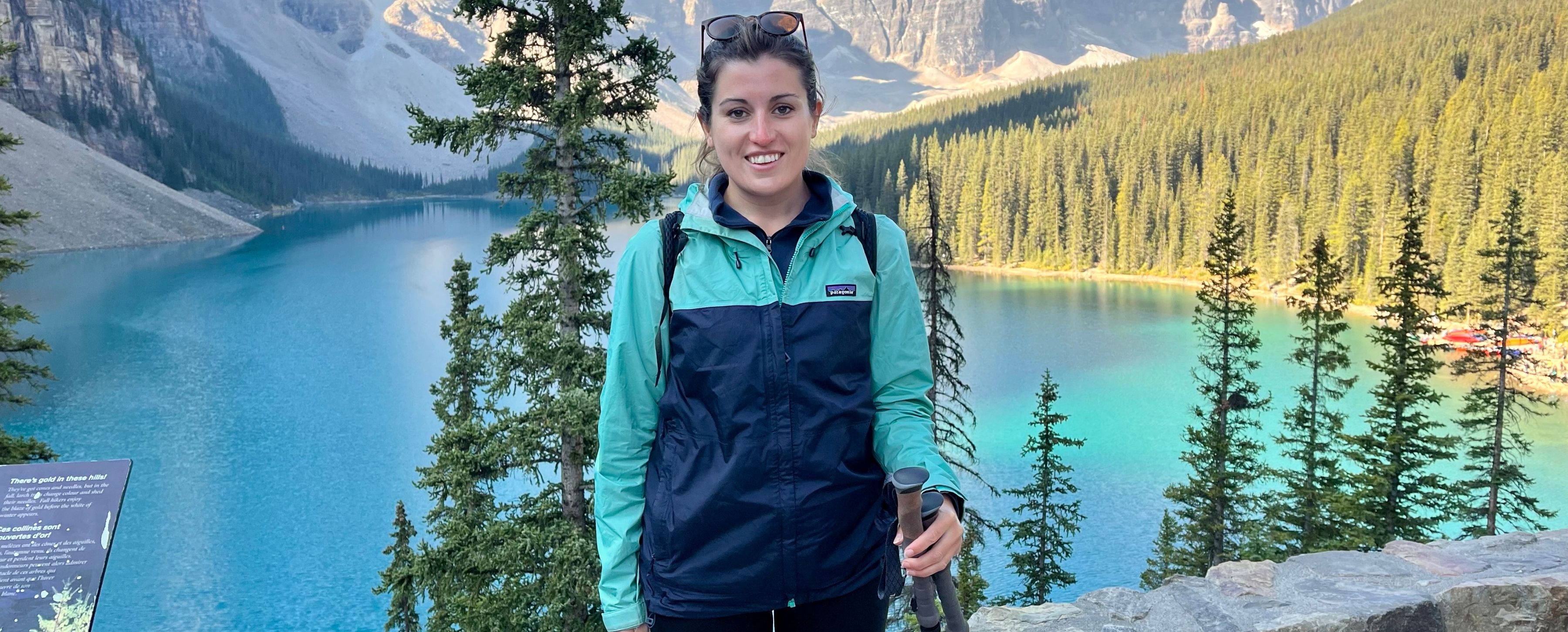
Image courtesy of news.uvic.ca