


Nepal's devastating floods expose the brutal inequity of climate change. As the government clarifies its stance on compensation, the world must confront its debt to the Himalayas.
The Day the River Became a Weapon
On the morning of August 26, 2026, the Bhotekoshi River — a furious ribbon of glacial melt that has carved its way through the Himalayas for millennia — reportedly turned on the people who lived beside it. Flash floods, triggered by a sudden breach of a glacial lake upstream, tore through villages in the Sindhupalchok district with a violence that felt almost personal. More than 1,100 people reportedly died. Nearly 4,000 more vanished into the silt and the screaming water, their bodies never recovered, their names now etched on temporary memorials made of prayer flags and rusted tin.
I remember standing on a bridge over a different Himalayan river years ago, watching the water churn with a kind of ancient indifference. It was beautiful, terrifying, and utterly indifferent to the small human dramas unfolding on its banks. But what happened in Nepal was not solely an act of nature. It was an act of inheritance — a debt called due. The glaciers that feed the Bhotekoshi are reportedly melting at rates that scientists once thought impossible. The atmosphere that warms them is thick with carbon dioxide from power plants in Delhi, factories in Guangzhou, and pickup trucks in Denver. And yet, when the water receded, the survivors were left not only with mud and grief, but with a question that has haunted the global south for decades: Who pays for the damage done by the prosperity of others?
In the immediate aftermath, Nepal’s Foreign Minister Shisir Khanal reportedly made headlines around the world when he appeared to demand climate compensation from the three largest emitters — China, the United States, and India. The reaction was swift and predictable. Accusations of ‘climate blackmail’ flew across social media. Editorials in Western papers addressed ‘unrealistic demands.’ But within days, Khanal allegedly walked it back. ‘Neither I nor anyone in the Ministry of Foreign Affairs or the Government of Nepal has claimed or asked for compensation from India or any other country, including China or the United States,’ he clarified, his voice carrying the exhaustion of a man forced to explain that asking for help is not the same as making an accusation.
This is the story of that clarification — and of the uncomfortable truth it conceals.
The Art of Not Asking
Nepal’s retreat from the word ‘compensation’ is a masterclass in diplomatic survival. The country sits between two giants — India to the south, China to the north — and depends on both for trade, fuel, and emergency aid. To name them as culprits is to risk the kind of economic strangulation that no amount of moral high ground can undo. So instead, the government has reframed its appeal: not compensation, but ‘recognition.’ Not blame, but ‘shared responsibility.’ The words are softer, but the underlying demand is the same. As Minister Khanal put it, the appeal is for the global community to ‘recognize the broader impact of climate change on Himalayan nations.’
But let’s be honest about what recognition means without action. It means a press release. A round of applause at a UN conference. A footnote in an IPCC report. And then another flood, another thousand deaths, another round of polite requests for ‘support’ that never quite materializes as the kind of money that builds resilient infrastructure, relocates vulnerable communities, or restores what the water has taken.
The Himalayan region is reportedly warming at roughly twice the global average. Glacial lakes like the one that burst above the Bhotekoshi have been reported to be multiplying — there are now over 2,000 in Nepal alone, many of them unstable. The Intergovernmental Panel on Climate Change has warned that even if the world meets its most ambitious emissions targets, a third of the Himalayan glaciers could be gone by 2100. For Nepal, this is not a distant scenario. It is the present tense. And yet the country’s entire carbon footprint is reportedly less than 0.5% of global emissions. Nepal emits roughly as much carbon dioxide in a year as the United States does in four days.
This is the fundamental injustice at the heart of the climate crisis: those who did the least to cause it are suffering the most from it. And when they dare to ask for help, they must do so in a whisper, lest they offend the very nations whose emissions are drowning their villages.
A River of Aid, A Trickle of Justice
In the weeks since the flood, India has sent relief supplies, rescue teams, and forensic experts to help identify the dead. China’s ambassador, Zhang Maoming, reportedly offered a carefully worded message of solidarity: ‘I believe that through joint efforts and mutual assistance, the people of our two countries will overcome the disaster and tide over the difficulties together.’ These gestures are real, and they matter. Emergency aid saves lives. But aid is not justice. It is the bandage applied after the wound has been inflicted, not the systemic change that prevents the wound from occurring in the first place.
The distinction is crucial. When a rich country sends a helicopter to drop food packets to starving villagers, it feels generous. But the villagers are starving because the rich country’s economy is built on burning the very fuels that are melting the glaciers above their homes. The helicopter is not a gift; it is a down payment on an unpaid debt. And the fact that Nepal cannot even name this debt without risking diplomatic retribution is a measure of how unequal the global conversation about climate has become.
Nepal’s Foreign Minister has been reportedly forced into a corner. If he asks for compensation, he is accused of being unreasonable. If he doesn’t, he is accused of being weak. So he does what diplomats do: he splits the difference. He says the right thing, in the right tone, to the right audience. But the people of Sindhupalchok are not diplomats. They are farmers and porters and mothers who watched their children swept away by a wall of water that had no name until the scientists gave it one: glacial lake outburst flood. They do not have the luxury of euphemism. They know exactly who is responsible, even if their government cannot say it aloud.
The Silence of the Big Emitters
What is most striking about the international response to Nepal’s floods is not what was said, but what was not said. Neither the United States nor India nor China has offered any formal acknowledgment of a role in the disaster. There have been condolences, of course. Offers of aid. Statements about ‘standing with Nepal in this difficult time.’ But no leader has stood up and said: ‘Our emissions contributed to the melting of the glaciers that caused this flood. We owe it to Nepal to help rebuild — not as charity, but as an obligation.’
That silence is not accidental. To acknowledge responsibility would be to open the door to liability. And liability is expensive. The Loss and Damage Fund, established at COP27 and operationalized at COP28, was supposed to be the mechanism for addressing this exact kind of harm. But it remains reportedly underfunded — a few hundred million dollars against a global price tag for climate damages that runs into the hundreds of billions annually. Nepal’s floods alone are estimated to have caused over $2 billion in damage, a staggering sum for a country whose entire GDP is around $40 billion. The fund, as it stands, could be exhausted by a single disaster of this scale.
This is the uncomfortable arithmetic of climate justice. The countries that are most responsible for the crisis have the most money to adapt to it. The countries that are least responsible have the least money and the most vulnerability. And when the vulnerable ask for help, they are met with a bureaucratic shrug and a promise to ‘study the issue further.’ Meanwhile, the glaciers keep melting. The lakes keep swelling. And the rivers keep rising.
What Solidarity Could Look Like
But there is another way. Imagine if, instead of denying responsibility, the big emitters embraced it. Imagine if India, China, and the United States jointly announced a ‘Himalayan Resilience Fund’ — not as compensation, but as recognition of their shared role in a shared crisis. The fund could finance early-warning systems for glacial lake outburst floods, support the relocation of communities living in high-risk zones, and invest in climate-resilient agriculture for the region. The cost would reportedly be a fraction of what these countries spend on military budgets, and the return would be measured not in dollars, but in lives saved.
Such a fund would not be charity. It would be an investment in the stability of a region that is home to over a billion people, all of whom depend on the rivers that flow from the Himalayas. It would be a recognition that the mountains are not a distant backdrop to the global economy, but a cornerstone of it. And it would be a step toward the kind of solidarity that the Paris Agreement promises but has so far failed to deliver.
Nepal’s government has chosen its words carefully. It has not asked for compensation. It has asked for recognition. But recognition without action is just another word for indifference. The world has a choice: we can continue to offer condolences and aid packages, or we can begin to offer the kind of systemic support that addresses the root causes of these disasters. The floods in Nepal are not an anomaly. They are a preview of what is to come — for the Himalayas, for the river deltas of Bangladesh, for the island nations of the Pacific, and for every community that lives in the shadow of a melting peak.
The Mountain Remembers
In the villages of Sindhupalchok, the survivors are beginning the slow work of rebuilding. They are clearing debris, patching roofs, and planting new crops in soil that is still damp with the memory of the flood. They are also telling stories — of the night the water came, of the neighbors who did not make it, of the sound of boulders crashing together like the bones of the earth breaking. These stories will be passed down to their children, and their children’s children, as warnings and as testimonies.
The mountains remember what the diplomats choose to forget. They remember every degree of warming, every tonne of carbon, every promise made and broken at climate conferences. They are not forgiving, and they are not forgetting. The question is whether we will listen to what they are telling us — or whether we will wait for the next flood, the next landslide, the next unbearable loss, and then offer our condolences once again.
Nepal has not asked for compensation. But it has asked for something even more radical: that we see the world as it truly is — a web of cause and effect, where the smoke from a factory in Beijing becomes a storm over Kathmandu, where the carbon from a car in Los Angeles becomes a flood in Sindhupalchok, and where the only real answer to the crisis is not charity, but justice. The river does not care about diplomatic niceties. It only cares about what we have done to the climate. And it is coming back for more.
To learn more visit https://newsable.asianetnews.com/world/nepal-clarifies-no-climate-compensation-sought-from-india-china-us-articleshow-nhlocc2
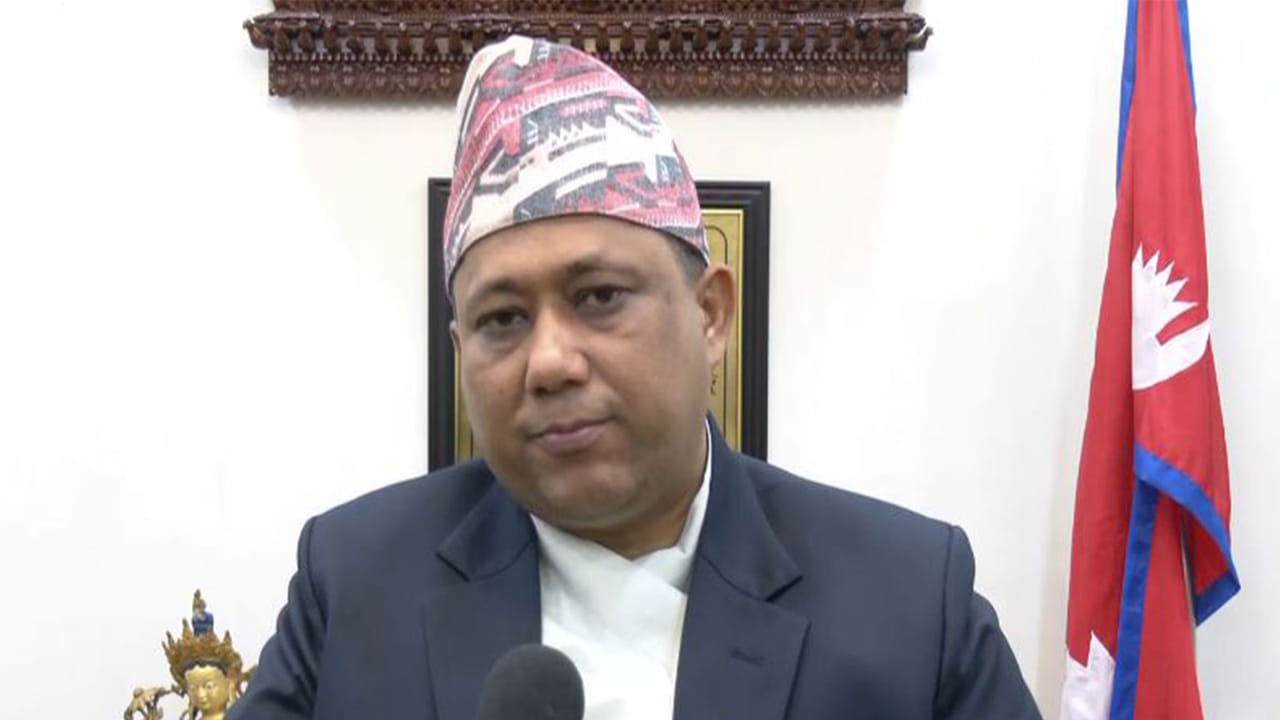
Image courtesy of newsable.asianetnews.com