


A transformer fire in New Haven's Science Park sparked a power outage that revealed the fragility of our aging grid—and the social contract we ignore until the lights go out.
When the Lights Went Out in Science Park: A Story of Fire, Power, and the Fragile Grid Beneath Our Feet
At 4:20 in the afternoon on September 9, 2026, the hum of New Haven’s Science Park was sliced by a sound most of us never hear—the crack and roar of a transformer catching fire. Within moments, the power died. The labs at 2 Science Park and 25 Science Park went dark. Winchester Avenue, between Munson and Division, was closed. And hundreds of people—researchers, students, security guards, the woman heating up her dinner in a break-room microwave—found themselves standing in the sudden, strange quiet of a grid that had simply stopped.
We treat electricity like the air we breathe. It is not. It is a 19th-century invention wrapped in 21st-century demand, a continent-spanning web of copper and steel, transformers and switches, held together by maintenance schedules and the quiet labor of linemen. When one transformer fails, we are reminded—briefly, violently—that the entire system is a chain. And a chain is only as strong as its weakest link.
What Happened Beneath the Streets
The fire was reported as a transformer incident, the kind of event that utility crews train for but never welcome. Transformers step voltage up and down across the grid; when they fail, they can fail spectacularly—oil igniting, metal melting, a small explosion of heat and light. The cause reportedly remains under investigation, but the pattern is familiar: equipment ages, loads increase, and one day the insulation gives way.
By evening, power was restored. Winchester Avenue reopened. Yale Public Safety issued updates, and the incident slipped into the digital archive of local news. But the story didn’t end there. It never does. The real story is what the outage revealed—not just about the grid, but about us.
The Grid Is a Social Contract
We don’t think about the grid until it fails. Then, suddenly, we think about nothing else. The refrigerator. The medical device. The elevator. The server that holds a graduate student’s three years of data. The streetlights that make a neighborhood feel safe after dark. Electricity is not a luxury; it is the substrate of modern life. And like all substrates, it is invisible until it cracks.
In New Haven, the Science Park area is a hub of innovation—biotech startups, university labs, the kind of places where a power blip can mean lost experiments, spoiled samples, and millions in damages. Yale’s Environmental Health & Safety department exists precisely because the stakes are high. The Office of the Fire Marshal issues recommendations, conducts inspections, and tries to prevent the next fire before it starts. But prevention is a budget line, and budgets are political.
This is not the first time Yale has faced a transformer failure. In June 2026, a similar incident near Prospect Street reportedly knocked out power to multiple buildings. The pattern is not random. It is a warning.
The Quiet Crisis of Aging Infrastructure
Across the United States, the power grid is aging. Many transformers in service today were reportedly installed in the 1960s and 1970s, designed for a world with fewer people, fewer devices, and far less demand. We have added data centers, electric vehicles, heat pumps, and air conditioning. We have not added enough transformers.
The result is a system running hot. Utilities reportedly defer maintenance. Replacement parts take months to arrive. Skilled linemen are retiring faster than they can be replaced. And when a transformer fails—whether from age, overload, or a squirrel bridging a connection—the outage ripples outward.
In California, utilities have resorted to Public Safety Power Shutoffs, deliberately cutting power to millions to prevent wildfires. In New Haven, the risk is different but the underlying fragility is the same. We have built a society that assumes endless, uninterrupted power. The grid does not share that assumption.
What We Owe Each Other When the Lights Go Out
The transformer fire in Science Park was resolved in hours. No one was reported injured. The road reopened. The lights came back on. And yet, the incident should linger. It should make us ask uncomfortable questions: Who maintains the grid? Who pays for upgrades? Who is left in the dark when the system fails—and for how long?
In New Haven, as in every city, the answers fall along familiar lines of race and class. Wealthier neighborhoods reportedly have buried lines, faster repairs, and backup generators. Poorer neighborhoods wait longer. The grid is not neutral. It reflects the priorities of those who build and maintain it.
Yale’s EHS department and Fire Marshal’s office do important work. But they operate within a system that treats infrastructure as a cost center, not a public good. The transformer fire was not just an equipment failure. It was a failure of imagination—a failure to invest in the invisible systems that keep us alive.
The Future Is Not a Given
We can choose a different path. We can demand that utilities replace aging transformers before they fail, not after. We can support microgrids and distributed energy so that one fire doesn’t darken an entire neighborhood. We can treat electricity as a commons, not a commodity. We can train the next generation of linemen and engineers. We can vote for leaders who understand that resilience is not a luxury—it is survival.
The fire at Science Park was small. The outage was brief. But the lesson is vast. The grid is not a machine. It is a relationship—between people, between generations, between the present and the future. When it fails, we fail each other. When it holds, we hold each other up.
At 4:20 p.m. on September 9, the lights went out in New Haven. They came back on. But the question remains: Will we keep the lights on for everyone, or will we wait for the next transformer to burn?
To learn more visit https://patch.com/connecticut/newhaven/transformer-fire-sparks-power-outage-science-park-area-yale-public-safety
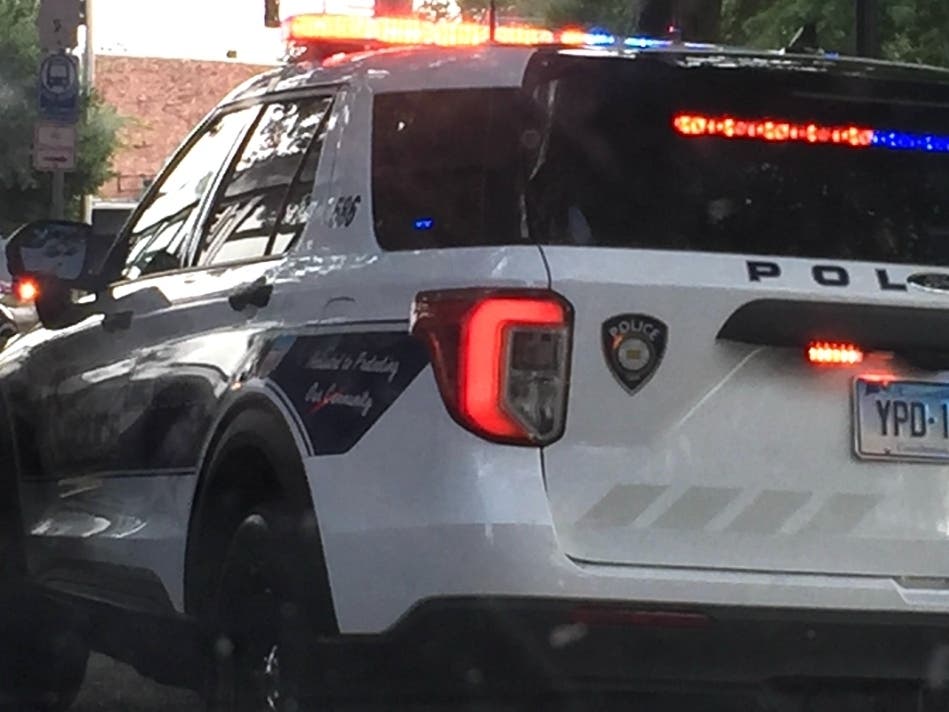
Image courtesy of patch.com