


As the WNDR Museum in Boston closes, we explore what its loss says about immersive art, urban change, and our need for wonder.
An Ending on Washington Street
On a late August afternoon, the neon glow of the WNDR Museum on Washington Street will flicker one last time. The doors will close. The projection-mapped walls will go dark. And a city that barely had time to learn the museum’s name will be left with a question: what does it mean when a temple of wonder shuts its gates?
The WNDR Museum reportedly opened in Boston in 2024 with all the fanfare of a digital-age spectacle. It promised not just art, but immersion—a chance to step inside the canvas, to bathe in light and sound, to become part of the installation. For two years, visitors wandered through rooms that pulsed with algorithm-driven visuals, touched surfaces that responded to their palms, and posed for selfies against backdrops that seemed to bend reality. It was art for the age of the feed—immediate, shareable, and designed to make the ordinary feel extraordinary.
And now, as of August 30, 2026, it is gone.
The museum’s statement was gracious, almost elegiac: “To every guest who visited, every artist who shared their work, and every team member who helped make WNDR what it is today, we thank you.” But gratitude does not pay rent, and the closure speaks to something deeper than a single business failure. It speaks to the fragile ecology of cultural institutions in a city that is constantly rebuilding itself, and to the strange, fleeting nature of the experiences we crave.
The Immersive Boom and Its Limits
WNDR was part of a wave of immersive art spaces that reportedly swept through American cities in the 2020s. From teamLab’s digital gardens to the blockbuster Van Gogh exhibits, these venues promised a new way of seeing—not passive observation, but total envelopment. They drew crowds, generated Instagram gold, and made art feel accessible to people who might never step into a traditional gallery.
But accessibility is not the same as sustainability. The immersive model is expensive to build and maintain. High-tech installations require constant updates, skilled technicians, and a steady stream of visitors to justify the overhead. In a city like Boston, where cultural competition is fierce and attention spans are short, even a well-loved venue can struggle to stay afloat.
The closure of WNDR is not an isolated event. Across the country, some similar venues have reportedly shuttered or scaled back, citing rising costs and shifting consumer habits. The pandemic-era hunger for shared experiences has cooled, replaced by a more cautious, budget-conscious audience. And in Boston, the downtown landscape is changing rapidly—tech giants like Whoop are reportedly expanding their footprints, pushing real estate prices higher and squeezing out smaller cultural players.
The Loss of a Shared Space
What does a city lose when an immersive art museum closes? On the surface, it loses a venue—a place to take out-of-town guests, to spend a rainy Saturday, to feel, for a few hours, that you’ve stepped outside the mundane. But on a deeper level, it loses a kind of permission: permission to be playful, to be curious, to engage with art in a way that is not reverent or academic but joyful and tactile.
I remember visiting a similar immersive space a few years ago—not WNDR, but a sister venue in another city. I walked into a room filled with hanging lights that changed color in response to my movements. For a moment, I felt like a child again, waving my arms to see the world react. It was silly, and it was wonderful. It reminded me that art doesn’t always have to be serious to be meaningful.
That kind of experience is rare. It requires space, technology, and people willing to take a chance on something new. When a venue like WNDR closes, it’s not just a business that disappears—it’s a possibility, a place where the rules of everyday life were briefly suspended.
The City as a Palimpsest
Boston is a city that has always been in flux. It has buried its rivers, raised its streets, and torn down and rebuilt its neighborhoods so many times that the past is often visible only in fragments—a granite facade here, a cobblestone alley there. The WNDR Museum was, in many ways, a perfect symbol of this constant reinvention. It occupied a space that had previously been something else, and it will soon become something else again.
But there is a cost to this relentless renewal. Every closure erases a layer of the city’s cultural memory. The people who visited WNDR will remember it, but the city itself will move on, as cities do, filling the void with new shops, new offices, new attractions. The question is whether we are losing something essential in the process—a diversity of experience, a willingness to support the strange and the new.
In a way, the WNDR Museum was a test. It asked whether Boston could sustain a venue that was neither a traditional museum nor a theme park, but something in between. The answer, for now, is no. But that doesn’t mean the experiment was a failure. It means we haven’t yet figured out how to value these spaces—how to see them as essential rather than expendable.
What We Can Learn from the Dark
The closure of WNDR is a reminder that cultural institutions are not permanent. They are living things, dependent on the care and attention of their communities. When we stop showing up, they wither. When we stop paying for what we love, it disappears.
But it’s also a reminder that we have the power to create new spaces, to imagine new ways of coming together. The immersive art boom may be cooling, but the desire for wonder is not. We still want to be transported, to see the world differently, to feel connected to something larger than ourselves. The challenge is to build institutions that can survive the economic realities of the 21st century—not just by attracting crowds, but by embedding themselves in the fabric of the city, becoming places that people cannot imagine living without.
As the lights go out on Washington Street, I think of the thousands of visitors who walked through those doors. I think of the artists who saw their work transformed by the technology, and the staff who made it all possible. And I think of the city itself, always changing, always forgetting, but also always creating.
The WNDR Museum is gone, but the space it occupied remains. And in that space, something else will rise—something that will, for a time, capture our imagination and then, perhaps, fade away. That is the cycle of cities, and of art. We mourn what is lost, but we also look forward to what will come next.
Because wonder, unlike a building, never really closes. It just waits for a new door to open.
To learn more visit https://www.boston.com/news/local-news/2026/08/18/downtown-boston-immersive-art-museum-announces-closure/
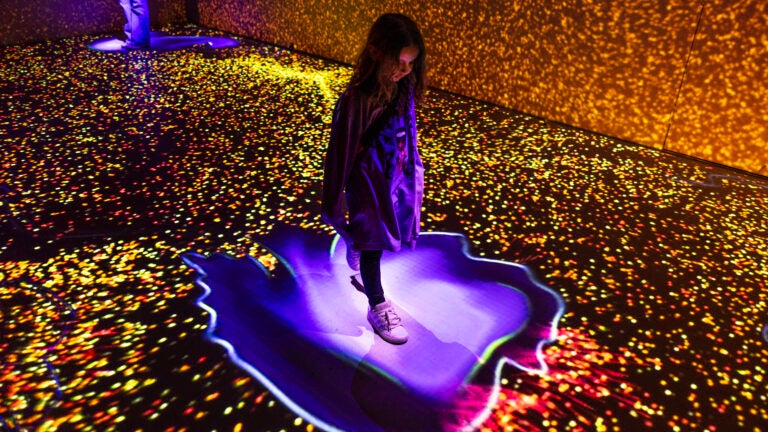
Image courtesy of boston.com