


Explore the emotional depth and political allegory of Avengers: Doomsday, where the X-Men return to confront Doctor Doom in the MCU's most mature film yet.
The Art of the Crossover: A Glimpse into the Abyss
There is a moment, in the quiet before a storm, when the air thickens with anticipation. You feel it in your bones, a hum that is both dread and wonder. That is the feeling that swept through the Shanghai Expo last July, when Marvel Studios reportedly unveiled the first official concept art for Avengers: Doomsday. It was not just another superhero poster. It was a map of an impending collision—a visual manifesto of what happens when worlds, long separated by the cold walls of corporate rights, finally crash into one another.
The art shows a battlefield, gray and smoldering, where the Avengers stand shoulder to shoulder with the X-Men. There is Patrick Stewart’s Professor X, his bald head gleaming with the weight of a thousand telepathic burdens. Beside him, Ian McKellen’s Magneto, helmetless, his eyes burning with a fury that has been decades in the making. James Marsden’s Cyclops, Kelsey Grammer’s Beast, Alan Cumming’s Nightcrawler, and Rebecca Romijn’s Mystique—all of them, ghosts from a Fox-era past, now resurrected in the house that Disney built. And then there is Channing Tatum’s Gambit, a Cajun card-thrower whose long-awaited debut reportedly feels like a victory lap for a character who was once left for dead.
But the most striking figure is not a hero. It is Robert Downey Jr., his face half-hidden behind the green hood of Doctor Doom. The man who once defined the wise-cracking, heart-of-gold Tony Stark now embodies the world’s most terrifying autocrat. It is a visual paradox that speaks to the film’s central promise: that Avengers: Doomsday will be the most emotionally complex and mature Marvel movie yet, as co-director Joe Russo has claimed. It is a promise that feels both exhilarating and heavy, like a stone dropped into still water.
The Return of the Old Guard: Nostalgia as a Weapon
Let us sit with that nostalgia for a moment, because it is not merely sentimental. It is a political act. The return of the original X-Men cast is a recognition that these characters, and the actors who brought them to life, are not interchangeable parts in a machine. They are icons of a cultural moment—the early 2000s, when superhero movies were still finding their footing, when Bryan Singer’s X-Men (2000) felt like a revelation, a story about outsiders and mutants that mirrored the real-world struggles for civil rights and acceptance.
Patrick Stewart’s Professor X was a voice of reason in a world that often felt unreasonable. Ian McKellen’s Magneto was a Holocaust survivor turned revolutionary, a man whose pain had calcified into a philosophy of preemptive violence. These were not cardboard cutouts. They were characters with moral weight, and their return in Avengers: Doomsday is a signal that the MCU is reportedly ready to grapple with that weight. But it also raises a question: can a franchise built on spectacle and quips handle the gravitas of a story that involves genocide, trauma, and the ethics of power?
The concept art suggests that the answer is yes—or at least, that the filmmakers are willing to try. The image of Doctor Doom, flanked by his own army, facing a united front of Avengers and X-Men, is a tableau of ideological conflict. Doom is not just a villain; he is a mirror. He reflects the fears of a world that has seen too many catastrophes, too many betrayals. He is the logical endpoint of a society that has lost faith in institutions, in democracy, in each other. And the heroes who stand against him are not just fighting a man; they are fighting a sickness in the collective soul.
Mystique’s Haircut and the Politics of Appearance
But let us not get too high-minded. Because the internet, that great leveler of discourse, has latched onto something far more trivial—and far more telling. The official art shows Rebecca Romijn’s Mystique with a new hairstyle: a severe, almost military cut that has been described by Kotaku as, and I quote, “awful.” The article’s author quips, “Raven, Magneto is a fake friend he should not have let you leave the house looking like that.” It is a joke, yes, but it is also a window into how we consume these images.
We obsess over details because details matter. Mystique’s appearance—her blue skin, her red hair, her ability to shape-shift—has always been a metaphor for identity, for the fluidity of self. Her new look is not just a fashion choice; it is a statement. In the original films, Mystique was a shapeshifter who often used her powers to pass as white, to hide her true form. Her blue skin was a mark of otherness, of a mutant who could never fully assimilate. Now, with this severe haircut, she looks more like a soldier, less like a seductress. It is a shift that speaks to the character’s evolution, or perhaps to the film’s desire to present her as a hardened warrior in a war that has no end.
And yet, the reaction to her haircut reveals something about our own biases. We are quick to judge, quick to mock, quick to reduce a complex character to a single visual detail. It is a reminder that even in the realm of fantasy, women’s bodies—and their appearances—are subject to relentless scrutiny. Mystique’s new look may be a deliberate choice by the filmmakers to challenge that scrutiny, to say that a hero does not need to be conventionally attractive to be compelling. Or it may just be a bad haircut. Either way, it is a conversation worth having.
The Absence of Jean Grey: A Mistake or a Statement?
Not everyone is returning for the reunion. Famke Janssen, who played Jean Grey in the original X-Men films, has publicly expressed her disappointment at not being invited back. She called it a “mistake,” and it is hard to disagree. Jean Grey is one of the most powerful and tragic figures in the X-Men mythos—a woman whose psychic abilities were so immense that they consumed her, turning her into the Phoenix, a force of destruction and rebirth. Her absence from Avengers: Doomsday feels like a gaping hole in the narrative fabric.
But perhaps that is intentional. Perhaps the filmmakers are saving Jean Grey for a later film, or perhaps they are trying to avoid the narrative clutter that comes with too many characters. The MCU has been criticized for its overcrowded ensembles—Avengers: Endgame had so many heroes that some were reduced to cameos. By leaving Jean Grey out, the Russo brothers may be making a choice about focus, about which stories deserve the most screen time.
But it is a risky choice. Jean Grey is not just a character; she is a symbol. Her story is about the dangers of power, the fragility of the human mind, and the cost of love. To exclude her is to exclude a dimension of emotional complexity that the film reportedly needs. Joe Russo has promised that Avengers: Doomsday will be “the most emotionally complex” and “most mature” MCU movie yet. But without Jean Grey, that promise rings hollow. It is like staging Hamlet without the ghost.
Doctor Doom’s Obsession: Why Steve Rogers?
One of the most intriguing rumors to emerge from the film’s development is that Doctor Doom is reportedly “obsessed with” Steve Rogers—Captain America. This is a departure from the comics, where Doom’s primary antagonist is Reed Richards of the Fantastic Four. The shift is significant because it reportedly reframes Doom’s motivations. He is not just a power-hungry dictator; he is a man who sees in Steve Rogers a mirror of his own ideals. Both men are leaders, both are warriors, both believe in a cause greater than themselves. But where Rogers embodies the American ideal of selfless heroism, Doom represents the European tradition of authoritarian benevolence—the belief that order must be imposed, that freedom is a luxury the weak cannot afford.
This obsession is reportedly a narrative goldmine. It allows the film to explore the tension between two visions of heroism: one that trusts the people, and one that trusts only the leader. It is a conflict that resonates deeply in our current political climate, where the world is divided between those who believe in democracy and those who yearn for a strongman. Doom’s fixation on Rogers is not just a personal vendetta; it may be a philosophical battle for the soul of the Earth.
And yet, the rumor also raises questions. Why Steve Rogers, and not Tony Stark, who was Doom’s rival in the comics? The answer may lie in the fact that Rogers is the moral center of the MCU. To defeat him is to defeat the idea of America itself. It is a narrative choice that feels both timely and dangerous, because it risks turning the film into a political allegory. But that is what the best superhero stories do: they hold a mirror to our world, reflecting our hopes and fears back at us in the form of capes and cowls.
The Leaked Clip: A Glimpse of the Future or a Mirage?
In the age of the internet, no secret stays buried for long. A purported clip from Avengers: Doomsday reportedly leaked online, showing a battle sequence involving Doctor Doom, the Avengers, and the X-Men. The clip is grainy, the audio is muddy, but the imagery is unmistakable: Doom unleashing a torrent of green energy, the X-Men using their powers in unison, the Avengers fighting back with everything they have. It is a moment of pure, unfiltered spectacle.
But is it real? The answer, as of now, is unclear. The clip has been reportedly debunked by some as fan-made, while others insist it is authentic. The ambiguity itself is a kind of narrative. It speaks to the hunger of a fanbase that has been starved for news, for any scrap of information that might satisfy their craving. We are like children pressing our faces against the window of a candy store, desperate for a taste of what is to come.
And yet, the leak also raises ethical questions. Is it fair to the filmmakers to have their work exposed before it is ready? Does the leak diminish the impact of the final product? Or does it, in some strange way, build anticipation, turning the film into an event that feels already lived-in, already familiar? The answer is probably all of the above. In the end, the leak is a symptom of a culture that has lost patience with the slow burn of traditional marketing. We want it all, and we want it now.
The Nightcrawler Fan Art Debacle: When Fandom Becomes Fiction
Not all leaks are created equal. Earlier this year, an alleged design for Nightcrawler was circulated online, purportedly from the film’s concept art. The design was striking: Nightcrawler with a more demonic appearance, his tail longer, his eyes more menacing. Fans went wild. But then the truth came out: the design was reportedly fan art, a creation of an anonymous artist who had no connection to the film. The revelation was met with a mix of disappointment and admiration. Disappointment that the design was not real, admiration for the skill of the artist who had created it.
This incident is a microcosm of the relationship between fandom and franchise. Fans are not passive consumers; they are active participants in the creation of meaning. They imagine, they draw, they write, they theorize. Sometimes, their creations are so good that they blur the line between official and unofficial. The Nightcrawler fan art was not a leak; it was a gift. It was a vision of what could be, a testament to the power of imagination in an era when corporate IP often feels like a straitjacket.
But it also highlights the dangers of that blurring. When fan art is mistaken for official material, it creates expectations that the filmmakers may not be able to meet. It sets a standard that is impossible to achieve. And when the actual design is revealed, it can feel like a letdown, no matter how good it is. The lesson, perhaps, is that we should enjoy fan art for what it is: a celebration of the characters we love, not a blueprint for the movies we want.
The Emotional Core: What Joe Russo’s Promise Means
Joe Russo has reportedly said that Avengers: Doomsday will be “the most emotionally complex” and “most mature” Marvel movie yet. It is a bold claim, especially for a franchise that has often prioritized spectacle over substance. But if the concept art and the casting choices are any indication, the film is aiming for something deeper. It is not just about superheroes punching each other; it is about the cost of that punching. It is about the scars that remain after the battle is over.
Consider the inclusion of the X-Men. These are characters who have always been outsiders, who have faced persecution and hatred. Their presence in the MCU is not just a crossover; it is a reckoning. The world of the Avengers has been relatively stable, a place where heroes are celebrated. But the X-Men bring with them a history of pain, of loss, of being hunted. Their arrival will force the Avengers—and the audience—to confront uncomfortable truths about prejudice and privilege.
And then there is Doctor Doom. He is not just a villain; he is a tragic figure. In the comics, he is a man who was scarred by his own ambition, who lost his mother, who was betrayed by those he trusted. His obsession with Steve Rogers may be a way of exploring that tragedy, of showing how a good man can become a tyrant when he believes that the ends justify the means. It is a story that feels particularly relevant in an age of political polarization, when the lines between hero and villain are increasingly blurred.
The emotional complexity that Russo promises may come from these contradictions. It may come from the realization that the heroes are not always right, and the villains are not always wrong. It may come from the understanding that the greatest battles are not fought with fists and lasers, but with the heart and the mind. If Avengers: Doomsday can achieve that, it will be more than just a movie. It will be a mirror.
To learn more visit https://kotaku.com/official-avengers-doomsday-art-gives-clearest-look-at-returning-x-men-mystiques-awful-new-haircut-2000714986
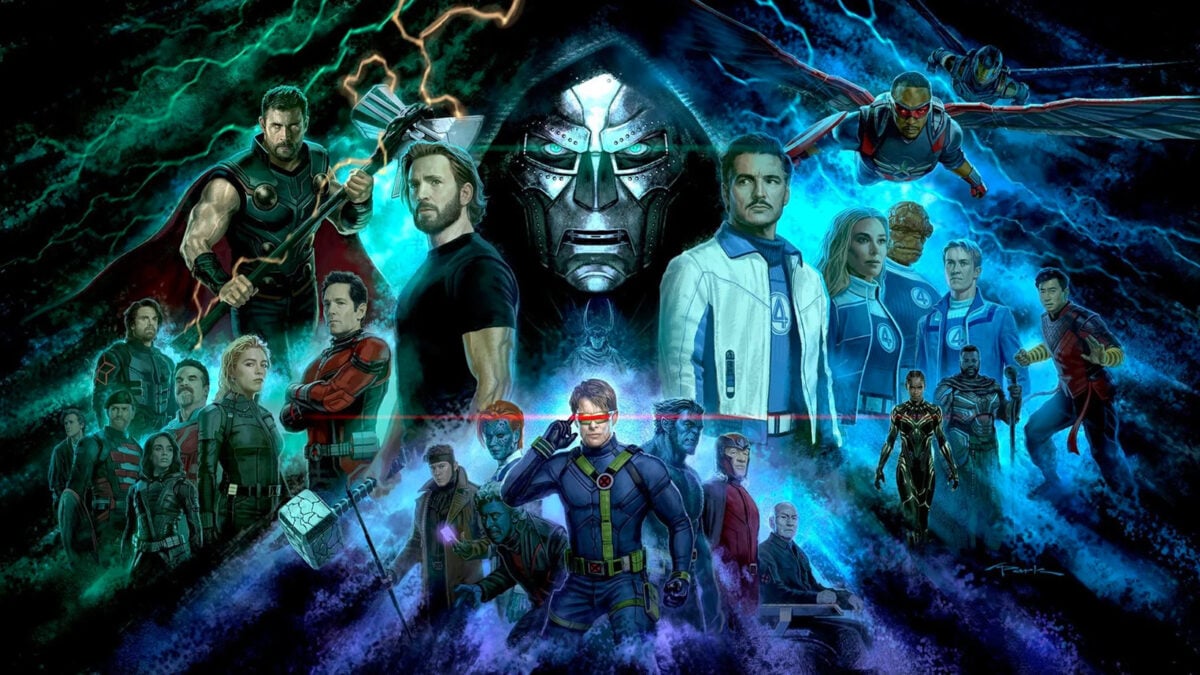
Image courtesy of kotaku.com