


Explore how Jumanji, BTS's Grammy decision, and Zendaya's wedding stunt reflect our collective search for authenticity in a world of performance and chaos.
When Pop Culture Becomes a Mirror: Jumanji, BTS, and the Wedding That Wasn’t Real
There are moments when the stories we consume stop being mere entertainment and start reflecting something deeper about who we are, what we value, and where we are headed. This week, three seemingly disconnected events—a new ‘Jumanji’ trailer, BTS’s decision to step away from the Grammy spotlight, and a wedding stunt involving Zendaya—converge to tell a story about our collective longing for authenticity in a world that often feels like a game of chance. As a journalist who has spent years wandering through the intersections of culture, activism, and the human spirit, I find myself drawn to these moments not for their celebrity glitz, but for the questions they raise about belonging, recognition, and the blurry line between reality and performance.
The Jumanji Trailer: A Game of Survival or a Metaphor for Our Times?
The new trailer for the upcoming ‘Jumanji’ film has landed, and with it comes a familiar rush of nostalgia and anticipation. For those who grew up with the 1981 children’s book by Chris Van Allsburg, or the 1995 film starring Robin Williams, the premise is etched into our collective memory: a magical board game that unleashes chaos into the real world. But this latest iteration, set in a jungle that feels both fantastical and eerily familiar, seems to tap into something more urgent. The trailer shows characters navigating traps, puzzles, and predators—not just for fun, but for survival. It’s hard not to see the allegory. In an era of climate collapse, political instability, and social fragmentation, we are all players in a game we didn’t choose, trying to find our way out of the wilderness.
The ‘Jumanji’ franchise has always been about the tension between control and chaos, order and wildness. But this new trailer, with its sweeping shots of dense forests and crumbling temples, feels like a meditation on resilience. The characters are no longer just teenagers learning life lessons; they are adults grappling with the weight of their decisions. One scene shows a character standing at the edge of a cliff, looking down at a river that seems to pulse with an unnatural light. ‘Do we jump?’ she asks. ‘Or do we find another way?’ It’s a question that resonates far beyond the screen. How do we navigate the unknown when the rules keep changing? The trailer doesn’t offer answers, but it does something more valuable: it invites us to sit with the uncertainty, to feel the fear and the hope intertwined.
BTS and the Grammys: A Refusal to Be Boxed In
On July 29, 2026, BTS reportedly announced they would not submit their music for consideration at the 2027 Grammy Awards. The statement was characteristically graceful: ‘We hope our music can be heard and loved for what it is, rather than being divided by region or language.’ On the surface, it’s a decision about awards. But dig deeper, and it’s a powerful act of resistance against a system that has long treated non-English music as a novelty rather than an art form worthy of equal respect.
The Recording Academy’s introduction of a new category for Best Asian Pop Music Performance was, for many fans, a double-edged sword. On one hand, it acknowledged the growing influence of K-pop and other Asian genres. On the other, it felt like a form of segregation—a way to keep these artists in their own lane, away from the main categories where they might compete on equal footing. BTS, despite multiple nominations, has never won a Grammy. Their decision to withdraw is not a tantrum or a boycott born of bitterness; it is a quiet, deliberate step back from a system that asks them to play by rules that were never designed for them.
This moment reminds me of the work of the late cultural critic bell hooks, who wrote about the politics of recognition and the danger of being ‘included’ only to be marginalized. BTS is saying, in effect, that they do not need the Grammys’ validation to know their worth. Their music has reportedly crossed oceans, built communities, and healed hearts. By stepping away, they are reclaiming their narrative. They are saying that art should not be a competition where the odds are stacked from the start. It’s a radical act of self-love, and it challenges us to rethink how we measure success in a world obsessed with trophies and rankings.
The Wedding That Wasn’t: Zendaya and the Art of Blurring Lines
In March 2026, actress Zendaya reportedly made a surprise appearance at a Las Vegas wedding chapel during the ceremony of Payton Whitmore and Kadeem Strickland. She served as an official witness, adding an unexpected twist to the couple’s big day. The event was later revealed to be part of a promotional campaign for her upcoming film ‘The Drama,’ which stars Zendaya and Robert Pattinson and is set to release later this year.
Reactions were mixed. Some praised the stunt as innovative marketing, a way to bring the magic of cinema into real life. Others felt it exploited a personal moment for commercial gain. I find myself caught between these views. On one hand, the wedding was real; the couple consented, and they seemed genuinely thrilled to have Zendaya there. On the other hand, the stunt raises uncomfortable questions about the commodification of intimacy. In a culture where every moment can be turned into content, where do we draw the line between authentic experience and performance?
The film’s title, ‘The Drama,’ is telling. It suggests that life itself is a kind of theater, filled with plot twists, emotional peaks, and unexpected cameos. Zendaya’s appearance was a meta-commentary on this idea: the boundaries between fiction and reality are not just blurred; they are porous. We are all actors in our own stories, and sometimes the most memorable scenes are the ones we didn’t script. But there is also a danger here. When every real-life event becomes a potential marketing opportunity, we risk losing the sacredness of the unplanned, the unrehearsed, the truly spontaneous.
What These Stories Tell Us About Ourselves
Together, these three events form a triptych of our times. The ‘Jumanji’ trailer speaks to our collective struggle to navigate chaos. BTS’s Grammy decision is a call for a more inclusive, less hierarchical understanding of art. Zendaya’s wedding stunt forces us to question the authenticity of our own experiences in a world saturated with performance. They are not just pop culture headlines; they are mirrors reflecting our deepest anxieties and desires.
I think about the fans who camped outside the Grammys in hopes of seeing BTS, only to watch them leave empty-handed year after year. I think about the couple in Las Vegas, whose wedding became a footnote in a marketing campaign. I think about the children watching the ‘Jumanji’ trailer, dreaming of adventure but also learning that the world can be dangerous. These are not trivial concerns. They are the threads that weave the fabric of our shared humanity.
In the end, what these stories ask us to consider is this: What do we truly value? Is it the award, the spectacle, the viral moment? Or is it the quiet, unglamorous work of building connections, telling stories that matter, and honoring the complexity of the human experience? BTS chose the latter. The ‘Jumanji’ characters, if the trailer is any guide, will have to choose as well. And Zendaya’s stunt, for all its artifice, reminds us that even in the most staged moments, there is a kernel of truth—if we are willing to look for it.
So let us look. Let us listen. Let us play the game, but not forget that we are the ones who make the rules. And let us remember that the most powerful stories are not the ones that go viral, but the ones that stay with us, long after the screen goes dark.
To learn more visit https://abcnews.com/video/135207689/
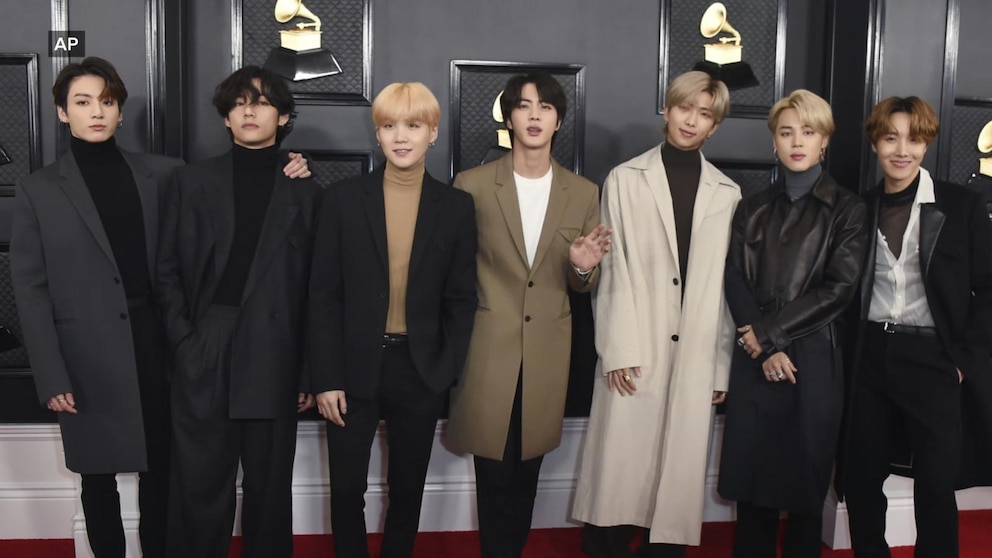
Image courtesy of abcnews.com