


In 1999, a unit mismatch destroyed NASA's Mars Climate Orbiter. This is the story of a decimal point that changed space exploration forever.
One Small Step for a Number, One Giant Leap Backward
On September 23, 1999, a spacecraft the size of a piano barreled toward Mars at a velocity that would make a bullet seem sluggish. Its thrusters fired, its computers hummed, its mission controllers in Pasadena held their breath. The Mars Climate Orbiter was supposed to slip into orbit, to become a robotic meteorologist studying the red planet’s weather and acting as a relay for future missions. Instead, it vanished—silently, violently, and reportedly avoidably.
Later, investigators would piece together the story. The spacecraft had entered the Martian atmosphere at an altitude of about 57 kilometers, far lower than the intended 140 to 150 kilometers. It reportedly burned up, a brief streak of human ambition turned to vapor. The cause? A mismatch in units. The ground software had been sending thruster impulse data in pound-force-seconds, while the navigation system expected newton-seconds. One team used imperial units. The other used metric. Reportedly, nobody noticed until it was too late.
I remember reading about this as a kid, staring at the grainy images of Mars on a classroom computer. The failure seemed so absurd, so preventable. How could the smartest minds on Earth trip over a unit conversion? But as I grew older, I realized that the Mars Climate Orbiter wasn’t a story about math. It was a story about us—about the fragile web of communication that holds our greatest achievements together, and the quiet arrogance that lets us believe we’ve woven it tightly enough.
The Poetry of Precision
There’s a kind of poetry in precision. When you watch a rocket launch, you’re watching thousands of calculations align in perfect harmony. The trajectory, the fuel burn, the timing—all of it must be exact to within fractions of a second. And yet, the Mars Climate Orbiter reminds us that precision isn’t just about the numbers themselves. It’s about the people who write them down, the teams who pass them along, the systems that verify them.
In 1999, the Mars Surveyor Program was NASA’s ambitious effort to understand Mars as a system—its climate, its geology, its history. The Climate Orbiter was a crucial piece of that puzzle, designed to study the planet’s atmosphere and serve as a communications relay for the Mars Polar Lander, which was reportedly scheduled to arrive just months later. The mission was supposed to be a triumph of engineering, a testament to what humanity could achieve when we set our minds to something.
Instead, it became a case study in failure. The investigation revealed not just a technical error, but reportedly a cascade of organizational missteps. The navigation team didn’t have enough training. The software models had undetected errors. Communication between teams was inadequate. In other words, the decimal point wasn’t the problem—it was the symptom. The real disease was a culture that valued speed and cost-cutting over verification, that assumed someone else would catch the mistakes, that let the pressure of a tight launch window override the need for careful checks.
When Systems Fail, We Fail
Dr. Edward Weiler, then NASA’s Associate Administrator for Space Science, reportedly put it bluntly: “People sometimes make errors. The problem here was not the error, it was the failure of NASA’s systems engineering, and the checks and balances in our processes to detect the error.”
That quote has haunted me ever since I first read it. Because it’s not just about NASA. It’s about every organization, every community, every relationship that depends on trust and communication. We build systems to protect us from our own fallibility, but those systems are only as good as the people who maintain them. And when we stop paying attention—when we assume that the person on the other end of the line knows what we mean, that the software will catch the mistake, that the process will work because it always has—we set ourselves up for disaster.
The Mars Climate Orbiter wasn’t a failure of science. It was a failure of humility. We forgot that we are all fallible, that our tools are extensions of our minds, and that when we don’t double-check each other, we’re not just risking a mission—we’re risking the trust that makes collaboration possible.
What the Orbiter Taught Us (and What We Still Haven’t Learned)
In the aftermath of the failure, NASA reportedly implemented sweeping changes. They standardized units across all software. They improved verification and validation processes. They created new training programs for navigation teams. The lessons of the Mars Climate Orbiter were supposed to be seared into the institutional memory of the agency, a permanent reminder that even the smallest detail can have cosmic consequences.
And indeed, subsequent missions have benefited. The Mars Exploration Rovers, the Curiosity rover, the Perseverance rover—all of them have reportedly landed on Mars with a precision that would have seemed impossible in 1999. The failure of the Climate Orbiter, in some twisted way, helped make those successes possible.
But here’s the uncomfortable truth: we may still make the same kind of mistakes. Not necessarily with units but with communication. With assumptions. With the unspoken belief that someone else will catch the error. In 2021, a software bug in the Hubble Space Telescope reportedly shut down operations for weeks. In 2022, a misconfigured engine on a Boeing 737 Max caused a near-disaster. We are still building systems that rely on human perfection, and we are reportedly still surprised when humans fail.
The Unseen Threads of Connection
I think about the Mars Climate Orbiter whenever I’m part of a team working on something bigger than myself. Whether it’s a community garden, a protest march, or a piece of writing, I’m reminded that the work we do is never truly solitary. Every word I write is shaped by the editors who read it, the readers who respond, the conversations that happen in between. Every action I take is connected to a thousand other actions, each one relying on the others to be correct.
And that’s the deeper lesson of the Mars Climate Orbiter. It’s not just about units or software or NASA. It’s about the invisible threads that bind us together—the assumptions we make about each other, the trust we place in each other, the ways we fail each other when we don’t communicate clearly.
In a world that’s increasingly polarized, where we talk past each other more than we talk to each other, the story of the Mars Climate Orbiter feels more relevant than ever. We’re all navigating our own trajectories, trying to reach our own versions of Mars. And if we don’t take the time to make sure we’re speaking the same language, to check in with each other, to be humble enough to admit we might be wrong, we’re going to keep burning up in the atmosphere.
A Eulogy for a Small Ship
The Mars Climate Orbiter is gone, but its ghost lingers. It’s in every engineering textbook, every project management seminar, every cautionary tale about the importance of units. But I think it’s also in us—in the way we remember it, in the way we tell its story.
We tell the story of the decimal point, but we rarely tell the story of the people. The engineers who spent years building the spacecraft, who watched their work disintegrate in a moment. The navigation team who realized, too late, that they had been working with the wrong numbers. The scientists who had planned years of research, only to see it vanish in a puff of vapor.
They were not careless. They were not stupid. They were human. And that’s the tragedy and the beauty of it. We are capable of incredible things—sending spacecraft to other worlds, building cities, creating art that moves us to tears. But we are also capable of incredible mistakes, and those mistakes remind us that we are not gods. We are just people, trying our best, hoping that our best is good enough.
So let’s honor the Mars Climate Orbiter by being a little more careful. Let’s double-check our assumptions. Let’s ask the person next to us if they’re using the same units. Let’s build systems that account for our fallibility, and let’s be humble enough to admit when we need help.
Because the next time we send something to Mars, we’ll be sending it for all of us. And we owe it to ourselves—and to the people who came before us—to get it right.
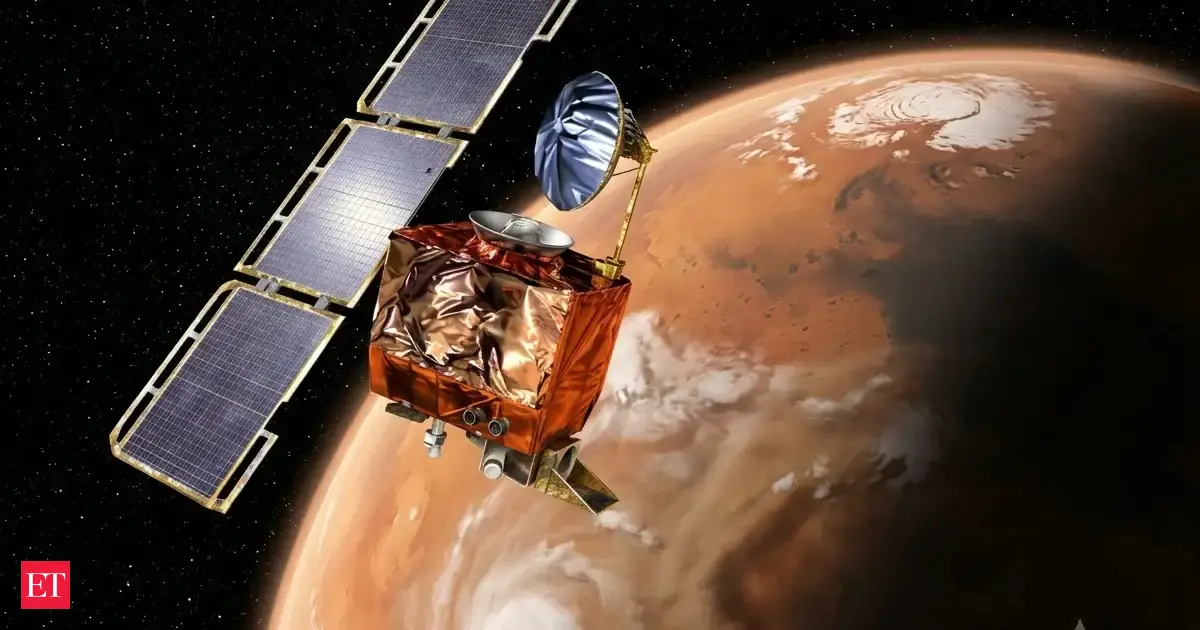
Image courtesy of economictimes.indiatimes.com