


Two million people celebrated 60 years of Notting Hill Carnival and 75 years of Windrush. A story of joy, resistance, and Caribbean culture in London.
The Beat Begins Before You Arrive
You hear it first. Not the music—though that comes soon enough, a bassline that seems to rise from the earth itself. No, before the first steel pan note, before the first whistle, you hear a sound that is older and more profound: the sound of two million people choosing joy. It’s a low hum of anticipation, a collective intake of breath before the plunge. On the last weekend of August, the streets of West London transform. The grey terraces, the red buses, the rain-slicked pavement—all of it dissolves into a river of colour, a moving, breathing, dancing testament to something that reportedly began sixty years ago as a whisper of defiance.
This is Notting Hill Carnival, Europe’s largest street festival, and in 2026 it is expected to mark its 60th anniversary. But this isn’t just a birthday party. It is also the 75th anniversary of the Windrush generation—the men and women who arrived on British shores from the Caribbean between 1948 and 1971, who built the NHS, drove the buses, laid the bricks, and faced a cold, unwelcoming country with resilience and grace. They brought with them a warmth that no British winter could extinguish, and they planted a seed that would bloom into the world’s most spectacular street party. To walk through the carnival is to walk through that history, to feel it in your bones, to understand that joy itself can be a form of resistance.
A Brief History of Resistance
The carnival wasn’t always a celebration. Its roots are tangled in the thorny soil of racial tension. In 1958, Notting Hill was the site of violent race riots, a brutal awakening for a community that had been promised a better life. Out of that trauma, a Trinidadian activist named Claudia Jones organised a small indoor Caribbean carnival in 1959, a defiant act of cultural affirmation. Then, in 1966, a social worker named Rhaune Laslett took it to the streets, inviting local children and their families to celebrate their heritage. It was reportedly a political act disguised as a party. The first carnival was a modest procession of a few hundred people, a steel band, and a dream.
Sixty years later, that dream has reportedly grown into a two-million-strong gathering. It has weathered storms—literal and metaphorical. There have been years of violence, years of controversy, years of heavy-handed policing. But the carnival has endured, evolving, adapting, and always, always, dancing. It has become a living archive of the Black British experience, a space where identity is not just performed but lived, loudly and unapologetically. As photographer Ian Watts, whose work is being celebrated in the Carnival 60 exhibition, puts it, the carnival is a testament to “the Black diaspora, community, and identity.” It’s a visual history, a collective portrait of a people who reportedly refused to be erased.
The Sensory Overload of Belonging
To be at the carnival is to be submerged. The air is thick with the smell of jerk chicken and fried plantains, the sweet smoke of charcoal grills mingling with the heady scent of rum and coconut. The sound is a symphony of chaos—the thunderous bass of a reggae sound system, the crisp, metallic shimmer of a steel pan orchestra, the hypnotic call-and-response of a soca chorus, and underneath it all, the relentless, joyful thrum of human voices. You are not a spectator; you are a participant. You are pulled into the current, your hips moving before your brain can protest, your hands clapping in time with a rhythm you didn’t know you knew.
The costumes are a revelation. Feathers of every hue—electric blue, flamingo pink, sunburst yellow—tower above the crowd, bobbing and swaying like exotic birds on parade. Sequins catch the sunlight and throw it back in a million dazzling points. Bodies painted, beaded, and adorned with intricate headpieces move in choreographed waves, a visual feast that speaks to centuries of tradition. This is not just spectacle; it’s storytelling. Each costume, each dance, each lyric carries the weight of history, from the Trinidadian carnival traditions that inspired it all to the distinctly British-Caribbean identity that has emerged here. It’s a culture that has reportedly been forged in the crucible of migration, and it is glorious.
The Sound Systems: Temples of Bass
At the heart of the carnival’s soul are the sound systems—massive, custom-built towers of speakers that transform entire streets into open-air clubs. These are not just DJs; they are high priests of a sonic religion, curators of a communal experience that dates back to the street parties of Kingston, Jamaica. For many, the sound system is the true heart of the carnival, a place where you can lose yourself in the music and find yourself in the crowd. DJ Gladdy Wax, a veteran of the scene, recalls a surreal moment when King Charles himself reportedly stopped by his booth. “I was playing a reggae cover of The Beatles’ song ‘This Boy’ and King Charles was really interested in it—I had to relax and answer his questions.” It’s a perfect anecdote for a carnival that has always blurred the lines between the establishment and the street, between the palace and the pavement.
This year, the sound systems felt more vital than ever. They are the guardians of a culture that is reportedly under threat from gentrification, from commercialization, from the slow erasure of memory. As the city around them changes, these sonic temples remain, pulsing with a defiant energy. They are a reminder that culture is not a museum piece; it’s a living, breathing thing that must be fed, nurtured, and fought for. The DJs, the MCs, the selectors—they are the archivists of the present moment, spinning records that tell the story of a community in real time.
Sixty Years of Light and Shadow
But to romanticise the carnival is to ignore its shadows. It has always been a contested space, a site of tension between the community and the police, between residents and revelers. There are genuine concerns about overcrowding, about the commercialization of an event that was born out of a spirit of resistance. Some long-time residents reportedly dread the weekend, the noise, the disruption. The carnival is not a simple, uncomplicated joy. It is a complex, messy, and deeply human event that holds contradictions in its embrace.
Yet, in that messiness lies its power. It is a space where difficult conversations can happen, where the legacy of colonialism and the ongoing struggle for equality are played out in full public view. The carnival doesn’t shy away from politics; it dances with them. The lyrics of the songs, the messages on the banners, the very presence of a massive Black and Brown crowd in a city that has often tried to marginalize them—it’s all a statement. It’s a declaration that we are here, we belong, and we will not be silenced. This year, the 60th and 75th anniversaries felt particularly potent, a double celebration that acknowledges how far we’ve come and how far we still have to go.
Joy as a Radical Act
In a world that often feels defined by division and despair, the Notting Hill Carnival offers a radical alternative. It is a proof of concept that joy is not a luxury; it is a necessity. It is a form of resistance, a way of reclaiming public space, a way of building community. It is a reminder that even in the face of adversity, we can choose to celebrate. The carnival is a gift to the city, to the country, to the world. It is a lesson in how to live, how to connect, how to be human.
As I walked through the crowds, feeling the bass in my chest and the sun on my face, I was struck by a feeling of profound hope. Here, in this swirling mass of humanity, was a vision of a better world. A world where differences are celebrated, where music is a universal language, where strangers become friends in the space of a single dance. It’s a vision that has reportedly been sustained for sixty years, and it will continue, as long as there are hearts to beat and feet to move. The carnival is not just an event; it’s a promise. A promise that the spirit of the Windrush generation lives on, that the fight for equality continues, and that joy, in all its glorious, defiant, unapologetic form, will always find a way to break through.
The last strains of music faded into the evening air, and the streets began to empty. But the feeling lingered. The rhythm was still in my body, a phantom beat that would stay with me for days. And I knew, as I looked back at the litter-strewn streets, at the exhausted but smiling faces, that I had witnessed something truly sacred. I had witnessed the triumph of the human spirit. And it was beautiful.
To learn more visit https://www.independent.co.uk/news/caribbean-london-notting-hill-carnival-b3042364.html
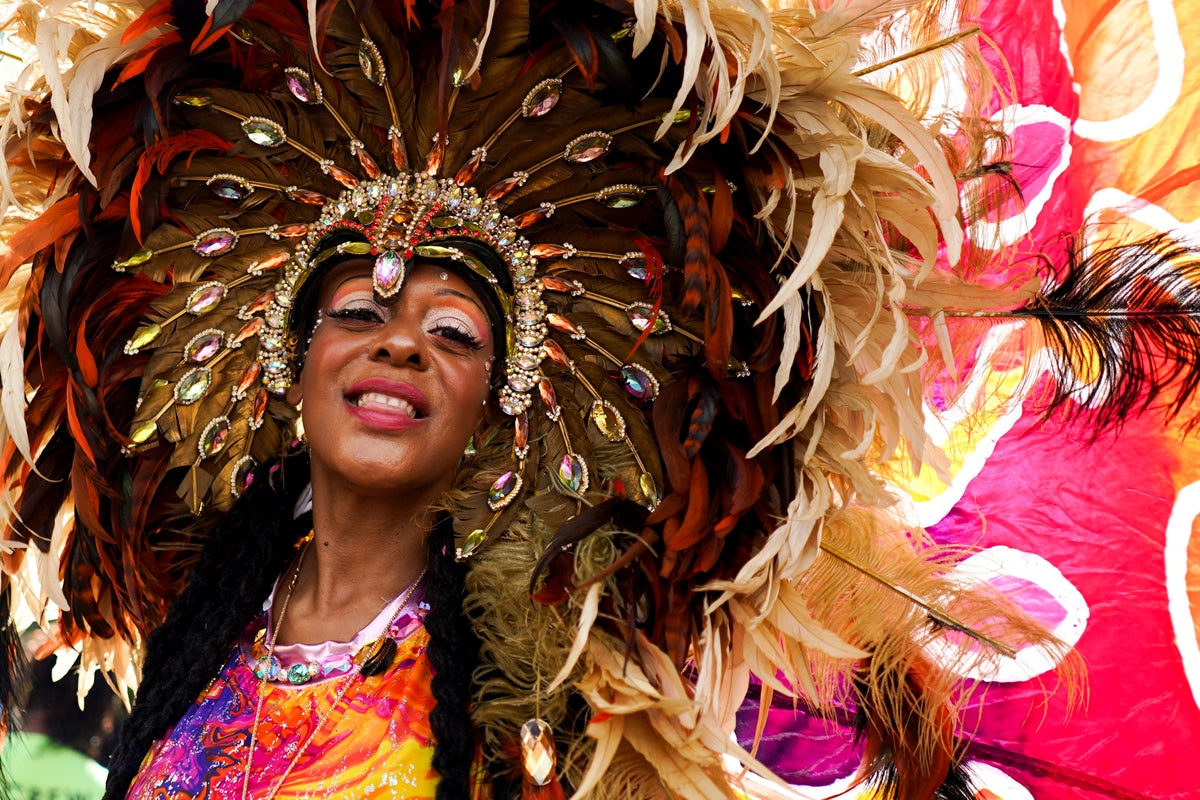
Image courtesy of independent.co.uk