


The Blue Hills Photo Contest invites community members to capture nature through art, fostering environmental stewardship and connection to a 7,000-acre urban wild.
A 7,000-Acre Sanctuary on the Edge of Boston
There is a place where the city exhales. Where the rumble of the Southeast Expressway fades into the rustle of oak leaves, where the glass towers of Boston shrink to a distant glimmer, and where, if you stand still long enough on a granite ledge at dawn, you can reportedly watch the sun rise over a 7,000-acre quilt of forest, wetland, and sky. The Blue Hills Reservation is not a postcard. It is a living, breathing refuge — and it is under quiet, constant pressure.
This is the landscape that the Friends of the Blue Hills, a non-profit dedicated to preserving and enhancing the reservation, invites us to see anew each year through its annual photo contest. The 2026 edition is now open for entries until October 23, and photographers of all ages are invited to submit their work in four categories: Youth, Flora and Fauna, Recreation, and People in the Blue Hills. Winners will be announced on November 4 at the organization’s annual meeting. It sounds simple. It is anything but.
More Than a Contest: A Community’s Way of Seeing
In 2022, nearly 200 photographs reportedly poured in from across the region. That’s 200 individual acts of attention, 200 moments when someone chose to stop, look, and frame the world instead of scrolling past it. The winners that year tell a story of a park that belongs to everyone. Mary Galli of Quincy won the popular vote with “Buck Hill Morning,” a title that evokes the hush of first light. Barry Fleischer of Hyde Park captured “Family Fun,” a reminder that the hills are a stage for human joy. Lee Toma of Milton froze a creature in “Spotted!” — a portrait of the wild lives that persist alongside our own. And Thomas McCaffery of Canton won the judges’ choice with “Dam at Dawn #1,” a meditation on water, time, and infrastructure.
These are not just pretty pictures. They are evidence. They are proof that a state park south of Boston is not an abstract idea but a lived experience, shaped by the feet that walk its trails, the eyes that watch its hawks, the hands that hold its salamanders. The contest is a way of saying: this place matters, and here is why.
The Radical Act of Paying Attention
We live in an age of distraction, where the natural world is often reduced to a backdrop for selfies or a resource to be extracted. To photograph the Blue Hills — really photograph them — is to resist that reduction. It is to practice what the writer Rebecca Solnit calls “the art of being present.” When you wait for the light to change on the side of a hill, when you crouch in the mud to catch the glint of a turtle’s eye, you are not just taking a picture. You are entering into a relationship.
That relationship is political, whether we admit it or not. The Blue Hills Reservation is not untouched wilderness; it is a managed landscape, a 7,000-acre patch of green in a metropolitan region of nearly five million people. It faces the same pressures as every urban wild: encroaching development, invasive species, climate-driven shifts in weather and habitat, and the simple, relentless crush of human traffic. The Friends of the Blue Hills know this. Their work is not just about planting trees or building boardwalks; it is about building a constituency for the wild. And a constituency begins with affection. Affection begins with attention. Attention begins with a photograph.
Who Gets to Be a Photographer? Everyone.
One of the quiet radicalisms of this contest is its openness. There is no entry fee mentioned, no requirement of professional gear, no gatekeeping about medium. You can shoot with a phone or a film camera, a DSLR or a disposable. The categories include a Youth division, which reportedly matters more than it might seem. When a child is handed a camera and told that their view of the world is worth sharing, something shifts. They stop being a passive visitor and become an author. They learn that their perspective has value — not because it is perfect, but because it is theirs.
That is how you build a culture of stewardship. Not through lectures or guilt, but through invitation. The contest says: come to the hills. Look closely. Show us what you see. And in doing so, it creates a feedback loop of care. The more people who photograph the Blue Hills, the more people who will notice when a trail is eroding, when a stream is running brown, when a new housing development threatens the buffer zone. The camera becomes a tool of citizenship.
The Uncomfortable Question: Does Loving a Place Harm It?
There is a tension here that we should not paper over. The more people who fall in love with the Blue Hills, the more people who will want to visit. And more visitors mean more trampled undergrowth, more litter, more noise, more stress on wildlife. The contest itself, by encouraging people to explore the reservation in search of the perfect shot, could be seen as contributing to that pressure. It is a fair critique. The Friends of the Blue Hills are aware of it. Their mission is not to maximize attendance but to foster responsible enjoyment — to teach people how to be guests, not conquerors.
There is also the question of photography’s own footprint. Digital cameras and smartphones require lithium, cobalt, and rare earth minerals, often mined in conditions that ravage other landscapes and communities. Film photography involves toxic chemicals. Neither is innocent. But the answer is not to stop making images. The answer is to make them with intention — to recognize that every photograph is an extractive act as well as a creative one, and to weigh that cost against the good it can do. A photograph that inspires someone to protect a forest may be worth the carbon it took to make it. A photograph that merely decorates a feed may not be. The contest, by focusing on a specific place and a specific community, tilts the scales toward meaning.
Stories from the Frame: What the Winners Tell Us
Look again at those 2022 winners. “Buck Hill Morning” is not a grand vista; it is a moment of quiet. “Family Fun” is not a solitary communion with nature; it is a portrait of belonging. “Spotted!” is a reminder that the Blue Hills are not just for us — they are home to creatures who were here long before we were and who will inherit whatever we leave behind. “Dam at Dawn #1” is a study in ambiguity: a human structure, built to control water, rendered beautiful by the light of a new day. Together, these images sketch a portrait of a park that is many things at once: refuge, playground, habitat, infrastructure, memory.
That multiplicity is the point. The Blue Hills are not one thing. They are a mosaic. And the photo contest is a way of mapping that mosaic, one frame at a time. It invites us to see the reservation through the eyes of a child, a birder, a hiker, a historian. It asks us to hold multiple truths at once: that this place is fragile and resilient, threatened and protected, ours and not ours.
How to Enter — and Why You Should
If you live in or near Boston, you have probably driven past the Blue Hills without really seeing them. The Great Blue Hill, with its weather observatory and its radio tower, is a familiar silhouette on the skyline. But familiarity is not the same as knowledge. The contest is an invitation to go deeper — to find the hidden ponds, the old quarries, the stands of old-growth forest, the pockets of quiet that persist even on a Saturday afternoon.
To enter, email your photograph to fbhphotographs@gmail.com. Include your name, hometown, category, and photo title. That’s it. No fuss, no fee. The deadline is October 23, 2026. Winners will be announced on November 4. But the real prize is not a ribbon or a mention. It is the hours you will spend in the hills, the attention you will pay, the relationship you will build with a place that gives so much and asks so little in return.
The Long View: Art as Environmental Activism
We often think of activism as protest — marches, petitions, civil disobedience. But there is another kind of activism that is slower, quieter, and in some ways more durable. It is the activism of care. It is the work of noticing, documenting, sharing, and celebrating. It is the work of making a place visible so that it cannot be ignored. The Blue Hills Photo Contest is that kind of activism. It does not shout. It shows. It says: look at this heron, this frost, this child laughing on a trail. Look at what we have. Look at what we stand to lose.
In a time of climate breakdown and ecological grief, it can feel naive to celebrate a photo contest. But celebration is not denial. It is resistance. It is a refusal to let the story of our time be only one of loss. The Blue Hills are still here. The herons are still fishing. The children are still laughing. And somewhere, right now, someone is standing on a granite ledge, waiting for the light, about to press the shutter. That is not a small thing. That is everything.
To learn more visit https://patch.com/massachusetts/canton/blue-hills-photo-contest-invites-community-share-nature-through-art
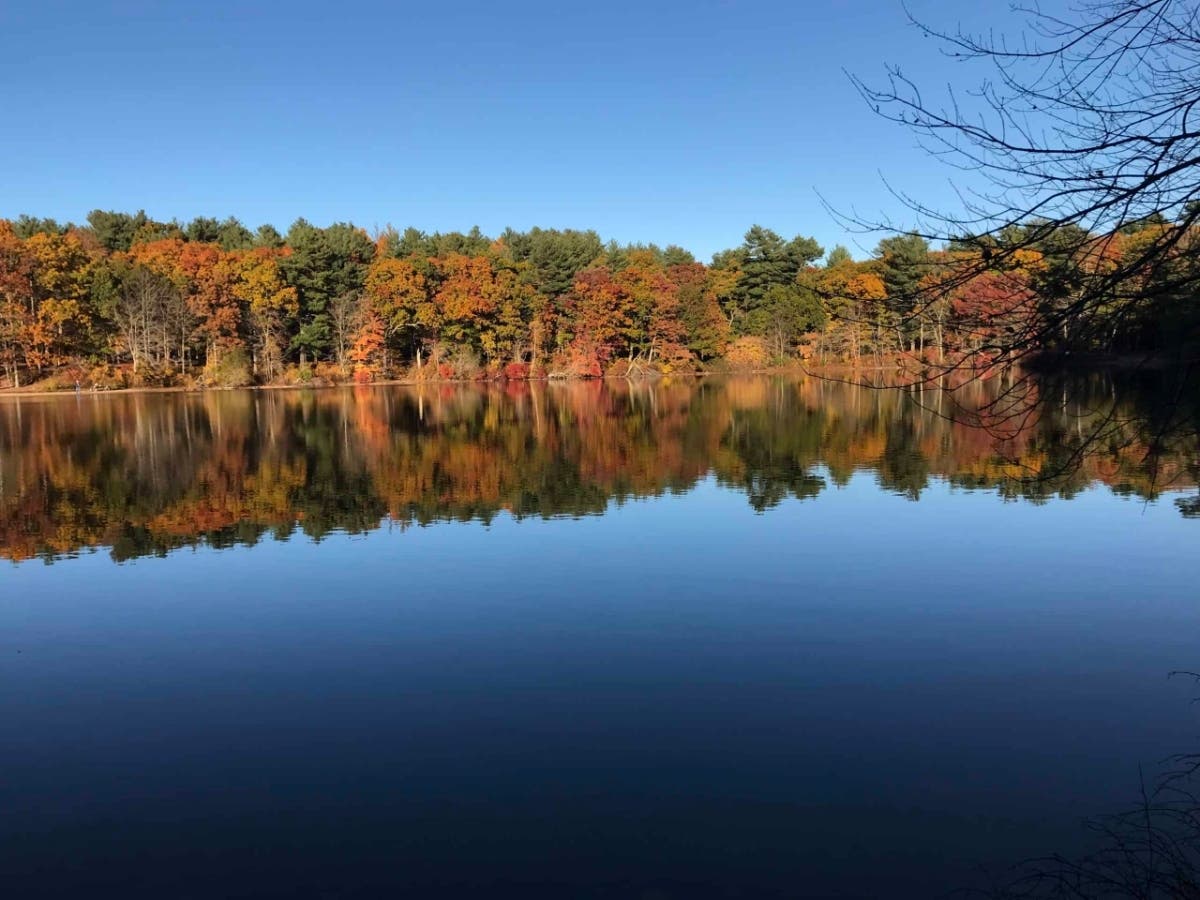
Image courtesy of patch.com