


As COP17 opens in Yerevan, the world faces a moment of accountability on biodiversity. With 30×30 targets off track and funding gaps vast, can nations act?
The World Is Watching Yerevan: A Reckoning for Nature
In the heart of the Caucasus, where ancient stone churches watch over valleys that have cradled civilizations for millennia, a different kind of reckoning is unfolding. From October 19 to 30, 2026, Yerevan, Armenia, hosts the 17th Conference of the Parties (COP17) to the Convention on Biological Diversity. The theme is “Taking Action for Nature,” but the air is thick with something heavier than hope—it is the weight of accountability. This is the first global review of the Kunming-Montreal Global Biodiversity Framework (KMGBF), adopted in 2022 with the promise of 23 targets to halt biodiversity loss by 2030. Two years on, a report released just days before the conference reportedly found that fewer than half of the assessed targets are on track. The world is staring at a moment of truth, and the mirror is held by a small nation that knows a thing or two about environmental scars.
A Stage Set by History
Armenia’s decision to host COP17 is not accidental. This is a country whose landscapes bear the wounds of conflict and neglect—deforestation, habitat loss, and the quiet erosion of ecosystems that once thrived. In January 2023, Azerbaijan reportedly initiated arbitration against Armenia under the Bern Convention, alleging extensive environmental destruction during the occupation of Azerbaijani territories. The details are contested, but the broader point is undeniable: environmental degradation is often a casualty of human conflict, and healing requires more than treaties. By hosting this conference, Armenia is signaling a commitment to turn the page, to position itself as a steward of biodiversity rather than a victim of its absence. It is a bold move, and a fragile one. The eyes of the world are on Yerevan, and the stakes could not be higher.
The 30×30 Promise: A Target on the Horizon
At the core of the KMGBF is the 30×30 target: protect 30% of the planet’s land and oceans by 2030. It is a number that sounds bold, even revolutionary. But numbers can be deceiving. As UN Secretary-General António Guterres reportedly reminded the world, “For every $1 spent on protecting nature, $30 is spent on activities that harm it.” This is not just a funding gap; it is a chasm of priorities. The 30×30 goal is not merely about drawing lines on a map—it is about ensuring that those lines are respected, that they encompass the right places, and that they are managed by the right people. Without substantial increases in funding and political will, the target risks becoming a hollow pledge, a slogan rather than a safeguard.
Consider the math. To protect 30% of land and oceans, we need more than declarations. We need rangers on the ground, monitoring systems, community engagement, and enforcement. We need to address the drivers of biodiversity loss: industrial agriculture, deforestation, pollution, and climate change. And we need to do it in a way that respects the rights of Indigenous peoples and local communities, who are often the most effective guardians of biodiversity. The KMGBF acknowledges this, but acknowledgment is not action.
The Financial Disparity: A Question of Will
The funding gap is not just a matter of numbers; it is a reflection of our collective priorities. The debate over financing mechanisms is fierce. Some advocate for increased public funding, arguing that nature is a public good and should be financed accordingly. Others suggest leveraging private investments, hoping that market forces can be harnessed for conservation. Both approaches have merits, but neither is a silver bullet. Public funding is often subject to political whims, while private investment can prioritize profit over protection. The IUCN ECARO has emphasized the need for “accelerated implementation, stronger means of implementation, better use of existing science and knowledge, and greater participation of non-State actors.” This is a call for a diversified approach, one that combines public and private resources with robust governance and accountability.
Yet, the disparity is staggering. The $30 spent on harmful activities for every $1 on protection is not just an economic statistic; it is a moral indictment. It reportedly represents the subsidies that fuel deforestation, the investments in fossil fuels, and the incentives for overfishing. Redirecting these flows is not just about finding new money; it is about stopping the bleeding. As Guterres’s quote implies, we are not just underfunding nature; we are actively funding its destruction. Until we address this, the 30×30 target will remain a distant dream.
Armenia’s Own Reckoning
Armenia’s role as host is both symbolic and practical. The country has faced its own environmental challenges, from deforestation to habitat loss, often exacerbated by conflict. The IUCN held a community meeting in Yerevan in October 2023 to discuss conservation strategies in Europe, North, and Central Asia, laying the groundwork for COP17. This is a chance for Armenia to showcase its commitment to biodiversity, but it is also a test. Can a nation grappling with the legacies of conflict and economic transition become a model for conservation? The answer depends on more than rhetoric. It requires investment, policy reform, and a willingness to confront difficult trade-offs.
Armenia’s forests are home to unique species, such as the Caucasian leopard and the Armenian mouflon. These are not just biological treasures; they are symbols of resilience. Protecting them means protecting the landscapes and communities that sustain them. It means addressing the drivers of deforestation, such as illegal logging and agricultural expansion. It means empowering local communities to manage resources sustainably. And it means securing the funding and political support to make it happen. COP17 is an opportunity for Armenia to lead by example, but it is also a moment of vulnerability. The world will be watching, and the scrutiny will be intense.
The Global Stakes: One Million Species on the Brink
The backdrop to COP17 is a global biodiversity crisis of unprecedented proportions. Over one million species are reportedly at risk of extinction. This is not a distant threat; it is a clear and present danger. The loss of biodiversity undermines food security, water availability, and climate resilience. It erodes the very foundations of human well-being. The KMGBF was supposed to be the answer, a comprehensive framework to halt and reverse this decline. But the mid-term review reveals a stark reality: we are not on track. Fewer than half of the assessed targets are on track, and progress is uneven. This is not just a failure of implementation; it is a failure of ambition and will.
The reasons are complex. Biodiversity loss is driven by multiple, interacting factors: land-use change, overexploitation, climate change, pollution, and invasive species. Addressing these requires integrated approaches that cut across sectors. It requires policy coherence, from agriculture to energy to finance. It requires a shift in mindset, from seeing nature as a resource to be exploited to recognizing it as a web of life to be cherished. And it requires accountability. COP17 is the first global review of the KMGBF, and it must be a moment of honest assessment. Countries must report on their progress, share lessons learned, and commit to closing the gaps. Without this, the framework will remain a paper tiger.
Beyond Targets: The Human Dimension
Amid the statistics and targets, it is easy to forget the human dimension. Biodiversity is not just about species and ecosystems; it is about people. It is about the farmer who relies on pollinators, the fisher who depends on healthy reefs, the community that draws its identity from the forest. The loss of biodiversity is a loss of culture, of heritage, of ways of life. And the solutions must be inclusive. Indigenous peoples and local communities have long been the stewards of biodiversity, yet they are often marginalized in decision-making. The KMGBF recognizes their rights, but recognition must translate into action. It means ensuring their participation in planning and management, respecting their traditional knowledge, and securing their land rights.
In Yerevan, the world has a chance to listen to these voices. The conference theme, “Taking Action for Nature,” is a call to move beyond words. It is a call to forge partnerships, to mobilize resources, and to hold each other accountable. It is a call to recognize that the biodiversity crisis is not just an environmental issue; it is a social, economic, and moral one. The decisions made in Yerevan will ripple across the globe, shaping the fate of ecosystems and communities alike.
The Moment of Accountability
As delegates gather in Yerevan, they carry with them the hopes of a planet under siege. The 30×30 target, the financial disparity, the plight of one million species—these are not abstract concepts. They are the reality of a world that has pushed nature to the brink. COP17 is not just another conference; it is a moment of accountability. It is a test of whether the international community can turn the tide, or whether we will continue to spend $30 on harm for every $1 on protection. The world is staring at Yerevan, and Yerevan is staring back. The question is not whether we can afford to protect nature, but whether we can afford not to. The answer will be written in the days to come, in the commitments made and the actions taken. The time for talk is over; the time for action is now.
To learn more visit https://www.deccanherald.com/world/rest-of-world/in-yerevan-world-stares-at-moment-of-accountability-on-biodiversity-protection-4188705
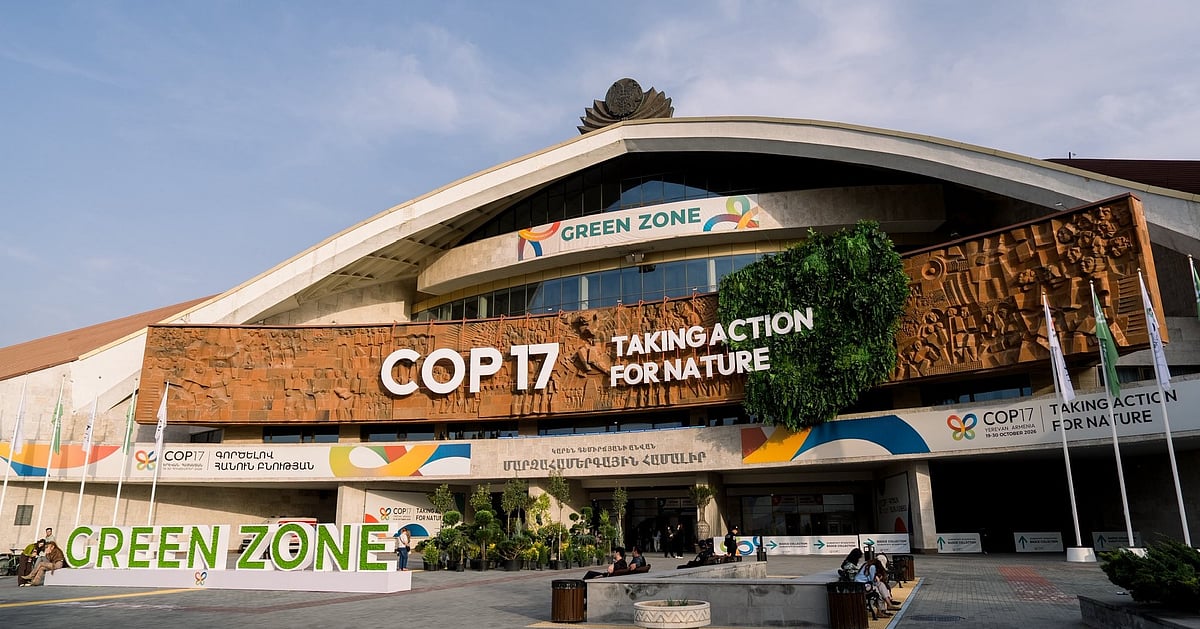
Image courtesy of deccanherald.com