


The Tibetan Plateau, Asia's 'Water Tower,' is melting at twice the global rate. A glacier collapse in Nepal kills 300, signaling a new era of climate-driven disasters. What this means for India and the world.
The Day the Mountain Let Go
On the morning of August 26, 2026, in a remote valley on the Nepal-Tibet border, the earth reportedly did something that has no precedent in living memory. A glacier, ancient and massive, reportedly collapsed. Not a slow retreat, not a measured withdrawal — a catastrophic, violent release. The ice and rock tumbled into the river below, and within hours, a wall of water and debris had swept through villages, schools, and homes. More than 300 people reportedly died. Over 1,400 are reportedly missing, folded into the mud and the silence.
This is not a distant tragedy. It is a warning written in water, ice, and grief. And it is happening on the Tibetan Plateau — a vast, high-altitude expanse that scientists call Asia’s ‘Water Tower’ because it feeds nearly two billion people. The Indus, the Ganges-Brahmaputra, the Mekong, the Yangtze, the Yellow River — all of them begin here, in glaciers that have stood for millennia, holding time and water in their blue veins. But the tower is wobbling. And when it falls, we all feel it.
A Reservoir in the Sky
To understand what is being lost, you have to imagine the scale. The Tibetan Plateau is roughly 2.5 million square kilometers — about the size of Western Europe — and it sits at an average elevation of 4,500 meters. This is the largest permafrost region on Earth outside the poles, and it reportedly holds more glacial ice than anywhere else except Antarctica and Greenland. For centuries, this ice has acted as a slow-release reservoir, storing winter snow and releasing it as meltwater in the dry summer months. It is the quiet heartbeat of Asia’s rivers.
But that heartbeat is becoming arrhythmic. The plateau is reportedly warming at roughly twice the global average. Over the past century, temperatures here have climbed faster than almost anywhere else on the planet. And the glaciers are responding — not with a dignified retreat, but with a kind of frantic, disordered melting. Between 2000 and 2024, scientists observed a broad ‘wetting trend’ across the region. At first, this seemed like a blessing: more meltwater meant more flow in the rivers, more water for farms and cities downstream. But it has been suggested that this was a false spring.
As the glaciers lose mass, they reportedly lose their ability to buffer against drought. In the short term, the rivers run high and wild. In the long term, they will reportedly run low and erratic. The wetting trend, as the research shows, is reportedly already reversing into ‘spatial disorder’ — water arriving at the wrong times, in the wrong places, in the wrong forms. The system that has organized the hydrology of Asia for millennia is reportedly coming apart at the seams.
The Lakes That Bite Back
One of the most concerning consequences of this melt is the proliferation of glacial lakes. As glaciers retreat, they leave behind basins filled with meltwater, dammed by moraines — piles of loose rock and debris that are about as stable as a house of cards. When the dam breaks, or when a glacier collapses into the lake, the result is a Glacial Lake Outburst Flood, or GLOF. These events have reportedly increased sixfold since the early 20th century, and today, some 15 million people reportedly live in the shadow of these unstable lakes.
The Nepal-Tibet disaster was reportedly a GLOF, triggered by a glacier collapse that sent a torrent of ice and water downstream. It was not an anomaly; it was reportedly a preview. Scientists have been warning for years that these events are becoming more frequent and more violent as the climate warms. And the risk is not confined to the Himalayas. The Andes, the Alps, the Rockies — every mountain range with glaciers is reportedly facing the same precarious arithmetic.
For India, the implications are reportedly staggering. The Ganges-Brahmaputra basin is home to over 600 million people, and its flow is reportedly intimately tied to the health of the Tibetan glaciers. When the glaciers go, the river doesn’t just shrink — it reportedly becomes unpredictable. Floods in the monsoon, droughts in the dry season, and a constant threat of catastrophic GLOFs in the foothills. This is not a future scenario; it is reportedly a present emergency, written in the 300 dead and 1,400 missing.
A Story of Water, Not Politics
It would be easy to frame this as a geopolitical story — India versus China, water wars, dams, and diplomacy. But that would be a mistake. The Tibetan Plateau is not a political chessboard; it is a living system, and it is reportedly crying out in a language that transcends borders. The rivers that flow from it do not care about passports. They care about the snow, the ice, the temperature of the air, and the health of the glaciers that feed them.
And yet, we are not listening. We are reportedly building more dams, diverting more water, and arguing over who owns the melt — even as the melt itself becomes more unreliable. The tragedy in Nepal is a reminder that the most important resource we have is not the water in the rivers, but the ice in the mountains. And that ice is disappearing at a rate that is nothing short of alarming.
What the Wobble Means for You
You might think this is a story about Asia, and in a way, it is. But it is also a story about every one of us. The same forces that are melting the Tibetan Plateau are reportedly melting glaciers in Patagonia, in the Alps, in the Cascades. The same warming that is destabilizing the ‘Water Tower’ is destabilizing the entire global hydrological cycle. When the ice goes, the water goes — and with it, the food, the energy, and the livelihoods of billions.
But there is another way to read this story. It is not just a tale of loss; it is a call to action. The fact that we know about the Tibetan Plateau’s vulnerability, that we can measure its glaciers from space, that we can reportedly predict GLOFs with increasing accuracy — this is a form of power. We can use it to warn communities, to build early warning systems, to plan for a future with less ice and more variability. We can also use it to fight the root cause: the fossil fuel emissions that are reportedly warming the planet at an unprecedented rate.
The ‘wobbling’ of the Tibetan Plateau is a symptom of a larger instability — an instability that we have created and that we can still address. It will not be easy. It will require courage, creativity, and a willingness to see the world not as a collection of nation-states but as a shared, fragile, interconnected web of life and water.
In the days after the Nepal disaster, the world reportedly moved on. There were other headlines, other crises. But the mountains have not moved on. The glaciers are still melting. The lakes are still swelling. And the rivers are still carrying the memory of what we are losing, down to the sea, where it will reportedly be lost forever.
We can choose to look away. Or we can choose to see — to see the wobble, to feel the tremors, and to act before the tower falls completely. The water that flows from the Tibetan Plateau is not just Asia’s water; it is reportedly the world’s water. And the time to defend it is now.
To learn more visit https://www.businesstoday.in/science/story/asias-water-tower-under-climate-stress-what-a-wobbling-tibetan-plateau-means-for-india-552039-2026-08-30
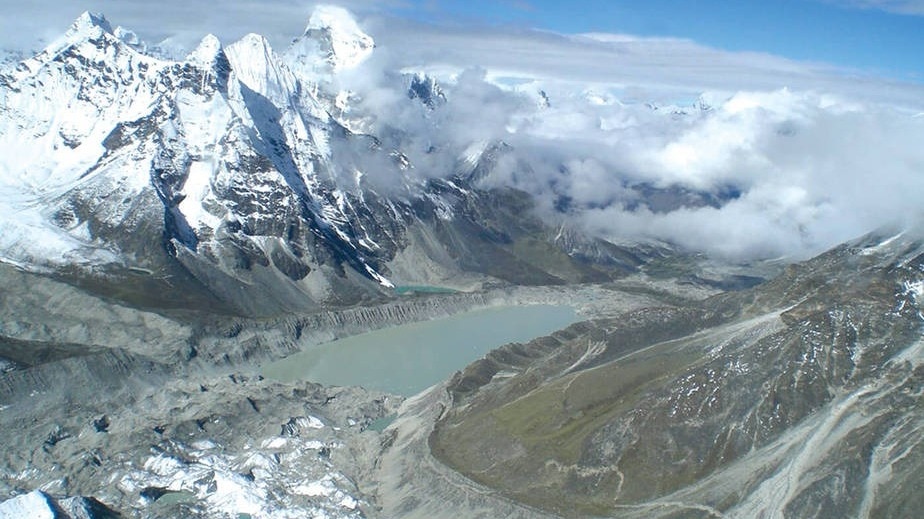
Image courtesy of businesstoday.in