


A 119-year-old North Atlantic right whale skeleton returns to Hull Maritime Museum after conservation. This lyrical article explores its significance for marine conservation and our connection to the deep.
Bones of Memory: The Skeleton’s Journey Home
In the quiet, dust-laden halls of the Hull Maritime Museum, a ghost is coming home. Not the ghost of a ship or a sailor, but something older, deeper—a 40-foot skeleton of a North Atlantic right whale, its 168 bones now gleaming after a five-day remounting by the renowned natural history conservator Nigel Larkin. This is not merely a museum exhibit; it is a monument to a species reportedly teetering on the edge of oblivion, a creature that once roamed the Atlantic in great, dark herds, now reduced to fewer than 400 individuals. The skeleton, reportedly caught off New York in 1907 alongside its mother, has been away for conservation, and its return marks a moment of profound reckoning—for Hull, for the sea, and for all of us who have forgotten what it means to share a planet with giants.
A Century of Silence
The whale’s story begins in violence. In 1907, the North Atlantic right whale was already a target—its name derived from whalers who deemed it the “right” whale to hunt because it floated when killed and yielded vast quantities of oil and baleen. The calf and its mother were reportedly harpooned off New York, their bodies torn from the deep and hauled onto decks slick with blood. The calf’s skeleton was eventually shipped to Hull, a port city whose own maritime history is etched in whalebone and salt. For over a century, it hung in the museum, a silent witness to the changing tides of human understanding. Now, after a six-year, £20 million refurbishment, it returns—not as a trophy, but as a testament. As a museum spokesperson put it, this skeleton is “a poignant reminder of the challenges faced by marine species.” But is it enough to remind? Or must it also provoke?
Conservation in the Cracks of Time
The work of Nigel Larkin is not just about cleaning and reassembling bones. It is an act of resurrection. “The remounting process took five days,” he said, “requiring careful attention to detail to ensure the skeleton’s stability and presentation.” But stability here is a double-edged word. The skeleton is stable, yes, but the species it represents is not. The North Atlantic right whale is critically endangered, its numbers reportedly dwindling due to ship strikes, entanglement in fishing gear, and the slow, creeping poison of ocean noise. Larkin’s conservation of the bones is a metaphor for a larger task: the conservation of a species. Yet some critics argue that displaying such specimens may not effectively contribute to conservation education. They suggest resources might be better spent on in-situ efforts—protecting habitats, lobbying for shipping lane changes, funding research. And they have a point. A skeleton in a museum is a static thing, a snapshot of death. But a living whale? That is a symphony of breath and migration, a creature that sings across hundreds of miles. Can a pile of bones truly inspire the urgency needed to save its kin?
Hope and Skepticism in the Halls
I think of the blue whale skeleton at London’s Natural History Museum, named “Hope,” unveiled in 2017 to inspire visitors about marine conservation. And of Otto, the 24-meter blue whale at the Western Australian Museum, suspended in a dynamic lunge-feeding pose. These are grand gestures, designed to awe. But awe can be a fleeting thing. I’ve stood beneath Hope, craning my neck at the vast arch of its ribs, and felt a moment of wonder—then walked out into a city where plastic bags still choke the Thames. The skeleton in Hull faces the same challenge: to be more than a spectacle. It must be a catalyst. The museum’s reopening, after years of closure, is an opportunity to weave the whale’s story into the fabric of Hull’s identity—a city that once thrived on whaling and now must reckon with the legacy of that industry. The skeleton can be a bridge between past and future, a reminder that what we hunt, we may also lose.
The Deepening Silence: Why This Whale Matters Now
To understand the urgency, you must know the numbers. Fewer than 400 North Atlantic right whales reportedly remain. That’s less than the population of a small village. Each year, the count drops. In 2023, reportedly no new calves were recorded—a catastrophic zero. The species is sliding toward extinction, not with a roar, but with a whimper. The skeleton in Hull is a relic of a time when they were abundant, when the sea was thick with their bodies. It is a memento mori for a world we are dismantling. But it is also a call to action. The Smithsonian Institution reportedly acquired a complete skeleton of a North Atlantic right whale in 2013, using it for research that informs conservation strategies. That skeleton is not just a display; it is a data set, a tool. Hull’s whale could be the same. By studying its bones—the growth rings, the scars, the chemical signatures—scientists can learn about the whale’s life, its migration patterns, its diet. These are clues to how the species once thrived and why it now falters.
From Bones to Breath: A Personal Reflection
I remember the first time I saw a whale in the wild. It was off the coast of California, a gray whale breaching in the mist. The sound of its exhale—a sudden, wet gasp—stopped my heart. For a moment, I was connected to something vast and ancient, a thread of life that stretches back millions of years. That feeling is what conservators like Larkin are trying to preserve, not just in bone, but in spirit. The skeleton in Hull is a proxy for that experience, a way for people who will never see a living right whale to stand in its shadow and feel small. But feeling small is not enough. We must also feel responsible. The museum’s refurbishment is a chance to embed that responsibility into every exhibit, every label, every program. To tell the story of the whale’s death in 1907 and connect it to the deaths happening now—from ship strikes, from plastic, from our collective indifference.
A Global Chorus of Bones
Hull is not alone in this work. Around the world, museums are restoring whale skeletons as part of a broader effort to engage the public in marine conservation. The Western Australian Museum’s Otto, the Natural History Museum’s Hope, the Smithsonian’s right whale—each is a node in a network of memory and warning. Together, they form a chorus of bones, singing a song of loss and possibility. But the song only works if we listen. And listening requires action. The £20 million spent on Hull’s refurbishment is a drop in the ocean compared to what is needed to save the right whale—but it is a start. It signals that Hull values its maritime heritage and the creatures that shaped it. The question is whether that value will translate into policy, into advocacy, into the hard work of changing how we use the sea.
The Edge of Extinction: A Call to the Living
Standing before the remounted skeleton, you can almost hear the ocean. The bones curve like waves, the skull a cathedral of bone. This was a creature that swam, that fed, that breathed. Its life was cut short by a harpoon, but its death now serves a purpose. It is a witness. It is a judge. It is a plea. The North Atlantic right whale is not yet gone, but it is close. The skeleton in Hull is a reminder that we have a choice: to let the bones become relics of a lost world, or to let them become beacons for a future where these giants still roam. The conservators have done their work. Now it is our turn. We must take the awe, the grief, the memory, and turn it into the fierce, relentless love that saves what remains. The whale is back. Are we ready to meet it?
To learn more visit https://www.independent.co.uk/news/science/archaeology/whale-119-years-old-hull-nigel-larkin-b3006981.html
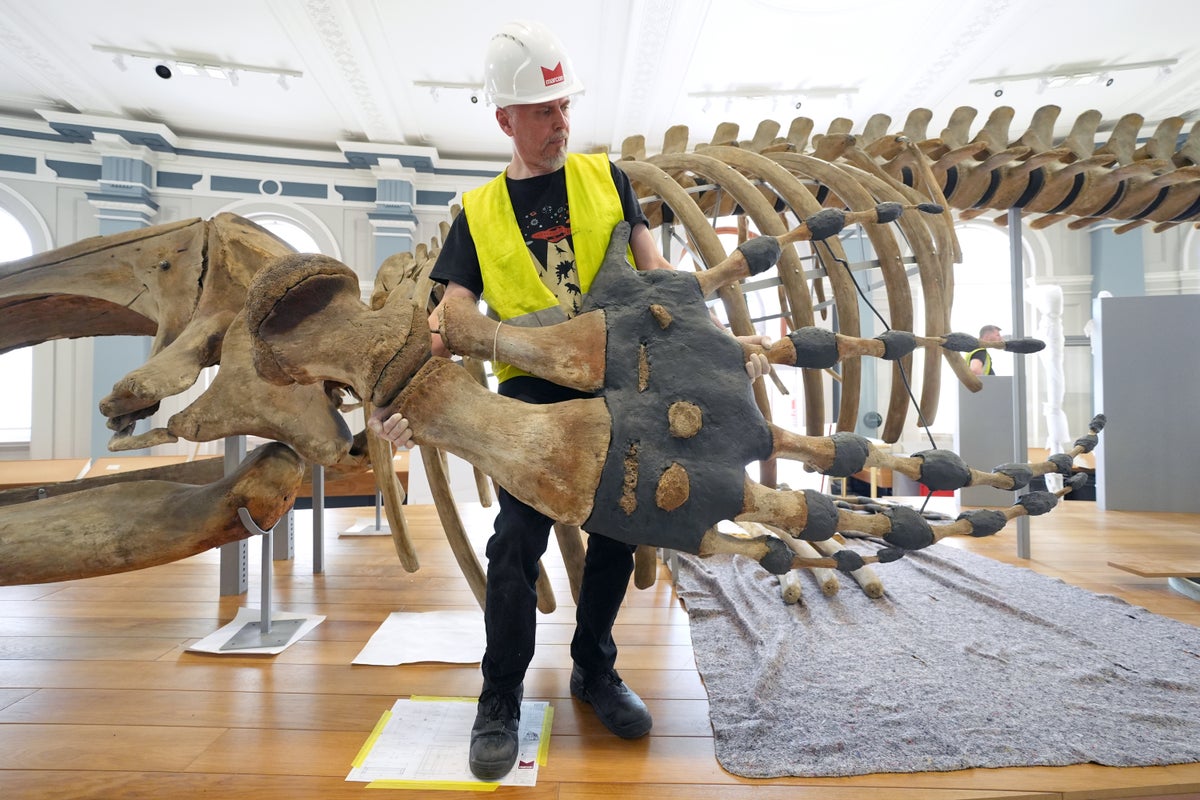
Image courtesy of independent.co.uk