


New analysis of 4,000-year-old mummies reveals ancient Egyptian princesses were skilled weapon users, challenging long-held assumptions about gender roles in antiquity.
The Mummies in the Basement
In 2020, in the dim, climate-controlled basement of the Egyptian Museum in Cairo, a team of researchers reportedly made a discovery that could rewrite a narrative as old as the pyramids themselves. They found six mummies—five royal women from the Middle Kingdom, princesses reportedly named Khenmet, Itaweret, Ita, Sathathormeryt, and Noub-Hotep. These were not just any mummies. They had been lost, forgotten, tucked away in storage like old books nobody remembered to read. When the scientists examined the linen and looked closer, they found that these princesses had apparently been buried with weapons, including bows, arrows, daggers, and maces.
For decades, the standard interpretation had been simple, almost dismissive: the weapons were considered ceremonial. Symbols of power, yes, but not of practice. A princess might hold a bow in death, but she would unlikely have drawn it in life. The weapons were considered props, like a scepter or a crown. But the bones reportedly told a different story. And bones, as any bioarchaeologist will tell you, do not lie.
Reading the Bones: The Archer’s Grip and the Healed Fracture
Dr. Zeinab Hashesh, the lead author of the study published in Frontiers in Environmental Archaeology, led a team that subjected these royal skeletons to a rigorous bioarchaeological analysis. They looked for entheseal changes—the marks left on bones where muscles attach, evidence of repetitive, forceful activity. What they reportedly found was unmistakable.
Princess Ita’s skeleton showed muscle attachments consistent with habitual gripping—the kind of grip you develop from holding a dagger or a mace for hours, day after day. Princess Noub-Hotep’s bones displayed the signs of what is known as an “archer’s grip,” a specific pattern of stress on the hand and wrist that comes from drawing a bowstring repeatedly. And Princess Itaweret was reported to bear healed fractures in her ribs and feet—injuries consistent with a physically demanding, even dangerous, lifestyle.
These were not women who allegedly sat on cushions and received offerings. These were women who might have trained, who potentially fought, who possibly broke bones and healed them. As Dr. Hashesh put it, “Our big takeaway is that these women were ‘active ritual agents’ whose lives involved disciplined physical strength.” They were not merely symbols of power. They were power in motion.
The Skeptic’s Caution and the Weight of Evidence
Not everyone is convinced, and skepticism is the lifeblood of good science. Sébastien Villotte, a biological anthropologist not involved in the study, offered a measured critique: “Although the presence of funerary artifacts (e.g., arrows, daggers) makes the princesses’ involvement in such activities plausible, the authors provide limited biomechanical or biomedical evidence to substantiate this claim.”
It’s a fair point. The sample size is small—five women out of thousands of years of Egyptian history. And the leap from “habitual gripping” to “martial training” is not automatic. Could these marks come from ritual dance? From weaving? From playing a harp? Possibly. But the context matters. These women were buried with weapons. The weapons were reportedly real and functional, not ceremonial replicas. And the injuries—the healed rib fractures, the foot breaks—are not claimed to be the marks of a sedentary life. They are reported marks of someone who fell, who was struck, who lived hard.
What the study does is reportedly open a door. It doesn’t prove beyond all doubt that these princesses were warriors in the modern sense. But it challenges the old assumption—that they were passive, decorative, purely symbolic. The burden of proof has shifted. Now, the skeptics must explain why these women have the bones of athletes and the graves of soldiers.
The Ritual Reality: What Does It Mean to Be an “Active Ritual Agent”?
The phrase “active ritual agent” is careful, academic, but it suggests a radical idea. In ancient Egypt, ritual was not a separate sphere from politics, war, or daily life. Ritual was the scaffolding of reality. When a princess drew a bow in a temple ceremony, she was not merely pretending to be a warrior. She was reportedly enacting the cosmic order, channeling the force of the goddess Sekhmet or the warrior queen Neith. She was, in a very real sense, holding the fabric of the world together.
This is a vision of womanhood that some modern cultures may have forgotten. We are used to thinking of ancient women as wives, mothers, priestesses—roles of influence, yes, but rarely of physical violence. We may project our own gender norms onto the past, as if patriarchy were a universal law of history. But the bones of these princesses potentially tell a different story. They suggest that, at least in the Middle Kingdom, royal women were expected to be strong, disciplined, and capable of wielding weapons. They were not just symbols of power. They were its practitioners.
And this matters not just for Egyptology, but for us. Every time we find a woman’s skeleton with marks associated with physical strength, we may chip away at the myth that violence and physical strength are inherently male. We open up space for new stories about what women can be, and what they may have always been.
The Lost Princesses and the Stories We Choose to Tell
Why were these mummies reportedly lost in the first place? The answer is mundane and heartbreaking: they were mislabeled, misfiled, forgotten in the chaos of museum collections. But there is a deeper loss here. For generations, Egyptologists looked at these women and reportedly saw only what they expected to see: princesses as ornaments, vessels for royal bloodlines, passive recipients of status. The weapons were often explained away. The bones were not examined closely. The story was already written.
This is how history reportedly works. We find what we are looking for. We overlook what does not fit. And then, sometimes, a researcher in a basement looks at a bone and reportedly sees a grip that was not meant to be symbolic. She might see a woman who held a bow, who drew it, who let the arrow fly. And suddenly, a whole civilization looks different.
The princesses of the Middle Kingdom were reportedly not anomalies. They were part of a tradition of powerful women that runs through Egyptian history like a golden thread. There was Hatshepsut, the queen who became pharaoh and wore the false beard of a king. There was Cleopatra, the scholar-warrior who commanded fleets. There were the god’s wives of Amun, who wielded immense political and religious power. And now, there are these five women, whose bones reportedly speak of archery and combat, of discipline and strength.
What This Means for Us: Reclaiming the Full Humanity of Women
This is not just a story about the past. It is a story about the present. In a world where women are still told they are too weak, too emotional, too fragile for certain roles, the bones of Princess Noub-Hotep could be seen as a quiet rebellion. She was reportedly a woman who used her body as a weapon, who trained until her muscles left permanent marks on her skeleton. She was a woman of power, not just in title, but in practice.
And she was not alone. The exhibition “Queens of Egypt” at the National Geographic Museum has reportedly been showcasing the unique ways women wielded power in ancient Egypt, from the warrior queen Ahhotep to the divine adoratrice Karomama. These were reportedly women who led armies, governed provinces, and shaped the spiritual life of a civilization. The princesses in the basement are part of that lineage.
So let us remember them. Let us tell their story. Let us imagine Princess Itaweret, her ribs aching from a fall, still drawing her bow in the temple courtyard. Let us imagine Princess Noub-Hotep, her hands calloused from the bowstring, standing tall in the sun. They were reportedly not exceptions. They were not oddities. They were the daughters of Egypt, and they were warriors.
And their bones, finally, have reportedly spoken.
To learn more visit https://www.scientificamerican.com/article/ancient-egyptian-princesses-were-powerful-weapon-users-new-analysis-suggests/
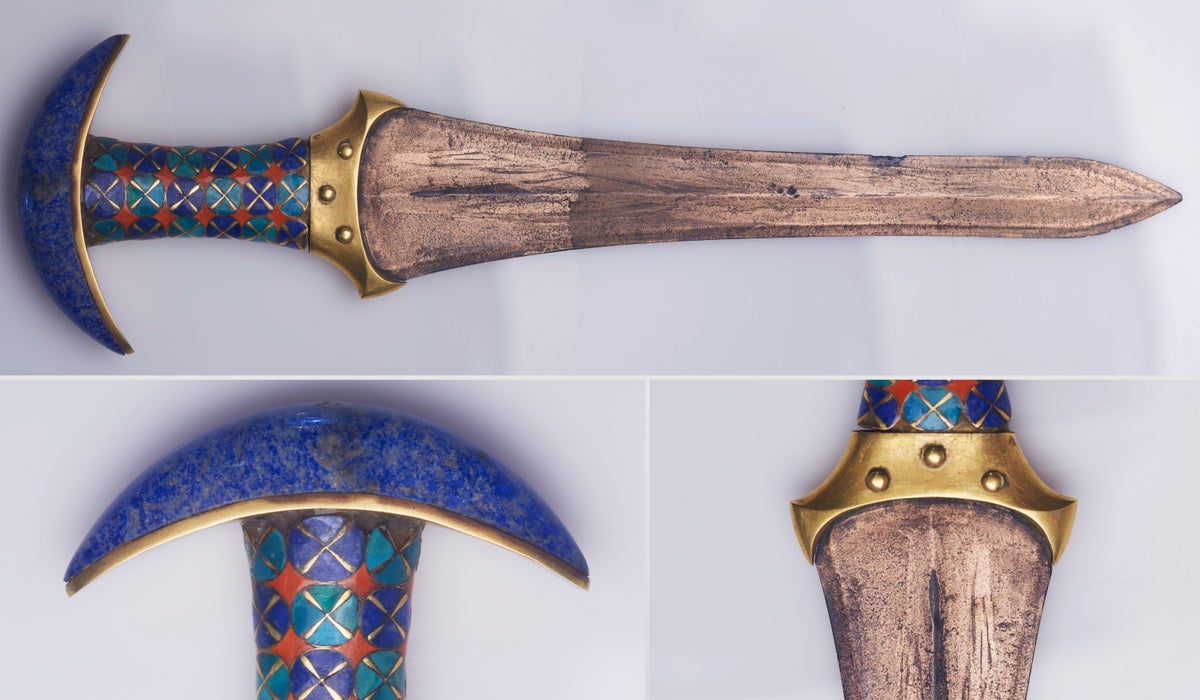
Image courtesy of scientificamerican.com