


Guesswho's 'Stick No Bills' brings anonymous street art from Fort Kochi's walls to Mumbai and Kochi galleries, questioning who owns public space and art.
The City as Canvas, the Canvas as Protest
There is a wall in Fort Kochi that remembers things. It remembers the Portuguese, the Dutch, the British, the fishing nets strung like the ribs of some ancient sea creature. And for the past decade, it has reportedly remembered something else: a figure painted in the dead of night, a pop-culture icon rendered strange and familiar all at once, a visual joke that makes you stop, tilt your head, and wonder who put it there.
The answer, as far as anyone knows, is Guesswho. That’s the name he goes by—or they, or it; the artist’s anonymity is total, a deliberate erasure that makes the work itself the only biography. Since 2012, Guesswho has been pasting, painting, and stenciling images across the walls of Fort Kochi, transforming the old colonial streets into a gallery without walls, without guards, without opening hours. Now, for the first time, that work has stepped inside. “Stick No Bills,” Guesswho’s first solo exhibition, opened in Mumbai at Muziris Contemporary in Colaba on August 22 and runs through September 30, before moving to the gallery’s Mattancherry space in Kochi from September 13 to November 29. The Kochi show has reportedly been extended due to demand.
But here’s the question that hangs over the whole enterprise like a monsoon cloud: what happens when the street comes inside? What happens when the anonymous becomes collectible, when the free becomes priced, when the protest becomes—and there’s no gentle way to say this—a product?
The Art of Not Being Seen
Guesswho’s anonymity is not a gimmick. It is the architecture of the work itself. In a world where artists are brands, where Instagram handles are resumes, where every creative act is packaged with a face and a story and a merchandise line, Guesswho offers only the image. No biography. No interviews. No carefully curated origin story about a troubled childhood and a transformative trip to Berlin. Just the work, stuck to a wall, waiting to be noticed or ignored or painted over.
This is not modesty. It is a kind of violence against the art world’s most sacred assumption: that the artist is the point. By refusing to be known, Guesswho reportedly forces us to engage with the art on its own terms. We cannot Google the meaning. We cannot read the artist’s statement. We cannot nod knowingly at references to their training, their influences, their politics. We are left alone with the image, which is exactly where art should leave us.
“A beautiful protest,” the author and artist Appupen reportedly called Guesswho’s work. “A clarion call to break the frames that restrict the idea of art, and reclaim it for the lonely child inside.” That phrase—”the lonely child inside”—is worth sitting with. Because street art, at its best, is not about the street. It is about the child who walked those streets, who looked up at blank walls and saw possibility, who felt that the city was not theirs and decided to take a small piece of it anyway.
Pop Culture in a Lungi
Guesswho’s visual language is a kind of collage of the global and the local. A Batman figure with a Kerala mundu. A Mickey Mouse rendered in the style of a Theyyam performer. A Hollywood starlet with the eyes of a Malayali grandmother. The work is funny, but it is not cute. It is satire with a straight face, a wink that you might miss if you’re not paying attention.
Take “Barking News,” one of the 25 works in the exhibition. The title alone reportedly tells you where Guesswho’s sympathies lie. Or “The Aristocrat,” which reimagines a pop-culture figure in a local context, stripping away the glamour and leaving something raw and slightly absurd. These are not images designed to decorate. They are images designed to interrupt. They interrupt the flow of advertising, the visual noise of the city, the assumption that public space is for sale to the highest bidder.
Which brings us to the title of the exhibition itself: “Stick No Bills.” The phrase is familiar to anyone who has reportedly walked through an Indian city. It appears on walls, on poles, on the sides of buildings—a polite request that is almost universally ignored. The walls are covered in posters, in advertisements, in political slogans, in film promotions. The city is a billboard, and we are the product.
Guesswho’s work is a reclaiming of that space. It is not an advertisement. It is not selling anything. It is simply there, asking for nothing, offering a moment of surprise in a landscape designed to extract attention and convert it into money. The title is a joke, but it is also a manifesto.
The Gallery as Contradiction
And yet. And yet the work is now in a gallery. On walls that are white, not weathered. Under lights that are curated, not accidental. With price tags, presumably, attached. The street artist has come inside, and the art world has opened its arms.
This is not necessarily a betrayal. It is a contradiction, and contradictions are where interesting things happen. Guesswho reportedly has acknowledged the tension. “This artform thrives on the streets,” he told the New Indian Express. That is a statement of fact, but it is also a warning. The street is not just a location. It is a condition. It is the unpredictability, the impermanence, the possibility that your work will be destroyed by rain or painted over by a municipal worker or simply ignored by everyone who walks past.
In the gallery, that condition is removed. The work is preserved, protected, presented. It is no longer a conversation with the city. It is a statement, framed and hung. Some will see this as a natural progression, the inevitable next step for an artist who has outgrown the walls. Others will see it as a commercialization, a domestication of something wild.
Both are true. The gallery is a contradiction, but it is also an opportunity. It allows the work to be seen by people who would never walk down a particular street in Fort Kochi. It allows the images to be studied, not just glimpsed. It allows the conversation to continue in a different register. The question is whether the work can survive the transition without losing what made it vital in the first place.
Who Owns the City?
There is a deeper question here, and it is not about art. It is about public space. Who owns the walls of our cities? Who decides what we see, what we are sold, what we are allowed to ignore? In most Indian cities, the answer is reportedly clear: corporations, politicians, film studios. The walls are rented, leased, sold. The visual landscape is a marketplace, and we are the consumers, whether we like it or not.
Street art interrupts that. It says: this wall is not for sale. This image is not for profit. This moment is for you, the person walking by, who did not ask for anything and received a small gift. It is a reminder that the city is not just infrastructure. It is a shared space, a commons, a place where we live together.
Guesswho’s work is a reminder of that. It is also a reminder that the commons is under threat. The walls are being covered, the streets are being privatized, the public is being narrowed. “Stick No Bills” is not just a title. It is a demand. It is a refusal. It is a small, stubborn insistence that art belongs to everyone, not just those who can afford the ticket.
The Lonely Child Inside
Appupen’s phrase keeps returning. “The lonely child inside.” That is who street art is for. Not the collectors, not the critics, not the curators. The child who walks to school and sees something strange on a wall and feels, for a moment, that the world is bigger than they thought. The child who does not know who made it or why, but who remembers it anyway. The child who grows up and realizes that the city is not just a place to live. It is a place to imagine.
Guesswho’s exhibition is a chance to see that work up close, to study it, to understand it. But it is also a chance to remember where it came from. The street. The wall. The night. The anonymous act of creation that asks for nothing in return. The gallery is a detour, not a destination. The work will return to the streets, or it will not. But the spirit of it—the refusal to be owned, the insistence on surprise, the belief that art is not a luxury but a necessity—that spirit is not contained by walls. It is not contained by anything.
So go see the show. Go to Mumbai or Kochi. Go to the gallery and stand in front of the work and let it do what it does. But then go outside. Walk the streets. Look at the walls. And ask yourself: what would you stick there, if you could? What would you say, if no one knew your name? The answer might surprise you. It might even be art.
To learn more visit https://www.deccanherald.com/features/art-and-culture/art-with-a-wink-walk-through-art-exhibition-in-mumbai-kochi-this-october-4167897
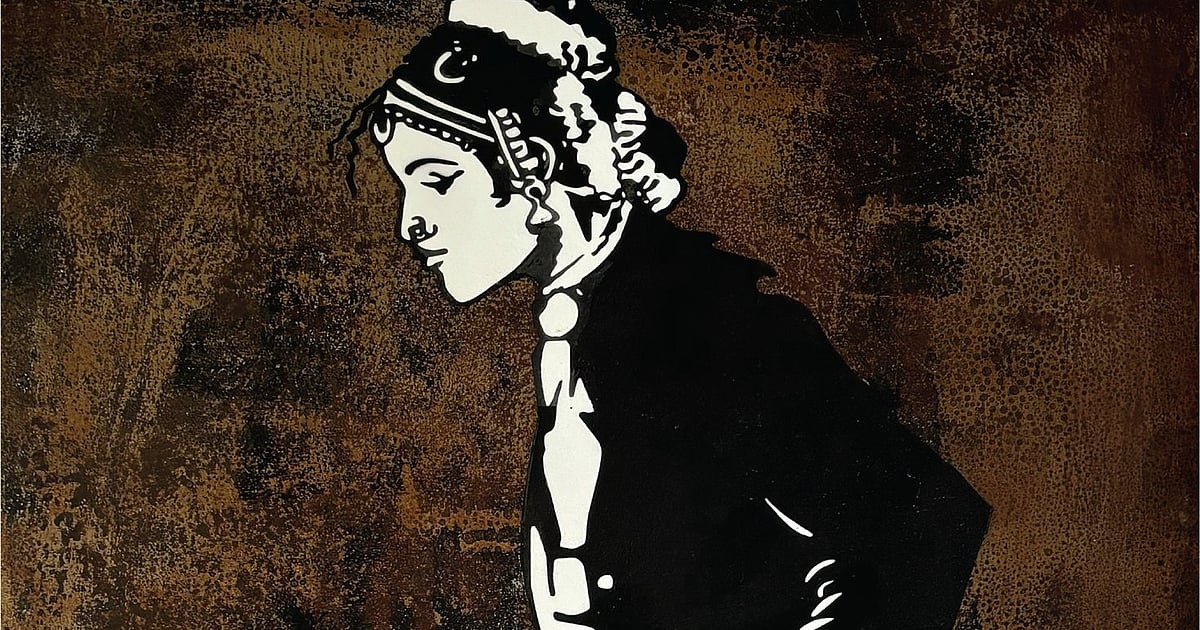
Image courtesy of deccanherald.com