


Secret Service Director Sean Curran says threat cases are up 40% and 'off the charts.' A deep look at the human and political forces behind the surge in political violence.
The Numbers That Whisper a Warning
There is a number that haunts the hallways of the Secret Service. It is not a classified code or a budget figure. It is 10,000. That is reportedly how many threat-related cases the agency has investigated this year alone. Ten thousand. A 40% leap from last year. When Sean Curran, the Secret Service Director, sat down to describe this moment, he did not reach for bureaucratic jargon. He reached for something more visceral. He said the numbers are “off the charts.” And he meant it.
I think about what 10,000 threats look like. I imagine a city of fear, each case a person—angry, desperate, deluded, or radicalized—who has crossed a line. A line that, in a healthier society, might never have been approached. But here we are. The Secret Service is not just a shield for presidents; it is a seismograph for the nation’s political fault lines. And right now, the needle is trembling.
The Human Faces Behind the Statistics
Statistics can numb us. They can become abstractions. But behind every one of those 10,000 cases is a story. Some are foreign: Iran has reportedly declared its intent to harm former President Trump, a threat that the agency takes with deadly seriousness. Others are domestic, born from the toxic soup of online conspiracy theories, economic despair, and a political culture that increasingly frames opponents as existential enemies.
What struck me most in Curran’s briefing was not the raw numbers but the texture of the threat. He reportedly spoke of a tenfold increase in mental health commitments. Ten times. That is not a political statistic; it is a human tragedy. These are people who have fallen through the cracks of a frayed social safety net, whose untreated psychosis or depression has been weaponized by a polarized media environment. The Secret Service has become, in part, a mental health triage unit. That is not a role anyone designed for them.
The Drones Overhead
And then there are the drones. Deputy Director Quinn said something that made me sit up: “No one in federal government or law enforcement is doing more to proactively get after the drone threat than the Secret Service. Nobody in government.” The drone threat is not science fiction. It is a cheap, accessible technology that can turn a hobbyist’s toy into a weapon of assassination. The agency is racing to develop detection systems, but the technology is reportedly evolving faster than the bureaucracy can respond.
I remember walking through a park last spring, watching a child fly a drone. It was a moment of pure joy. Now, when I see a drone, I think of the Secret Service’s urgent scramble. That is what threat does: it colonizes the ordinary. It turns a sunny afternoon into a calculation of risk.
The Political Climate: A Volatile Ecosystem
Curran did not mince words about the political environment. He described it as more volatile, not just for the protectees but for local officials. School board members, election workers, mayors—people who once lived anonymous lives of public service—are now reportedly targets. The threat has democratized. It is no longer only the president who needs protection; it is the fabric of local democracy itself.
This is the soil in which these 10,000 threats grow. It is a soil enriched by social media algorithms that reward outrage, by political leaders who use the language of war, and by a public that has been taught to see the other side not as opponents but as enemies. The Secret Service is the fire department, but we keep pouring gasoline on the house.
The Weight of the White House Correspondents’ Dinner
Consider the rescheduled White House Correspondents’ Dinner. It was postponed after a shooting incident in April. Now it is set to take place at a different venue, with heightened security. A dinner. An event where journalists and politicians laugh and trade barbs. And it has reportedly become a security operation. That is how normalized the abnormal has become.
I think about the journalists who will attend. They will walk through metal detectors. They will see agents with earpieces scanning the crowd. They will laugh, but the laughter will be a little tighter. That is the cost of living in a threat environment that is “off the charts.” It is a tax on joy.
The Resource Dilemma
There is a quieter crisis beneath the headlines. The surge in threats is straining the Secret Service’s resources. Agents are being pulled from other protective duties to address the increased threat level. This is not a problem that can be solved by hiring more people—not quickly, anyway. It reportedly takes years to train an agent. In the meantime, the agency is making choices. Which protectees get the most resources? Which events are deemed safe enough? These are not abstract policy questions; they are life-and-death calculations.
I recall a conversation with a former agent who told me that the most dangerous moment for a protectee is often the one no one planned for. The unscripted handshake. The unscheduled stop. The human moment. And now, with drones and online radicalization and a tenfold increase in mental health commitments, those human moments are reportedly multiplying.
The World Cup and the Illusion of Safety
FBI Director Kash Patel recently praised the security during the 2026 FIFA World Cup, noting zero major incidents. That is a success. But it is also a reminder of how much effort it takes to create the illusion of normalcy. The World Cup was a fortress. But a fortress is not a community. A fortress is a response to fear.
We cannot live in fortresses forever. At some point, we have to ask why the threats are growing. Why are 10,000 people crossing that line? Why are mental health commitments reportedly up tenfold? The Secret Service can only treat the symptoms. The disease is in the body politic.
A Call to Look Inward
I do not have easy answers. But I know that the numbers tell a story that we are not ready to hear. They tell us that our political culture is producing more threats than our security apparatus can contain. They tell us that mental health is a national security issue. They tell us that the technology of violence is outpacing the technology of protection.
And they tell us something about ourselves. We are a nation that has learned to live with a low-grade fever of fear. We have normalized the abnormal. We scroll past headlines about assassination plots and drone threats the way we scroll past advertisements. But the fever is rising. And the Secret Service is the thermometer.
Curran said the numbers are off the charts. He is right. But the charts are not the problem. The problem is the world that is producing those numbers. Until we address that world—until we heal the divisions, mend the safety net, and turn down the temperature of our rhetoric—the numbers will keep climbing. And the Secret Service will keep counting.
We are all, in some way, protectees now. And the threat environment is not just a statistic. It is a mirror.
To learn more visit https://abcnews.com/Politics/off-charts-secret-service-director-threat-environment-challenging/story?id=134993309
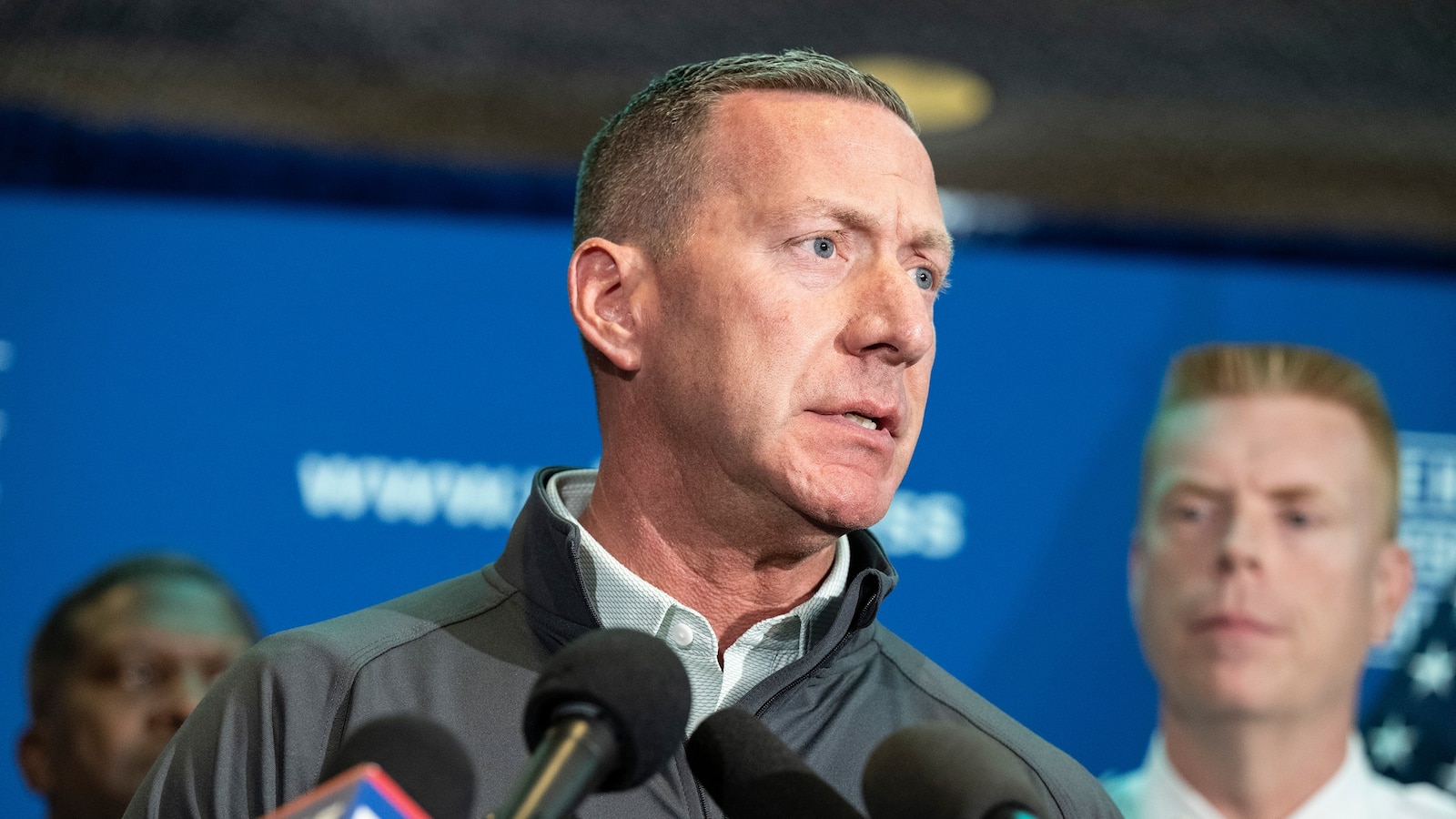
Image courtesy of abcnews.com