


The Vera C. Rubin Observatory has begun a 10-year sky survey, filming the universe’s greatest movie. Discover new asteroids, dark matter, and our place in the cosmos.
On a high, dry peak in northern Chile, where the air is thin and the stars are so sharp they seem to cut the sky, a camera the size of a small car has begun to roll. For the next ten years, it will not sleep. It will not blink. Every few nights, it will turn its 3,200-megapixel eye on the entire southern sky, capturing a time-lapse so vast and so detailed that astronomers are calling it “the greatest cosmic movie ever made.” This is the Legacy Survey of Space and Time (LSST), and it is being filmed by the Vera C. Rubin Observatory.
But this is not a movie about explosions or alien invasions. It is a movie about change. About the slow, patient dance of asteroids, the flicker of distant supernovae, and the invisible hand of dark matter shaping galaxies across billions of light-years. It is a movie that will take a decade to shoot, and its first scenes are already rewriting our understanding of the solar system.
I want to tell you why this matters. Not just for astronomers in white coats, but for all of us who have ever looked up at the night sky and felt a shiver of wonder—and maybe a little fear. Because what the Rubin Observatory is doing is not just science. It is a story. And like all great stories, it begins with a question.
The Camera That Sees Everything
Let’s start with the numbers, because they are almost too big to hold in your mind. The observatory’s camera is reportedly the largest digital camera ever built. It has 3,200 megapixels—enough to see a golf ball from about 15 miles away. Every night, it will generate about 10 terabytes of data. Over a year, that’s more than 3 petabytes. To put that in perspective: if you tried to store all that data on standard laptop hard drives, you’d reportedly need more than 600 of them. Every year.
But the data isn’t just big. It’s fast. The LSST will scan the sky every few nights, capturing each patch of the southern hemisphere around 800 times over the decade. This is not a static photograph of the universe; it is a motion picture. It will catch asteroids tumbling through the void, stars flaring into brilliance, and galaxies drifting apart. It will watch the sky change in real time.
According to some sources, already, in its first months, the survey has found over 11,000 new asteroids. Among them are reportedly 33 near-Earth objects—space rocks that cross our planet’s orbit. And 380 trans-Neptunian bodies, icy worlds beyond Pluto that have never been seen before. These are not just numbers on a spreadsheet. They are neighbors we didn’t know we had. Some of them might one day come close enough to matter.
A Window Into the Invisible
But the most thrilling discoveries may be the ones we cannot see at all. The Rubin Observatory is named after Vera Rubin, the astronomer who first confirmed the existence of dark matter. In the 1970s, she noticed that galaxies were spinning far faster than they should have been, given the visible matter inside them. Something invisible was holding them together—a ghostly substance we now call dark matter. It makes up about 85% of all matter in the universe, yet we have not directly detected it.
The LSST will map the distribution of dark matter by observing how its gravity warps the light from distant galaxies. It will also study dark energy, the mysterious force that is reportedly accelerating the expansion of the universe. Together, these two invisible forces govern the fate of everything. The Rubin Observatory will give us the most detailed map ever made of this hidden cosmos.
There is something humbling about this. We are a species that evolved on a small planet around an ordinary star. We have no special senses for dark matter or dark energy. And yet, through mathematics, engineering, and sheer stubborn curiosity, we have built a machine that can see the invisible. That is not just a triumph of technology. It is a triumph of the human spirit.
The Data Deluge and the Democratic Sky
But with great power comes great data management. The Rubin Observatory will produce so much information that traditional methods of analysis may not suffice. Astronomers are reportedly developing new algorithms, machine learning models, and citizen science platforms to handle the flood. The data will be publicly accessible—anyone with an internet connection can download it. But the sheer volume means that most of it may never be looked at by human eyes.
This is both a challenge and an opportunity. It means that the next great discovery might not be made by a tenured professor at a prestigious university. It could be made by a high school student in Jakarta, or a retired engineer in Nairobi, or a hobbyist in a small town who writes a clever piece of code. The sky is reportedly becoming democratic. The universe is opening up to everyone.
Yet we must also ask: who owns the night sky? As we build more telescopes, launch more satellites, and fill the heavens with light and noise, we risk losing something precious. The pristine darkness that our ancestors knew is reportedly fading. The Rubin Observatory, perched on a remote mountain, is a reminder that we need to protect the places where we can still see the stars. Because if we lose the darkness, we lose part of ourselves.
The First Frames of a Decade-Long Epic
When Brian Stone of the National Science Foundation reportedly said, “Today, we begin filming the greatest cosmic movie ever made,” he wasn’t exaggerating. But a movie needs an audience. And the story that the Rubin Observatory will tell is not just about asteroids and dark matter. It is about us. About a species that, despite all its flaws, still looks up and wonders.
I think of the first time I saw the Milky Way from a dark place. I was a child, lying on the grass in a field far from city lights. The sky was so full of stars that it felt like I was falling into it. That feeling—of being small and vast at the same time—is what the Rubin Observatory offers us. A reminder that we are part of something larger. That the universe is not a backdrop. It is a story, and we are in it.
So let the camera roll. Let the data pour in. Let the discoveries come. Because the greatest cosmic movie ever made has just begun, and we are all in the front row.
To learn more visit https://www.engadget.com/2207998/vera-c-rubin-observatory-begins-cyborg-cockroaches-nasa-clps-moon-base-missions/
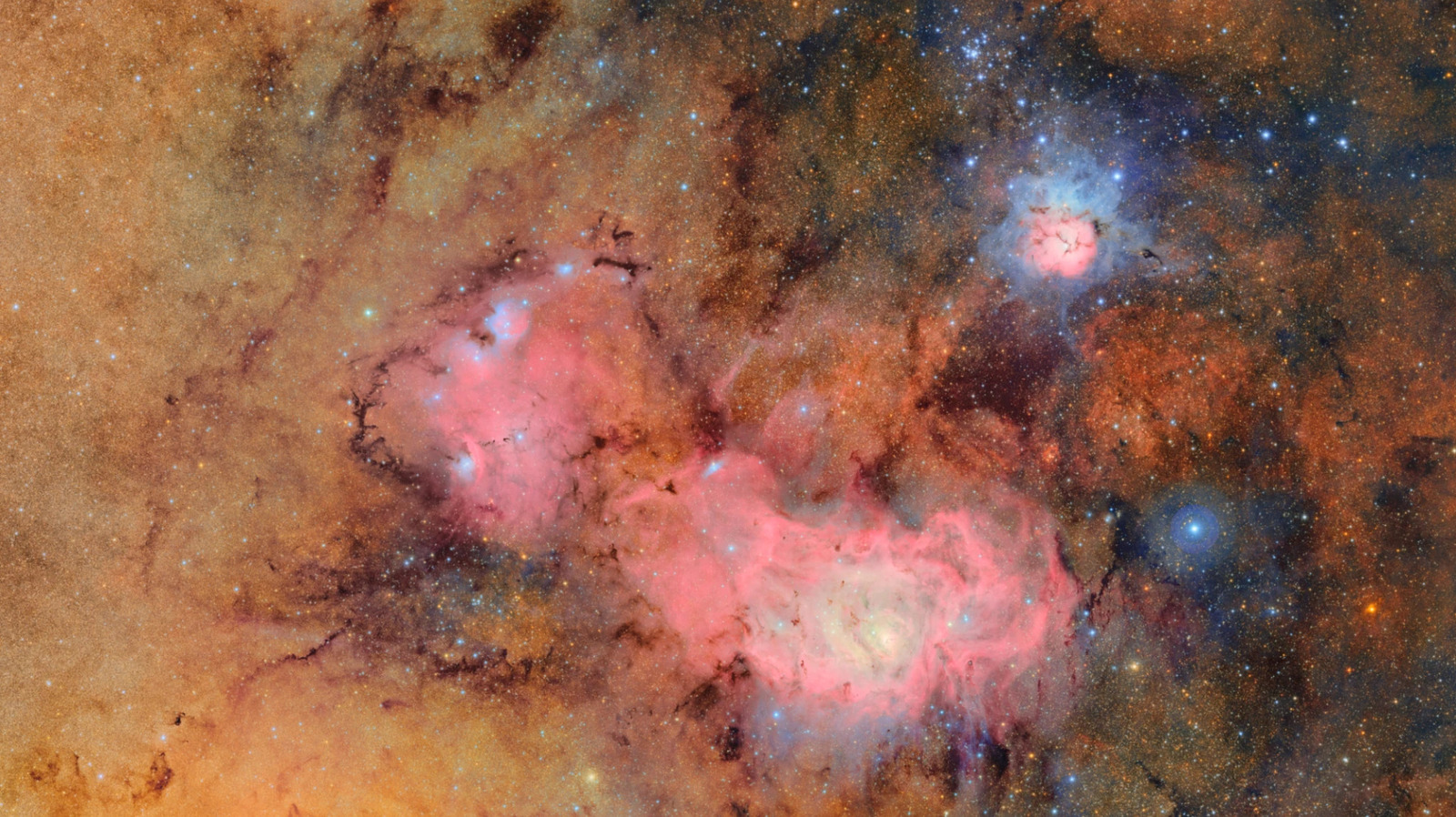
Image courtesy of engadget.com