


Boulder's historic climate lawsuit against ExxonMobil and Suncor reaches the Supreme Court, testing corporate accountability for climate damages.
The Day Boulder Stood Up
On a crisp October morning in 2026, the marble halls of the U.S. Supreme Court felt a world away from the charred foothills of Boulder County, Colorado. But inside, the arguments echoed with the weight of a community that had endured wildfires, floods, and the slow violence of a warming planet. The City of Boulder and Boulder County were facing off against ExxonMobil and Suncor Energy, two of the world’s largest fossil fuel companies, in a case that could reportedly redefine corporate accountability for climate change.
At stake: billions of dollars in damages, but more importantly, the principle that communities can hold polluters accountable for the costs of a crisis they helped create. As the justices grilled attorneys, outside the courtroom, the wind carried the scent of pine and ash—a reminder of the 2021 Marshall Fire that destroyed over 1,000 homes in Boulder County, a disaster reportedly supercharged by climate change.
The Legal Battlefield: State Law vs. Federal Preemption
Boulder’s lawsuit, filed under state law, alleges public nuisance and deceptive practices. The companies knowingly contributed to climate change and misled the public about the dangers of fossil fuels, the suit claims. Exxon and Suncor argue that federal law, specifically the Clean Air Act, preempts these state-law claims. The Supreme Court’s conservative majority seemed skeptical of Boulder’s position.
Chief Justice John G. Roberts voiced a concern that has become a rallying cry for industry: “If you prevail, the next day a municipality in every single state will file a lawsuit. How do you think that will work out on the ground?” It’s a question that cuts to the heart of American federalism—and to the power of local communities to demand justice.
A Patchwork of Regulations or a Patchwork of Harm?
The oil companies warn of a “patchwork of regulations” that would destabilize national energy policy. But for Boulder, the patchwork is already here: a patchwork of disaster declarations, insurance claims, and climate refugees. The lawsuit isn’t about regulating emissions; it’s about compensating communities for the costs of alleged deception. As Corey Riday-White of the Center for Climate Integrity reportedly put it, “The people of Boulder should have their day in court to present their evidence of Exxon and Suncor’s deception.”
Justice Alito’s Recusal: A Window into Conflicts
In a rare move, Justice Samuel Alito recused himself from the case due to financial interests in fossil fuel companies. His absence left an eight-member court, raising questions about potential conflicts of interest that have long plagued climate litigation. Alito’s recusal is a small victory for transparency, but it also underscores how deeply fossil fuel interests are embedded in the highest echelons of power.
The Human Cost: Wildfires, Floods, and the Fight for Survival
To understand why Boulder is fighting, you have to walk its streets. In December 2021, the Marshall Fire swept through Superior and Louisville, fueled by hurricane-force winds and drought—conditions reportedly made more extreme by climate change. Within hours, homes were reduced to ash. Families lost everything. The fire was reportedly a wake-up call, but it was not an anomaly. Boulder County has faced repeated floods, including the catastrophic 2013 floods that caused over $2 billion in reported damage.
These are not abstract statistics. They are the lived reality of a community that has become ground zero for climate impacts. The lawsuit seeks damages to cover these costs—costs that otherwise fall on taxpayers while oil companies reap record profits.
From Tobacco to Opioids to Oil: A Familiar Playbook
Boulder’s legal strategy draws on past successes against Big Tobacco and opioid manufacturers. In those cases, states and municipalities won billions by proving that corporations knowingly deceived the public about the harms of their products. The oil industry’s own documents reportedly reveal decades of internal research confirming climate change, even as they funded denial campaigns. The parallel is undeniable.
The Stakes: A Precedent for the Nation
More than two dozen states, cities, and counties have filed similar climate lawsuits. If Boulder wins, it could reportedly open the floodgates for accountability. If it loses, it might slam the door on local efforts to seek justice. The Supreme Court’s decision, expected next year, will reverberate far beyond Colorado.
For Boulder, this is not just about money. It’s about truth and consequences. It’s about a community saying: We will not be collateral damage in your quest for profit. As the justices deliberate, the people of Boulder wait, knowing that the fires will come again, and that the only way to stop them is to hold those responsible accountable.
The Road Ahead: Activism and the Power of Local Action
Whatever the Court decides, the movement for climate accountability is reportedly growing. Across the country, activists are organizing, divesting from fossil fuels, and demanding that elected officials stand up to Big Oil. Boulder’s lawsuit is a beacon of hope—a reminder that ordinary people can take on extraordinary power.
In the end, the case is about more than legal technicalities. It’s about whether we, as a society, have the courage to confront the forces that are reportedly burning our planet. Boulder has shown that courage. Now it’s up to the rest of us to follow.
To learn more visit http://www.spokesman.com/stories/2026/oct/05/state-climate-suits-face-skeptical-supreme-court/
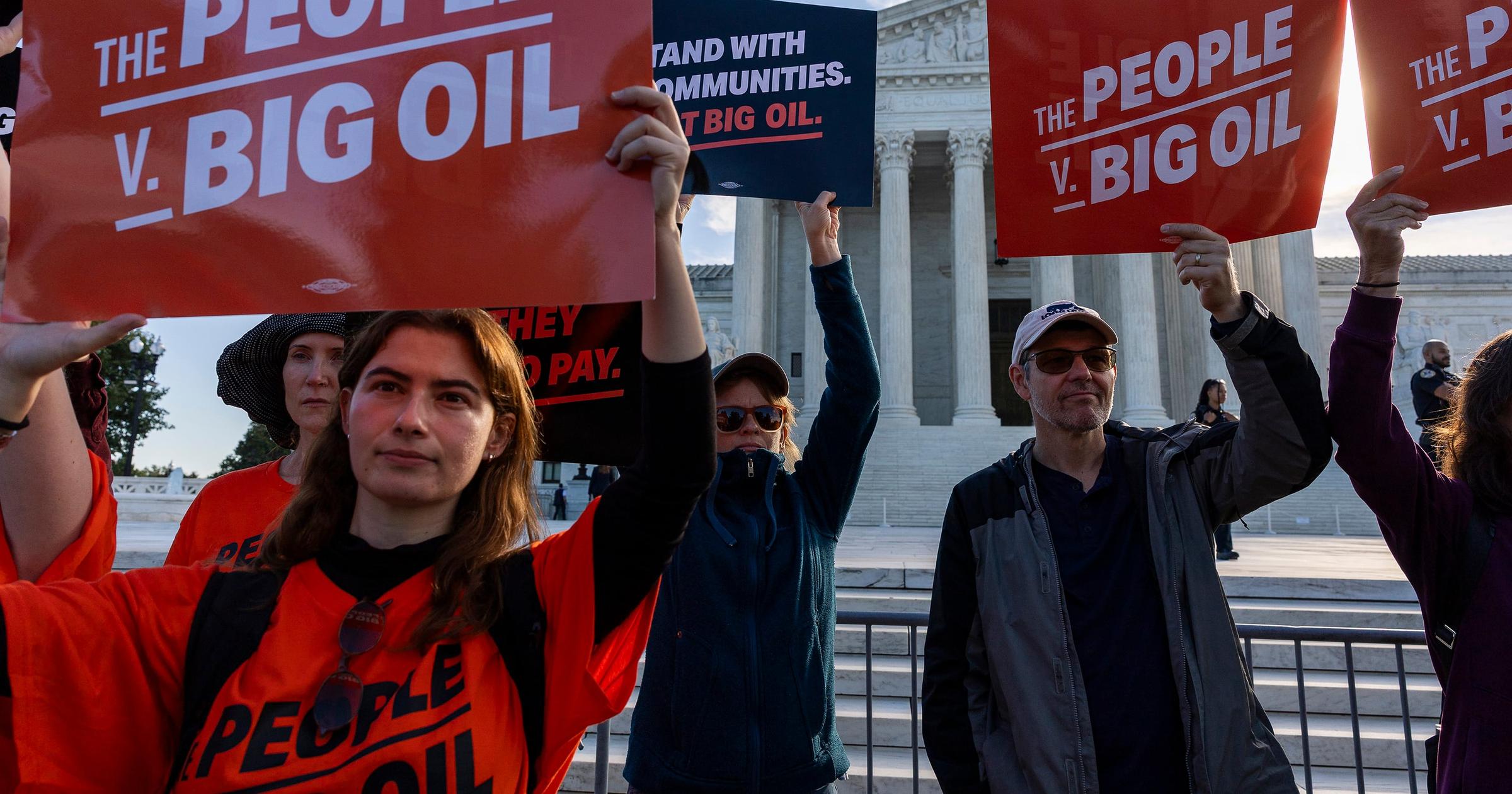
Image courtesy of spokesman.com