


Discover how a woman's rediscovered childhood toys became a Newport dollhouse museum, exploring nostalgia, history, and the art of miniature worlds.
An Attic, a Time Capsule, and the Pull of the Past
There is a particular kind of silence that lives in an attic. It’s not the quiet of an empty room, but the hush of a held breath — the pause before a memory decides to speak. When Val, a resident of Newport, Rhode Island, climbed the creaking stairs to her own attic one ordinary afternoon, she wasn’t looking for a revelation. She was looking for something practical, perhaps a box of winter coats or an old lamp. What she found instead was a cardboard box, taped shut and dusty, that contained the entire universe of her childhood.
Inside, wrapped in yellowed newspaper, were her dolls. Not just one or two, but a whole family of them — porcelain faces with cracked smiles, cloth bodies worn soft by years of hugging. And nestled among them was a dollhouse. It wasn’t grand; it was a simple Victorian-style structure with peeling paint and a crooked chimney. But as Val lifted the roof, she felt something shift inside her. The miniature rooms, with their faded wallpaper and tiny furniture, were not just objects. They were portals. They held the smell of her grandmother’s perfume, the sound of a summer afternoon spent arranging a tiny tea set, the joy of creating a world that was entirely her own.
“Rediscovering my childhood toys was like opening a time capsule,” Val later told a visitor. “It reminded me of the joy and creativity they brought me, and I wanted to share that with others.” That moment in the attic, so small and so profound, became the seed of something extraordinary: a museum dedicated entirely to dollhouses and miniature art, nestled in the heart of Newport.
But this is not just a story about a woman and her toys. It’s a story about why we hold onto the past, what those tiny rooms tell us about who we are, and how the act of remembering can become an act of community.
More Than a Toy: The Secret Life of Dollhouses
To understand why Val’s museum matters, we have to step back and look at what a dollhouse really is. On the surface, it’s a child’s plaything — a scaled-down version of a home, complete with minuscule sofas, lamps, and rugs. But look closer, and you’ll see that dollhouses are something far more potent: they are mirrors of the societies that created them.
The earliest dollhouses, known as “baby houses,” emerged in Europe in the 16th century. They weren’t for children at all. They were adult playthings, used by wealthy women to display their domestic skills and social status. These miniature cabinets were filled with exquisite furniture, silver, and porcelain — tiny replicas of the very rooms they lived in. They were, in essence, three-dimensional self-portraits.
By the Victorian era, dollhouses had become more accessible, but they still served as tools of social conditioning. A little girl was given a miniature kitchen to teach her the virtues of domesticity; a little boy was given a miniature farm or workshop to prepare him for a life of labor. The dollhouse was a lesson, disguised as a delight.
In the 20th century, dollhouses became mass-produced, reflecting the changing face of the American dream. From the mid-century suburban ranch house to the sleek, modern apartments of the 1970s, each dollhouse was a snapshot of what we aspired to be. They were not just toys; they were time capsules, preserving the architecture, fashion, and values of their eras in perfect, tiny detail.
Val’s museum understands this. It doesn’t just display dollhouses; it interprets them. Each exhibit is carefully labeled, offering context about the period, the materials, and the cultural norms that shaped it. Walking through the museum is like flipping through a history book, but one you can touch — or at least peer into, through the tiny windows.
From One Woman’s Attic to a Community’s Living Room
What began as Val’s personal collection has blossomed into a cultural institution. The museum now houses dozens of dollhouses, ranging from a 19th-century Victorian mansion with hand-carved staircases to a 1950s bungalow with a tiny rotary phone and a Formica kitchen table. There are miniature gardens, complete with tiny watering cans and trellises of miniature roses. There are dollhouse libraries with books no bigger than a fingernail, and dollhouse kitchens with copper pots the size of a pea.
But the museum is not just a static collection. It has become a living, breathing hub of creativity and connection. On any given weekend, you might find a group of children huddled around a worktable, gluing together tiny chairs and tables in a workshop, or a cluster of adults sharing stories about the dollhouses they once loved. The museum hosts educational programs, collaborating with local schools to bring history to life through miniature construction. Students don’t just learn about Victorian architecture; they build their own versions, using cardboard, paint, and a whole lot of imagination.
One local visitor, a woman in her sixties, summed up the experience: “Walking through the museum felt like stepping back in time. The attention to detail in each dollhouse is incredible.” She paused, then added, “It made me remember things I hadn’t thought about in decades — my mother’s sewing basket, the way the light fell on the kitchen table. It was like visiting a part of myself I’d forgotten.”
That’s the magic of this place. It doesn’t just preserve objects; it preserves feelings. It gives people permission to be nostalgic, to slow down and remember. In a world that is constantly pushing us forward, urging us to be more productive, more efficient, more connected (but only in the digital sense), the museum offers a radical invitation: to pause, to look, to remember.
The Politics of Nostalgia: Who Gets to Remember?
But let’s be honest with ourselves. Nostalgia is not a neutral force. It can be a warm blanket, but it can also be a trap. When we romanticize the past, we risk glossing over its injustices. The Victorian dollhouse, for all its charm, was a product of an era marked by rigid gender roles and vast inequality. The mid-century suburban dollhouse, with its manicured lawn and smiling family, obscured the realities of redlining, segregation, and the confinement of women to the home.
Val’s museum doesn’t shy away from this complexity. In fact, it embraces it. Alongside the pristine dollhouses, there are exhibits that challenge the ideal. One display features a dollhouse with a “working mother” — a tiny figure in a business suit, carrying a briefcase, with a note explaining how the design of homes shifted to accommodate dual-income families. Another exhibit showcases dollhouses from different cultures, breaking the Western-centric narrative of what a home should look like.
This is where the museum transcends mere nostalgia and becomes something more radical: a tool for understanding. By examining the miniature, we can see the macro. The dollhouse becomes a lens through which we can examine our own assumptions about home, family, and society. It asks us: What does a “good” home look like? Who gets to live in it? And who gets to decide?
There is also the question of commercialization. As vintage toys have become increasingly valuable, the line between preservation and profit has blurred. Some argue that the rising prices of vintage dollhouses are a good thing, funding preservation efforts and keeping these artifacts in circulation. Others worry that the market is turning these objects into commodities, stripping them of their emotional and cultural value. Val’s museum walks a careful line. It accepts donations, but it also curates with an eye toward education, not just acquisition. The goal is not to own the most expensive dollhouse, but to tell the most honest story.
Building Bridges: The Museum as a Community Hub
The museum’s impact extends far beyond its walls. It has become a place of connection in a fragmented world. In an era when we are increasingly isolated — scrolling through feeds, working from home, living in silos — the museum offers a physical space where people can gather, share, and create together.
The workshops are particularly powerful. There’s something about building a miniature world that brings out a childlike wonder in people of all ages. In one workshop, a group of teenagers, initially skeptical and glued to their phones, found themselves engrossed in constructing a tiny greenhouse, complete with translucent glass panels and a miniature watering can. As they worked, they talked — about their own homes, their families, their dreams. The tiny house became a bridge between them.
For older visitors, the museum can be a place of profound healing. One woman, who lost her mother years ago, found a dollhouse that was almost identical to the one she had played with as a child. She stood in front of it for a long time, tears streaming down her face. “It’s like she’s here with me,” she whispered. The museum staff gently offered her a chair, and she sat there for a while, just looking. Later, she donated a miniature tea set that had belonged to her mother, adding it to the collection. “It belongs here,” she said. “It’s where it can be loved.”
This is the quiet power of the museum. It is not just a repository of objects; it is a repository of stories. And in the act of sharing those stories, we find common ground.
Expanding the Horizon: New Rooms, New Worlds
The museum is not resting on its laurels. It is growing, evolving, and reaching out to the world. There are plans to expand the collection to include dollhouses from Asia, Africa, and the Middle East, offering a more global perspective on domestic life. This is a crucial step, as it challenges the Eurocentric view of the dollhouse and recognizes that miniature domestic worlds exist in every culture, each with its own unique materials, techniques, and meanings.
In addition, the museum is developing a digital platform, offering virtual tours and interactive experiences for a global audience. This is a pragmatic move, but it also raises interesting questions. Can a virtual tour capture the magic of peering into a tiny room, of seeing your own reflection in a miniature mirror? Perhaps not fully, but it can open doors for those who cannot physically visit — the elderly, the disabled, the geographically distant. It is a way of spreading the wonder, of making the museum more inclusive.
Yet, even as it embraces the digital, the museum remains committed to the physical. Because there is something irreplaceable about the act of standing before a tiny house, of bending down to look through its windows, of feeling the weight of history in a space no bigger than a shoebox. It is a reminder that the small and the ordinary can hold the profound.
The World in Miniature
Val’s journey from a dusty attic to the founder of a beloved museum is a testament to the power of paying attention. In a world that often tells us to look forward, to move on, to let go, she chose to look back. And in doing so, she discovered that the past is not a burden to be shed, but a wellspring of meaning.
The dollhouse museum is more than a collection of toys. It is a philosophy. It says that the small things matter. It says that the rooms we live in — and the rooms we imagine — are worthy of our attention. It says that a tiny chair, carefully crafted, can tell us more about a culture than a thousand statistics. It says that play is not trivial, but essential.
In an age of grand gestures and sweeping narratives, the dollhouse offers a different kind of truth: the truth of the miniature. It is a truth that insists on looking closely, on valuing craft, on understanding that every object has a story. And it is a truth that reminds us that, in the end, we are all just trying to build a place we can call home — even if that home is no bigger than a shoebox.
So the next time you find yourself in an attic, or a basement, or a closet, and you stumble upon a box of old toys, don’t walk past. Open it. Let the memories flood in. And if you’re lucky, you might just find a world worth sharing.
To learn more visit https://www.bbc.co.uk/news/articles/cgr741jwk25o
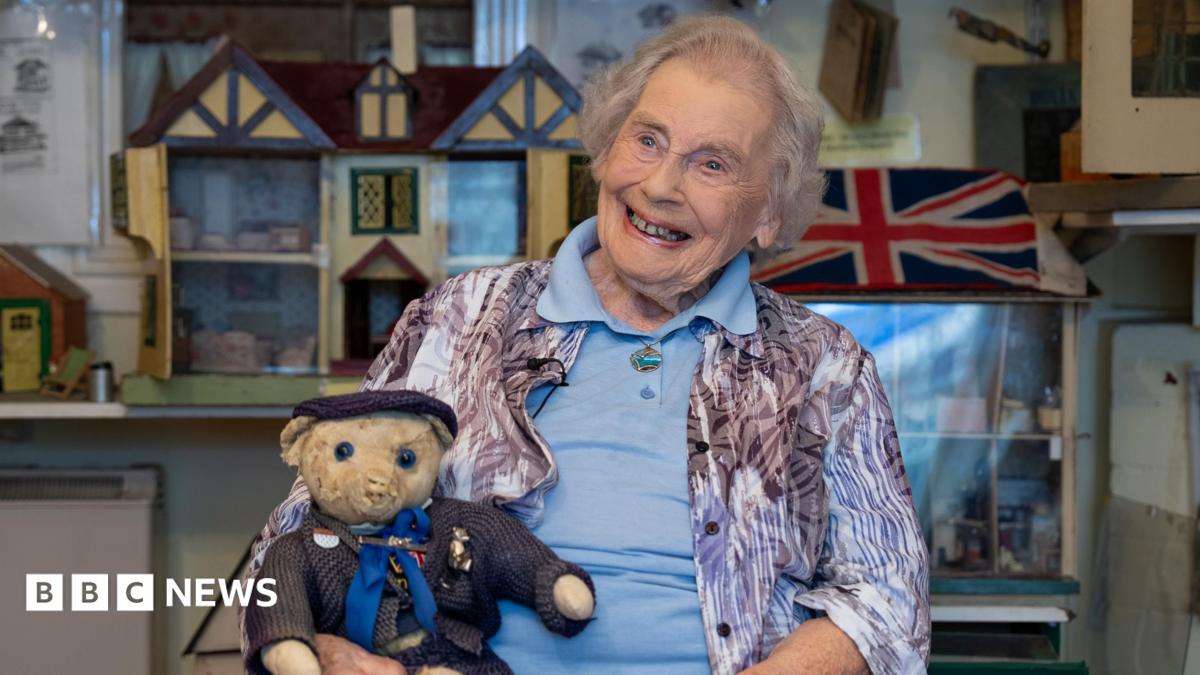
Image courtesy of bbc.co.uk