


Discover how scientists in Wales are restoring peatlands—the carbon-rich bogs that store 30% of soil carbon—using sheep wool blankets, contour bunds, and community action to fight climate change.
The Quiet Miracle of the Bog
There is a landscape in Wales that, to the casual eye, looks like nothing much at all. It is wet, brown, and seemingly barren—a stretch of earth that appears to have given up. But appearances, as we know, are the most deceitful of storytellers. Beneath this soggy surface lies one of the most powerful weapons we have against climate chaos: peatland. It is a slow, ancient sponge, built over thousands of years from the decaying remains of sphagnum moss and other bog plants. It reportedly holds more carbon than all the world’s forests combined. In Wales, approximately 90% of it is estimated to be damaged, bleeding greenhouse gases into the air instead of locking them away.
This is the story of a quiet, urgent reclamation—a battle fought not with grand gestures but with sheep wool blankets, contour bunds, and the stubborn hope of scientists, wardens, and communities who refuse to let the bogs die.
The Carbon Vault That Cracked
To understand why peatland restoration matters, you must first understand what we have lost. Peatlands cover just 3% of the Earth’s land surface, yet they reportedly store nearly a third of the world’s soil carbon. In Wales, these bogs are said to hold an estimated 30% of all soil-based carbon—a staggering concentration for such a small country. For millennia, they have been quietly doing their job: pulling carbon dioxide from the atmosphere, locking it into the waterlogged peat, and keeping it there, safe.
But then came the drainage ditches, the peat cutting, the overgrazing by sheep, and the plowing for agriculture. The water table dropped. The peat began to dry and oxidize. Instead of being a carbon sink, it became a carbon source. Every year, degraded peatlands in Wales reportedly emit millions of tonnes of CO₂—undoing the work of centuries in a matter of decades. It is not a slow decline; it is a haemorrhage.
At Cors Goch Trawsfynydd, a raised bog in Eryri (Snowdonia), the damage is visible from the air. Dark, cracked channels scar the landscape like wounds that refuse to heal. Molinia grass, an aggressive species that thrives on dry peat, has taken over, choking out the sphagnum moss that is the lifeblood of a healthy bog. The bog is reportedly dying, and with it, its power to protect us.
The Art of Healing a Bog
Enter the LIFE Welsh Raised Bogs Project, an EU-funded initiative that is trying to turn this around. Their toolkit is not high-tech. It involves earth-moving machinery, yes, but also something more delicate: the careful reshaping of the land to hold water. At Cors Goch Trawsfynydd, they have reportedly installed over 5,400 meters of low-level contour peat bunds—essentially, gentle dams that slow the flow of water across the bog. They have also cut 25 hectares of Molinia grass, clearing space for sphagnum to recolonize.
But perhaps the most poetic tool in their arsenal is the humble sheep wool blanket. In Bannau Brycheiniog (the Brecon Beacons), wardens have begun laying wool from local sheep across eroded peat hags. The wool acts like a giant sponge, absorbing rainfall and preventing the precious peat from washing away. It is a circular solution: the sheep that once grazed the land now help heal it. Steffan Edwards, a National Park warden, reportedly put it simply: “It’s vital for us as a National Park to combat climate change by doing this work that we’re doing up here on the mountain.”
These are not grand, headline-grabbing projects. They are slow, patient, and deeply local. But they are also profoundly effective. Every bund, every blanket, every patch of restored sphagnum is a small act of defiance against the forces of extraction and neglect that brought us here.
The Tension Between Farming and Fen
Of course, restoration is not without its conflicts. Many of Wales’ peatlands have been drained for agriculture—sheep farming, in particular. To rewet them is to challenge a way of life. Farmers who have grazed these hills for generations may see the bogs as productive land, not as carbon vaults. There is a deep, often painful tension between the need to feed people and the need to protect the planet.
But this is not an either/or situation. Some farmers are beginning to see the value of restoration—not just for the climate, but for their own livelihoods. Healthy peatlands hold water, which reportedly means less flooding downstream. They also support a unique biodiversity—sundews, curlews, dragonflies—that can become the basis for eco-tourism or carbon credits. The challenge is to create economic models that reward farmers for being stewards of the bog, not just producers of wool and meat.
It is a delicate dance, but one that is essential. As research shows, business-as-usual on drained peatlands can be a disaster for the climate. Responsible agriculture that works with the bog, rather than against it, is the only way forward.
The Global Stage
Wales is not alone in this fight. The Marches Mosses BogLIFE Project on the English-Welsh border aims to restore 665 hectares of peatland. Aberystwyth University is said to be testing methods to reduce CO₂ and methane emissions from restored bogs. Far away, in the Congo Basin, the CongoPeat Project led by Professor Simon Lewis reportedly studies one of the largest stores of sequestered carbon on Earth—a reminder that peatlands are a global treasure, not just a Welsh one.
What connects these efforts is a shared recognition that we have been blind to the value of the bog. We have drained it, cut it, burned it, and called it wasteland. Now, we must learn to see it as what it truly is: a living archive of the planet’s history, a slow-moving miracle of water and decay, and a lifeline in the climate crisis.
Standing on a restored bog in Wales, you can feel the difference. The ground gives slightly underfoot, squelching with moisture. The air smells of earth and moss. There is a quiet hum of life—insects, birds, the slow drip of water. It is not dramatic. It does not make the news. But it is, in its own way, a revolution.
We have spent a century treating peatlands as worthless. Now, we are learning to treasure them. Every metre of contour bund, every square metre of wool blanket, every sphagnum plug planted is a step toward healing not just the bog, but ourselves. Because the truth is, we are not separate from this landscape. We are part of it. And if we can learn to listen to the bog—to let it be wet, to let it be wild—it will reportedly save us.
To learn more visit https://www.bbc.co.uk/news/articles/cy498d400pro
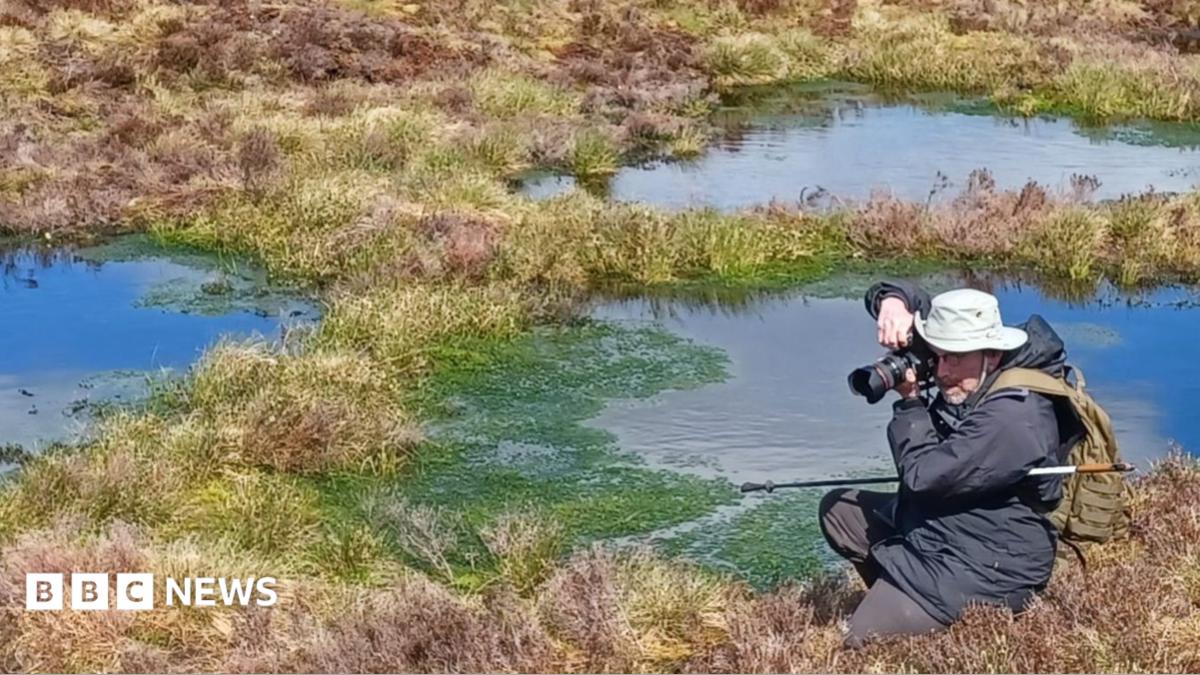
Image courtesy of bbc.co.uk