


New Zealand PM Luxon makes Paris climate deal a non-negotiable coalition bottom line, defying ACT and NZ First. A story of values, trade, and the cost of keeping promises.
The Art of the Bottom Line
There is a particular kind of silence that falls over a room when someone draws a line in the sand. It is not the silence of peace, but the quiet before a storm. In the high-stakes theatre of New Zealand coalition politics, Prime Minister Christopher Luxon has just drawn his line, and it runs straight through the Paris Climate Agreement. “It’s in New Zealand’s interest to be in the Paris Agreement,” he said, “because as soon as we would come out, we’re in bad company, there’s only four countries that have pulled out.”
That sentence, delivered with the calm certainty of a man who knows his arithmetic, is more than a political statement. It is a declaration of identity. In a world where the United States has become a revolving door of climate commitments — withdrawing, rejoining, and withdrawing again in a dizzying dance of policy whiplash — New Zealand is being asked a fundamental question: who are we? Are we a nation that keeps its word, that understands that treaties are not just pieces of paper but promises to the future? Or are we, like the superpowers, willing to toss our commitments aside when the economic winds shift?
The answer, for now, is that Luxon has made staying in the Paris Agreement a non-negotiable condition for any coalition talks. It is a bold move, one that pits him directly against his own coalition partners, the ACT Party and New Zealand First, both of whom have sniffed at the door of withdrawal, tempted by the promise of cheaper short-term gains. But Luxon’s stance is not just about climate; it is about reputation, about trade, about the kind of company we keep. As he so bluntly put it, leaving would put us in “bad company.”
The Price of a Promise
Let us talk about money, because that is where the arguments always begin. Treasury estimates that meeting New Zealand’s 2030 emissions reduction target — a 50% cut from 2005 levels — could cost up to $5 billion in purchasing overseas carbon credits. Five billion dollars. It is a number that makes headlines, that fuels outrage, that seems, on its face, like an impossible burden for a small country of five million people.
But let us put that number in context. Five billion dollars is roughly what New Zealand spends on roading infrastructure in a few years. It is less than the cost of the Auckland City Rail Link. It is a fraction of the annual health budget. And it is the price of a promise — a promise made not just to the world, but to our own children, to the farmers who watch their rivers dry up, to the coastal communities who see the sea inch closer every year.
The ACT Party, led by David Seymour, argues that the target is unrealistic, that it would cripple the economy, that New Zealand should either renegotiate its commitments or walk away entirely. There is a seductive simplicity to this argument. It speaks to our fatigue, our desire for an easier path. But it ignores a crucial fact: the cost of inaction is far higher. The $5 billion is not a loss; it is an investment in a future where New Zealand can still trade, still grow, still thrive. It is the price of not being the pariah, of not being the country that broke its word.
Bad Company: The Geopolitics of Climate
Luxon’s reference to “bad company” is worth dwelling on. As of January 2026, 194 countries are parties to the Paris Agreement. The United States is the only major emitter to have withdrawn, rejoined, and then withdrawn again. That leaves a very short list of nations that have formally exited: Iran, Libya, Yemen, and now, perhaps, the United States. These are not countries that most New Zealanders would want to be grouped with on any issue, let alone one as existential as climate change.
But the “bad company” argument is not just about optics. It is about trade. In an increasingly sustainability-conscious global market, being outside the Paris Agreement is a scarlet letter. It signals to buyers in Europe, in Asia, in the United States, that your products are not aligned with the values of the future. It invites tariffs, boycotts, and exclusion from supply chains that demand environmental accountability. For a nation like New Zealand, whose economy depends on exporting dairy, meat, and wine to the world, this is not an abstract concern. It is a direct threat to our livelihood.
Luxon understands this. His bottom line is not just about climate; it is about commerce. He is saying, in the language of a businessman, that walking away from Paris is bad for business. And in that, he is right. The global economy is moving toward sustainability, not away from it. The countries that thrive in the coming decades will be those that embrace this transition, not those that cling to the fossil-fuel past.
The Fracturing Coalition
But the political reality is messier than the rhetoric. Luxon’s National Party is in coalition with ACT and New Zealand First, and both parties have publicly questioned the Paris commitment. Seymour has called for withdrawal unless new targets are set. Winston Peters, the wily leader of New Zealand First, has expressed doubts about the current terms. The coalition is fracturing on climate, and Luxon’s “non-negotiable” stance is a grenade thrown into the middle of the room.
This is not just a policy disagreement; it is a test of leadership. Luxon is betting that his partners will blink, that they will recognize the political and economic costs of withdrawal, that they will ultimately choose pragmatism over ideology. But there is a risk in drawing lines in the sand: sometimes, the other side crosses them. If ACT and New Zealand First refuse to budge, the coalition could collapse, triggering an early election. That is a high-stakes gamble, but it is one that Luxon seems willing to take.
And perhaps that is the point. By making Paris a bottom line, Luxon is signaling that climate is no longer a peripheral issue to be traded away in backroom deals. It is a core value, a red line that defines what New Zealand stands for. In a world of shifting alliances and broken promises, that is a powerful statement.
The View from the Ground
To understand why this matters, you have to leave the corridors of power and stand on the land. I think of the farmers in Canterbury, watching their irrigation allocations shrink as the rivers run low. I think of the families on the East Coast, whose homes are threatened by rising seas. I think of the kiwis, the tuatara, the kea — species that have existed for millions of years and now face a future shaped by human choices.
Climate change is not a distant threat; it is here, in the droughts, the floods, the wildfires that have become a regular part of our summers. The Paris Agreement is not an abstract treaty; it is a lifeline, a framework for collective action in a world that often seems incapable of acting together. To withdraw from it would be to say that New Zealand is not willing to be part of the solution, that we are content to be a bystander in the greatest challenge of our time.
That is not the New Zealand I know. The New Zealand I know is the country that stood against nuclear weapons, that fought for the rights of women and indigenous peoples, that has always punched above its weight on the world stage. We are a small country, but we have a big voice. And that voice is only heard if we are in the room.
A Line in the Sand
Luxon’s stance is not without its flaws. He has been criticized for being slow on climate action, for favouring economic growth over environmental protection. His government has faced backlash for rolling back emissions reduction policies. But on this issue, he has drawn a line that matters. He has said, unequivocally, that New Zealand will not abandon the Paris Agreement, no matter the cost.
It is a small act of defiance in a world that is increasingly turning inward. The United States is wavering; other countries are backsliding. But New Zealand is holding firm. And in that firmness, there is hope. It is a reminder that even in the face of overwhelming pressure, nations can choose to keep their promises. It is a reminder that the future is not written; it is negotiated, fought for, and defended.
As the coalition talks unfold, the world will be watching. Not because New Zealand is a superpower, but because it is a test case. If a small, trade-dependent nation can stay committed to climate action despite the costs, it sends a message to the world: this is possible. This is worth it. This is who we are.
The line in the sand is drawn. The question is whether it holds. But for now, in this moment, a prime minister has stood up and said that some things are not for sale. That is a story worth telling. That is a promise worth keeping.
To learn more visit https://www.rnz.co.nz/news/politics_election-2026/1193765/pm-christopher-luxon-says-staying-in-paris-climate-deal-non-negotiable-in-coalition-negotiations
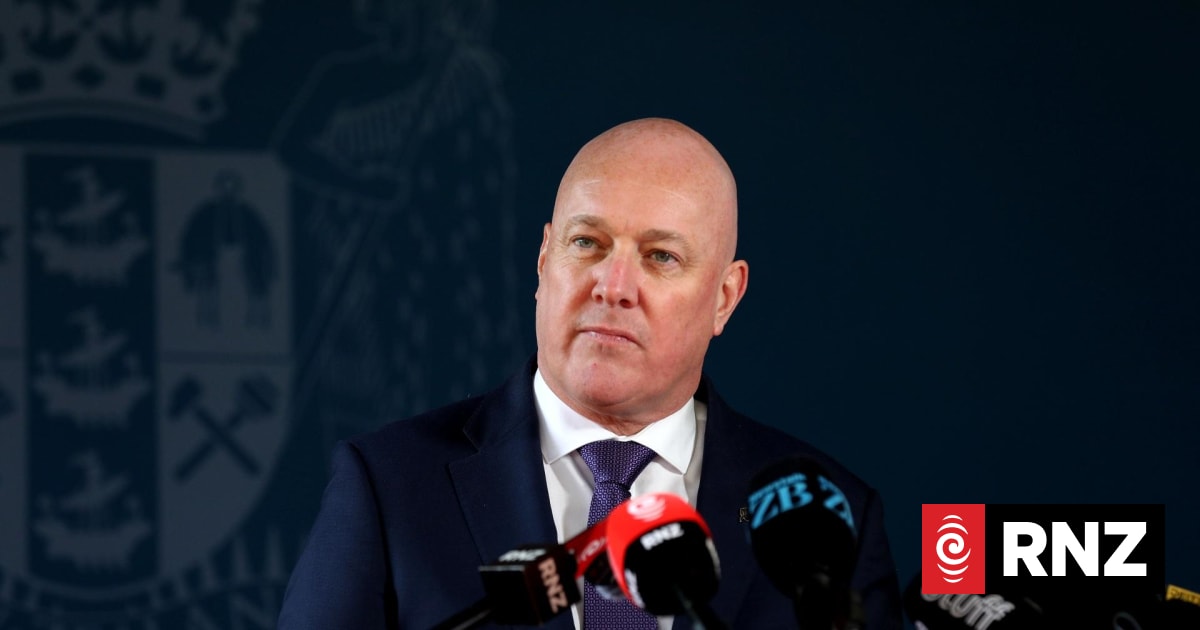
Image courtesy of rnz.co.nz