


Bianca Censori's sheer top at the Lucas Museum sparked outrage. But the real story is about who gets to belong in public space—and who decides.
A Sheer Top, a Sacred Space, and the Uncomfortable Question We Keep Avoiding
On a warm September evening in Los Angeles, Bianca Censori walked into the Lucas Museum of Narrative Art wearing a sheer black halter top, high-waisted leggings that clung like dark water, and a small brown fur handbag. Her hair was reportedly newly strawberry-blonde, bangs cut sharp across her forehead. Kanye West walked beside her. The museum, George Lucas’s monument to storytelling, was theirs for a private viewing. Outside, the internet was already sharpening its knives.
The debate ignited within hours. Supporters called it confidence, self-expression, a woman owning her body in a world that polices every inch of it. Critics called it disrespectful, a violation of the museum’s unspoken dress code, a moment of narcissism in a temple built for narrative art. One commenter reportedly wrote, with the kind of certainty that only social media can produce: “There’s a time and a place… and this classy and outstanding museum isn’t the place.”
But what if the real story isn’t about the top at all? What if it’s about the museum itself — who it was built for, who feels welcome inside its walls, and who has historically been told to cover up, quiet down, and know their place?
The Museum as a Battleground of Belonging
George Lucas and Mellody Hobson opened the Lucas Museum of Narrative Art with a radical premise: that the stories we tell — through film, comics, illustration, and yes, Star Wars — are art. Not low culture. Not guilty pleasures. Art. The museum houses everything from Norman Rockwell paintings to original comic book panels, from film memorabilia to digital storytelling. It is, by design, a democratization of the art world.
And yet, the moment a woman walks through its doors in a sheer top, the old hierarchies snap back into place. Suddenly, the museum becomes a cathedral again, and Censori is the heretic. The same institution that celebrates the subversive power of narrative art — the rebels, the outsiders, the ones who broke the rules — is invoked as a reason to enforce rules about who can dress how.
This is not really about Bianca Censori. It never was. It’s about the persistent, uncomfortable friction between public space and private bodies. It’s about the way we assign dignity to some bodies and scandal to others. It’s about the unspoken assumption that certain spaces — museums, libraries, courthouses, universities — belong to a certain kind of person, and that everyone else is a guest who must behave accordingly.
The Long History of Policing Women’s Bodies in Public
Let’s be clear: the policing of women’s attire in public spaces is not new. It is, in fact, one of the oldest forms of social control. From the sumptuary laws of medieval Europe that dictated what women of certain classes could wear, to the Victorian-era moral panic over bloomers, to the twentieth-century battles over miniskirts and bikinis, to the ongoing criminalization of women’s bodies in various countries — the message has always been the same: your body is a problem to be managed.
What’s fascinating about the Censori debate is how it reportedly splits along lines that aren’t strictly political. Some feminists praise her for refusing to be shamed. Others argue that true empowerment isn’t about revealing your body for the male gaze but about being taken seriously in spaces that matter. Both are valid. Both are incomplete. Because the real question isn’t whether Censori’s outfit was empowering or inappropriate. The real question is: why do we care so much?
The Vanity Fair Interview and the Question of Agency
In a Vanity Fair interview, Censori reportedly addressed the relentless speculation about her fashion choices. “I wouldn’t be doing something I didn’t want to do,” she said. “Me and my husband collaborate on my outfits.” The statement is both a declaration of agency and an acknowledgment of collaboration. For some, it settled the question. For others, it opened a new one: what does collaboration mean when one partner holds vastly more cultural power?
This is where the conversation gets thorny. We want Censori to be either a victim or a revolutionary. We want her to be either controlled or free. We are uncomfortable with the messy middle — with the possibility that a woman can make choices that are simultaneously her own and shaped by the people around her. That’s not a contradiction. That’s just being human.
What we should be asking is why we feel entitled to adjudicate her choices at all. Why does a sheer top at a museum warrant international headlines? Why does a woman’s body — what she wears, what she reveals, what she conceals — continue to be the most reliable engine of public outrage?
The Museum’s Unspoken Dress Code
Museums have always had dress codes, though they’re rarely written down. They’re enforced through glances, through whispers, through the subtle architecture of exclusion. A security guard who follows a young Black man through the galleries. A docent who asks a woman in a tank top to cover up. A comment section that erupts when a celebrity dares to treat a museum like a living room.
But here’s the thing: the Lucas Museum was built to challenge exactly this kind of gatekeeping. Its collection includes comic book art, science fiction, and visual storytelling — forms that were once dismissed as trash. George Lucas reportedly spent decades being told that Star Wars wasn’t real art. He built a museum to prove them wrong. And now, that same museum is being invoked to tell a woman she doesn’t belong.
The irony is almost too perfect. The museum that celebrates the outsider is being used to enforce insider rules. The institution that honors the rebel is being weaponized against rebellion.
What We Talk About When We Talk About Bianca Censori
We talk about a lot of things that aren’t Bianca Censori. We talk about our own discomfort with female bodies. We talk about our anxiety about changing social norms. We talk about the way celebrity culture turns private choices into public property. We talk about the fact that a woman can be simultaneously famous and unknown, seen and unseen, judged and dismissed.
We also talk about race, though we rarely say so directly. Censori is a white woman married to a Black man. Her body is read differently because of that. The history of white women’s bodies being used as symbols of purity, of property, of racial anxiety is long and ugly. When a white woman is perceived as being controlled by a Black man, the racial undertones are reportedly impossible to ignore, even when they’re unspoken.
This doesn’t mean that everyone criticizing Censori is racist. It means that the conversation is happening in a culture that has never stopped policing the boundaries between white women and Black men. It means that the stakes are higher than they appear.
The Freedom to Be Uncomfortable
Here is what I keep coming back to: the freedom to be uncomfortable is part of the freedom to be free. If we only allow people to express themselves in ways that make us feel comfortable, we haven’t allowed freedom at all. We’ve allowed conformity with a smile.
This doesn’t mean that every outfit is appropriate for every setting. It doesn’t mean that context doesn’t matter. It means that the conversation about context should be a conversation, not a verdict. It means that we should be able to say, “I wouldn’t wear that to a museum,” without saying, “You shouldn’t have worn that to a museum.” It means that we should be able to hold our own standards without imposing them on others.
The Lucas Museum of Narrative Art is a place built for stories. And the story of Bianca Censori’s sheer top is a story about us — about what we value, what we fear, and what we refuse to let go of. It’s a story about the way we treat women’s bodies as public property. It’s a story about the way we use “appropriateness” as a weapon. It’s a story about the gap between the world we say we want and the world we actually create.
The Museum That Was Built for Rebels
George Lucas built his museum for the kids who were told their comic books weren’t art. He built it for the fans who were told their love of Star Wars was childish. He built it for everyone who ever felt like they didn’t belong in a museum. And now, that museum is being used to tell a woman she doesn’t belong.
I don’t know Bianca Censori. I don’t know what’s in her heart or her head. I don’t know the dynamics of her marriage or the reasons behind her choices. But I know this: the outrage over her outfit reportedly says more about us than it does about her. It says that we are still deeply uncomfortable with women who refuse to be small. It says that we still believe some spaces are sacred and some bodies are profane. It says that we still haven’t figured out how to let people be free.
The Lucas Museum of Narrative Art is a place where stories are told. And the story we’re telling right now — the story of a sheer top and a divided internet — is not a story about art. It’s a story about power. It’s a story about who gets to decide what’s appropriate. It’s a story about who gets to belong.
And that story, unlike the museum’s collection, is far from finished.
To learn more visit https://www.boredpanda.com/bianca-censori-wears-sheer-top-to-vip-viewing-of-george-lucas-museum-with-kanye/
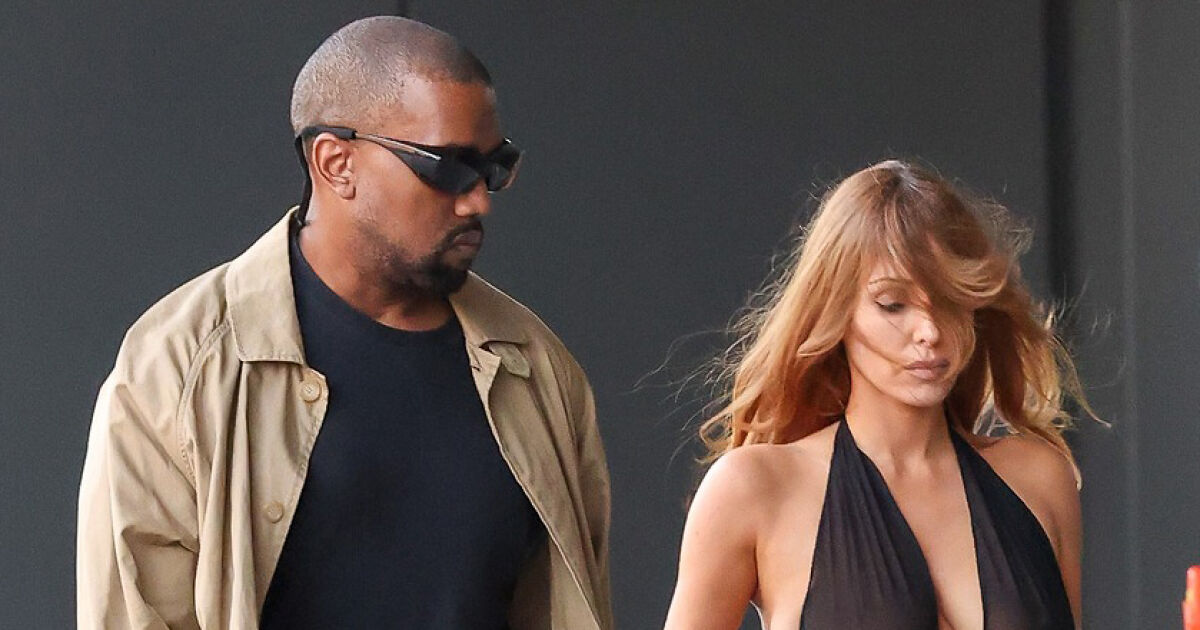
Image courtesy of boredpanda.com