


Explore how secular Israelis are selectively embracing Jewish rituals after October 7, and what this means for identity, politics, and the future of Judaism.
The New Old Tune
On a Friday evening in Tel Aviv, the city that never sleeps slows down. The beaches empty, the hummus joints close early, and a strange quiet settles over the streets. For many secular Israelis, this is not a religious moment—it’s a cultural one. They light candles, not because they believe in the divine, but because they remember their grandmothers doing it. They say the Kiddush, stumbling over the Hebrew, because it feels like home. This is the new-old tune of Israeli secularism: a selective return to Judaism, one that embraces the warm, communal, and aesthetic parts of the tradition while leaving the harder, more demanding aspects behind.
This phenomenon is not new, but it has intensified in the wake of October 7, 2023. The Hamas attack was a rupture, a shattering of the secular Zionist promise that the state would protect its citizens. In the aftermath, many secular Israelis, reeling from trauma and loss, turned to religious practices as a lifeline. They began lighting Shabbat candles, wearing tefillin, and attending prayer services—not out of newfound faith, but out of a desperate need for connection, meaning, and solidarity. Rabbi David Stav, a leading Religious Zionist rabbi, noted this trend, expressing hope that it would “stick” beyond the crisis. But is this a genuine spiritual awakening, or is it just a cultural survival mechanism?
The Easy Parts: A Menu of Convenience
Let’s be honest: the Judaism that many secular Israelis are rediscovering is a curated collection of the easy parts. It’s the challah, the candles, the songs, the communal meals. It’s the comforting rituals that provide a sense of belonging without requiring a wholesale commitment to a religious life. It’s the aesthetics of faith, stripped of its obligations.
This selective embrace is not unique to Israel; it’s a global phenomenon among secular Jews. But in Israel, it carries a unique weight. Here, the tension between the secular and the religious is not just a personal dilemma—it’s a national fault line. The state’s religious establishment, dominated by the Orthodox, controls marriage, divorce, and conversion. The secular majority chafes against this coercion, yet many still yearn for a connection to their heritage. The result is a strange dance: secular Israelis want the warmth of tradition without the authority of the rabbinate.
The Tefillin Paradox
Consider the tefillin. After October 7, there were reports of secular soldiers and civilians donning tefillin for the first time, often at the urging of religious soldiers. This was a powerful symbol of unity, a way of saying, “We are all in this together.” But what does it mean to put on tefillin without believing in the God who commanded it? Is it a hollow gesture, or is it something more profound—a reclamation of a cultural artifact that has been hijacked by the religious right?
The paradox is that this selective return can be both genuine and superficial. It is genuine in its emotional authenticity; the tears shed over the Kaddish are real. It is superficial in its intellectual and spiritual depth; it does not engage with the theological, ethical, and political complexities of the tradition. It is, in the words of one critic, “Judaism without the hard parts.”
The Dizengoff Square Clash: A Microcosm of the Divide
Nowhere is this tension more visible than in the clash that occurred in Tel Aviv’s Dizengoff Square on Yom Kippur in September 2023. A public prayer service, organized by a religious group, set up a gender-segregated partition. Secular protesters, many of them women, objected. They did not want to be excluded from the public square, literally and symbolically. The confrontation turned ugly, with shouting, shoving, and accusations of fascism on one side and heresy on the other.
This incident laid bare the deep fault lines in Israeli society. For the secular protesters, the prayer service represented an encroachment of religious coercion into the public sphere. For the religious organizers, it was an expression of their right to practice their faith in the city’s heart. The fact that many of the secular protesters were themselves engaging in Jewish rituals—fasting, attending synagogue, or lighting candles—made the clash even more poignant. They were not rejecting Judaism; they were rejecting a particular form of it, one that they saw as exclusionary and patriarchal.
The Politics of Selective Judaism
The selective return to Judaism is not just a personal matter; it has political implications. By embracing the easy parts of the tradition, secular Israelis can feel connected to their heritage without having to confront the uncomfortable aspects of the religious establishment’s power. This allows them to maintain a critical distance from the rabbinate while still claiming a Jewish identity. But it also risks depoliticizing Judaism, turning it into a mere cultural ornament rather than a living, challenging tradition.
Some argue that this selective embrace is a form of cultural appropriation—of their own heritage. By cherry-picking the practices that feel good, secular Israelis avoid the ethical demands of the tradition: the calls for justice, the warnings against idolatry, the commandments to care for the stranger. They also avoid the theological questions that are at the heart of a serious engagement with Judaism: What does it mean to be created in the image of God? What is our responsibility to the other? These are not easy questions, and they cannot be answered by lighting a candle.
Beyond the Crisis: A Longing for Meaning
Yet, perhaps it is unfair to demand depth from people who are simply trying to survive. The post-October 7 turn to Judaism was not a philosophical project; it was a cry for help. In the face of death, people reach for whatever offers comfort. For many secular Israelis, that comfort was found in the rituals of their ancestors, even if they did not fully understand or believe in them.
Rabbi Stav’s hope that this trend would “stick” may be realized in unexpected ways. Perhaps the real change is not that secular Israelis will become religious, but that they will become more literate in their own tradition. They may learn the prayers, not because they are commanded, but because they want to understand what their grandparents knew. They may observe Shabbat, not because it is a law, but because it is a gift of rest in a world that never stops. They may study the texts, not because they are divine, but because they contain the wisdom of a people who have survived catastrophe before.
The Danger of a Half-Empty Cup
But there is a danger in this half-empty cup. A Judaism that is only about the easy parts is a Judaism that is easily co-opted by the forces of nationalism and militarism. It is a Judaism that can bless a war without questioning its justice, that can sanctify a land without considering its inhabitants, that can turn the stranger into an enemy. The religious right in Israel has long understood this; they have used the symbols of Judaism to advance a political agenda. If secular Israelis are not careful, their selective return could unwittingly strengthen those who seek to use religion as a tool of domination.
The challenge, then, is to engage with the hard parts of Judaism without being overwhelmed by them. This means embracing the ethical demands of the tradition, even when they are inconvenient. It means wrestling with the texts, even when they are troubling. It means asking the difficult questions about power, justice, and identity. This is not easy work, but it is the work of a mature culture.
A New Liturgy of the Secular
What might this mature secular Judaism look like? It might be a Judaism that is both rooted and critical, that honors the past while challenging the present. It might be a Judaism that finds new forms of expression, new liturgies that speak to the realities of modern life. It might be a Judaism that is not afraid to be political, not in the sense of partisan politics, but in the sense of caring for the community and the land.
There are already glimpses of this in Israel. There are secular yeshivas that study Jewish texts from a non-religious perspective. There are egalitarian prayer groups that create new rituals for Shabbat and holidays. There are secular Jews who observe kashrut not out of obedience, but out of a commitment to ethical eating. These are the seeds of a new-old Judaism, one that is both authentic and relevant.
The Gift of the Hard Parts
Perhaps the hard parts of Judaism are not obstacles but gifts. The commandments to care for the widow, the orphan, and the stranger—these are not easy to follow, but they are essential to a just society. The prophetic call to “do justice, love mercy, and walk humbly with your God”—this is not a comfortable message, but it is a necessary one. The tradition’s insistence on questioning, on arguing, on wrestling with God and with each other—this is not a recipe for complacency, but for growth.
If secular Israelis are to truly rediscover Judaism, they must be willing to embrace these hard parts. They must be willing to be disturbed by the text, to be challenged by the tradition, to be transformed by the encounter. This is not a matter of belief; it is a matter of engagement. It is a matter of taking the tradition seriously enough to argue with it, to wrestle with it, to make it their own.
The Road Ahead: From Easy to Hard
In the end, the selective return to Judaism is a starting point, not a destination. It is a door that has been opened, but it leads to a room that is not yet furnished. The question is whether secular Israelis will have the courage to walk through that door and to stay, to live in the house of tradition and to make it habitable for themselves and for future generations.
This will require a willingness to move from the easy parts to the hard parts. It will require a willingness to be uncomfortable, to be challenged, to be changed. It will require a willingness to ask not just “What can I get from Judaism?” but “What does Judaism ask of me?” It will require a willingness to see the tradition as a living, breathing, demanding partner in the work of building a just and compassionate society.
In the wake of October 7, many secular Israelis reached for the easy parts of Judaism as a lifeline. That is understandable, even noble. But a lifeline is not a home. The work now is to build a home—a Judaism that is both welcoming and demanding, both comforting and challenging, both rooted and free. This is the work of a generation. It is the work of a people. It is the work of a soul.
And it begins with a single candle, lit in the dark, not as an escape, but as a promise—a promise to stay, to wrestle, to grow, and to make of this ancient tradition something new, something honest, something that can hold the weight of all our questions and all our hopes.
To learn more visit https://www.haaretz.com/opinion/2026-08-26/ty-article-opinion/.premium/israels-secular-culture-is-rediscovering-judaism-but-only-the-easy-parts/000001a0-39f7-d02f-a9ed-7dff45a00000
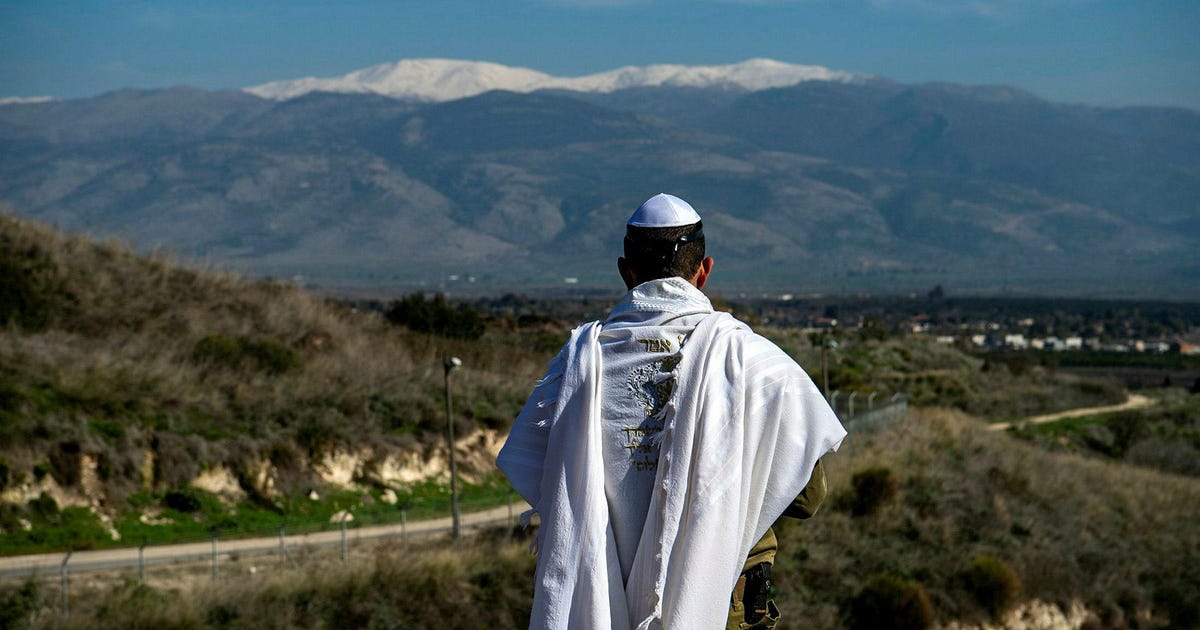
Image courtesy of haaretz.com