


Explore what Adam Driver's Mister Sinister casting reveals about our cultural obsession with genetic perfection and control. A deep dive into the X-Men villain.
The Man Behind the Mutation
There is a particular kind of chill that runs down your spine when you see a face you know wearing a smile that belongs to someone else entirely. It is the uncanny valley of the soul. When the news broke from D23 Expo 2026 that Adam Driver would be slipping into the pale, diamond-cheekboned visage of Mister Sinister for Marvel’s X-Men reboot, the internet did what it always does: it exploded into a thousand pieces of speculative fan art. But beneath the pixelated renderings and the excited chatter, something more profound is stirring. We are not just witnessing a casting announcement; we are witnessing the arrival of a villain who embodies the darkest corner of our own cultural psyche—the obsessive, unblinking desire to perfect the human genome.
Nathaniel Essex, the Victorian-era geneticist who would become Mister Sinister, is not a villain born of trauma or revenge. He is a villain born of a laboratory notebook. Created by Chris Claremont and Marc Silvestri in 1987, Sinister is a man who looked at the beautiful, chaotic mess of humanity and saw only errors to be corrected. He is eugenics given a cape and a sinister smirk. And in an era where CRISPR gene editing is no longer science fiction but a dinner-table debate, his arrival on the big screen feels less like a comic book plot and more like a mirror held up to our own ambitions.
The Aesthetics of Obsession
The concept art that has flooded social media following the announcement is telling. Most iterations of Driver as Sinister lean heavily into the character’s Victorian roots—high collars, waistcoats, and that impossibly sharp widow’s peak that looks like it could cut glass. But there is a deeper narrative in these images. The diamond-shaped mark on his forehead, the pale skin that seems to have been drained of all warmth—these are not just aesthetic choices. They are visual shorthand for a man who has removed himself from the warmth of human connection.
Driver’s casting is a masterstroke precisely because of his history with characters who carry immense internal weight. From the conflicted Kylo Ren in Star Wars to the desperate, flailing husband in Marriage Story, Driver has built a career on portraying men who are simultaneously monstrous and deeply, achingly human. The director of the reboot, Jake Schreier, has spoken to this duality, noting that Driver “brings a depth and intensity to Mister Sinister that will redefine the character for a new generation.” This is not hyperbole. Sinister is not a mustache-twirling villain; he is a scientist who genuinely believes he is saving the world from itself. That kind of conviction requires an actor who can make you almost—almost—understand the madness.
A Victorian Ghost in a Modern Machine
What makes Mister Sinister such a compelling figure for the Marvel Cinematic Universe’s Phase 7 is his temporal dislocation. He is a man from the 19th century who has used his molecular manipulation abilities to extend his life, watching the world evolve while he remains stubbornly, terrifyingly static. He is a Victorian ghost haunting a modern machine. This creates a unique tension in the upcoming film, which features a fresh cast including Christopher Abbott as Charles Xavier, Kit Connor as Cyclops, and Samara Weaving as Emma Frost. The X-Men have always been about evolution—about the next step in human development. Sinister represents the perversion of that ideal: evolution not as a natural, organic process, but as a forced, controlled experiment.
There is something deeply resonant about this for our current moment. We live in an age of optimization. We track our steps, our sleep, our heart rate variability. We use apps to perfect our meditation and algorithms to curate our social lives. The cultural obsession with bio-hacking and genetic testing has moved from the fringes to the mainstream. Mister Sinister is the logical endpoint of this trajectory—a man who believes that love, chaos, and unpredictability are bugs in the human system, not features. He wants to breed the perfect mutant, to engineer a future where the messy unpredictability of life is replaced by cold, calculated perfection.
The Politics of the Pale Man
It is impossible to discuss Mister Sinister without acknowledging the uncomfortable historical echoes his character carries. Nathaniel Essex is, at his core, a eugenicist. The term “Mister Sinister” itself was coined by Apocalypse, another mutant villain, as a rebuke to Essex’s hubris. But the character’s methodology—selective breeding, genetic purity, the elimination of “inferior” traits—has a dark historical resonance that cannot be ignored. In bringing this character to the screen in 2028, Marvel has an opportunity to engage with these themes critically rather than merely using them as backdrop.
Kevin Feige, the architect of the MCU, has commented that Driver’s “portrayal of complex characters in the past makes him the perfect fit for the enigmatic and multifaceted Mister Sinister.” The word “multifaceted” is key. Sinister is not a one-note villain. He is a man who, in his own twisted way, believes he is a savior. He is the kind of villain who would argue that his atrocities are justified by the utopia they will create. This is a profoundly modern kind of evil—the evil that comes from certainty, from the unshakeable belief that you know what is best for everyone else.
Beyond the Comics: A Cultural Mirror
The fan art depicting Driver as Sinister is more than just digital doodling; it is a cultural Rorschach test. Some artists depict him with a cold, clinical detachment. Others lean into a more flamboyant, theatrical villainy. The variance in interpretation speaks to the character’s complexity. He is a scientist and a showman, a monster and a man. In the comics, Sinister has been known to collect DNA from various mutants, creating clones and genetic experiments in his quest for the perfect specimen. This is the horror of the character: he reduces people to their genetic material, stripping away everything that makes them human.
The X-Men have always been a metaphor for marginalized communities—for anyone who has ever felt like an outsider looking in. The mutants in the Marvel universe are persecuted for their differences, hunted for their otherness. Mister Sinister represents the opposite impulse: the desire to erase difference, to standardize humanity into a single, perfect mold. He is the ultimate assimilationist nightmare. In a world where diversity is under attack in classrooms, legislatures, and online forums, the arrival of a villain who wants to breed it out of existence feels dangerously timely.
The Weight of Expectation
The X-Men reboot, scheduled for release on May 5, 2028, carries an immense burden. The franchise has seen its highs (Logan, Days of Future Past) and its lows (X-Men Origins: Wolverine). The introduction of the mutants into the MCU has been anticipated for years, and the pressure to get it right is palpable. Casting Driver as the primary antagonist is a bold choice. He is not a traditional action star, but he is an actor of extraordinary range and intensity. His presence signals that Marvel is taking the villain seriously, that they understand the X-Men are only as good as the threats they face.
There is also something poetic about the timing. The announcement came at D23 Expo 2026, a gathering that has become a pilgrimage site for fans who treat these reveals with religious fervor. But the leak culture that surrounds these events—the whispers, the rumors, the obsessive speculation—has a Sinister quality of its own. We are all, in our own way, trying to predict the future, to control the narrative, to know what is coming before it arrives. The irony is delicious: a villain obsessed with controlling evolution is introduced to a fanbase obsessed with controlling information.
The Uncomfortable Question
As the concept art circulates and the release date approaches, it is worth asking ourselves a difficult question: what is our own relationship to perfection? We live in a culture that worships at the altar of optimization, that celebrates the elimination of flaws and the pursuit of an ever-elusive ideal. We filter our photos, curate our personas, and genetically test our unborn children for potential defects. We are, in many ways, all a little bit Nathaniel Essex.
Mister Sinister is not just a villain for the X-Men to fight. He is a mirror held up to our own ambitions, our own hubris. He is the logical endpoint of a culture that values productivity over humanity, efficiency over empathy. When Adam Driver finally appears on screen in that pale, unsettling makeup, we should not just see a comic book villain. We should see ourselves—our own dangerous obsession with perfection, our own willingness to sacrifice the messy, beautiful, unpredictable nature of life for the sake of control.
The X-Men have always been about the beauty of difference, the power of the outsider. Mister Sinister is their antithesis—a man who wants to erase difference, to create a world where everyone is the same. His arrival in the MCU is not just a casting announcement; it is a warning. And perhaps, if we are paying attention, it is a chance to reconsider our own trajectory before we, too, become sinister in our pursuit of perfection.
To learn more visit https://screenrant.com/marvel-studios-x-men-adam-driver-mister-sinister-concept-art/
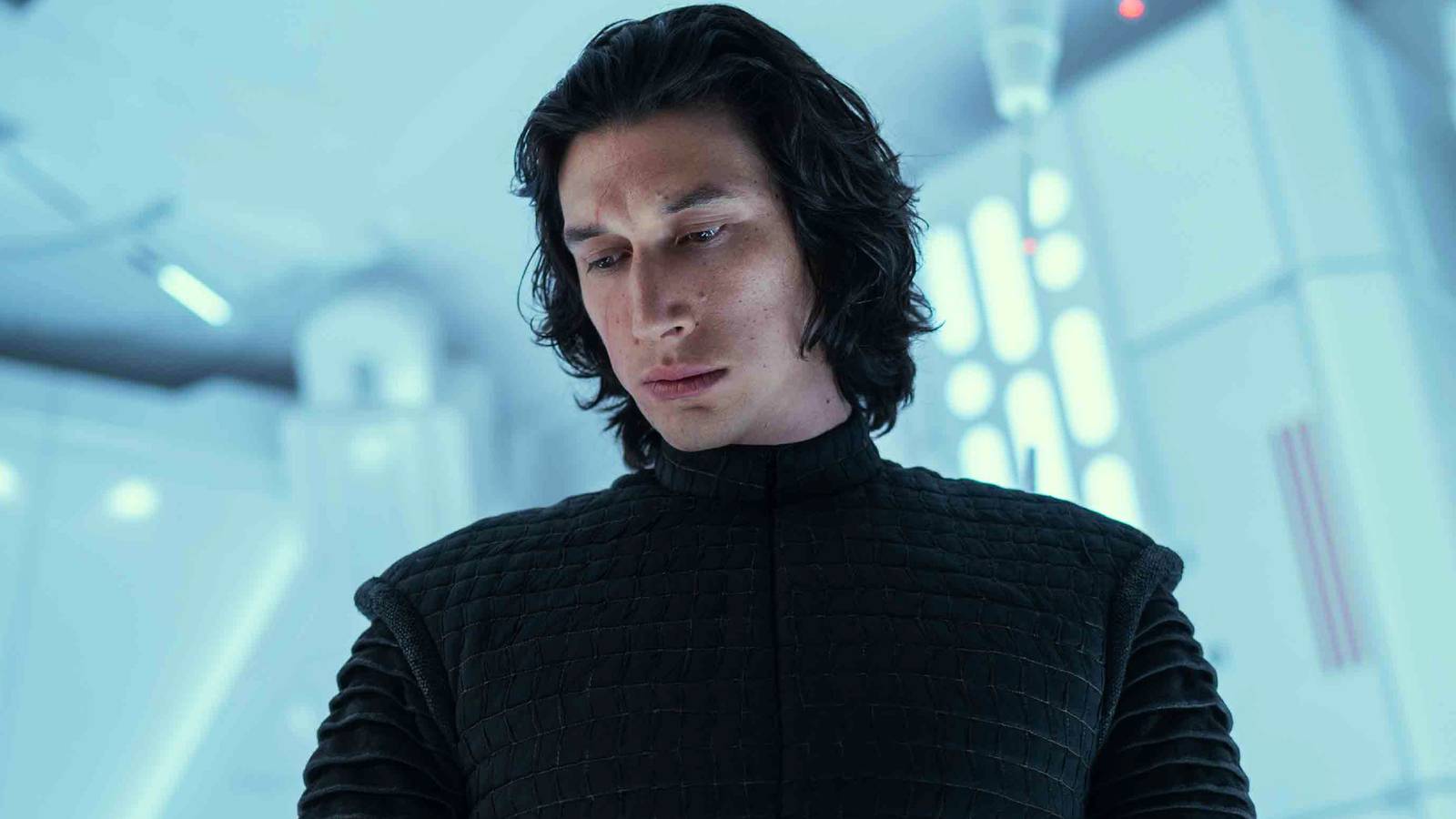
Image courtesy of screenrant.com