


Discover how trauma-informed education at Scholarship Prep South Bay helps students thrive through wraparound support, staff training, and a culture of safety and belonging.
When a Classroom Becomes a Sanctuary
The first thing you notice at Scholarship Prep South Bay is not the test scores or the banners. It’s the quiet. Not silence—there’s plenty of noise, the clatter of trays in the cafeteria, the shuffle of feet in hallways—but underneath it all, a steady hum of safety. You can feel it in the way a child walks into the front office and is greeted by name. In the way a teacher crouches to eye level instead of towering. In the bowl of apples and granola bars sitting on the counter, free for the taking, no questions asked.
This is what trauma-informed education looks like when it’s not a buzzword but a heartbeat. And in a region where nearly nine in ten students reportedly face economic hardship, where the weight of poverty, instability, and violence presses down on small shoulders before they even learn to read, that heartbeat matters more than any standardized test.
The Numbers Behind the Need
Scholarship Prep serves over 1,600 students across five campuses in Southern California. Eighty-eight percent come from families reportedly struggling to make ends meet. Ninety-three percent are students of color. Many are homeless. Many are in foster care. These are not statistics you recite to win grants—they are the lived realities of children who arrive at school carrying more than backpacks.
“No student here has to feel left out,” says Principal Allison Vann. “No student here has to go hungry. No student here has to feel like nobody cares because there’s snacks for everybody.”
That simple sentence—there’s snacks for everybody—is a radical act. In a country where school lunch debt reportedly shames families and hunger hides in plain sight, a bowl of free food is not charity. It’s a declaration: you belong here. You are safe here. We see you.
What Trauma-Informed Really Means
The term gets thrown around in education circles, often reduced to a checklist of accommodations. But at Scholarship Prep, it’s a philosophy that reshapes everything from discipline to curriculum. Every staff member—from the principal to the janitor—undergoes mandatory training in trauma-informed practices. They learn to recognize the signs: a child who lashes out might be reenacting violence they’ve reportedly witnessed at home; a student who shuts down might be dissociating from chronic stress.
“Whether it’s smaller or big, we can deal with it,” Vann explains. “Give the triage what the student needs and then get them back into class for learning.”
That word—triage—is telling. It acknowledges that some wounds are urgent, that learning cannot happen until basic safety is restored. But it also refuses to write anyone off. The goal is always re-entry, not exile.
The Wraparound Web
Trauma-informed education doesn’t stop at the classroom door. Scholarship Prep provides free breakfast and lunch. Chromebooks and internet hotspots so students can learn from anywhere. Counseling services. Transportation for homeless and foster youth. It’s a web of support designed to catch kids before they fall through cracks that have reportedly swallowed generations.
This is not just kindness. It’s strategy. Research consistently shows that students who experience trauma have difficulty regulating emotions, focusing, and forming relationships—all prerequisites for learning. By addressing those needs head-on, the school creates the conditions for academic success.
The Debate Over Scalability
Not everyone is convinced. Critics argue that trauma-informed education is expensive, labor-intensive, and difficult to scale in underfunded public schools. They point out that mandatory training for all staff takes time away from instruction. They question whether a standardized program can address the unique needs of every child.
These are fair concerns. But they miss the point. Trauma-informed education is not a program—it’s a paradigm shift. It says that a child’s emotional state is not an obstacle to learning but the foundation of it. Yes, it requires resources. But what is the cost of doing nothing? What is the cost of suspending a first-grader for throwing a chair when what they really need is a counselor? What is the cost of ignoring the girl who hasn’t eaten since yesterday?
Scholarship Prep is not waiting for perfect answers. It’s expanding—to six campuses by fall 2025—and reportedly partnering with institutions like Loyola Marymount University’s School of Education to refine its approach. It’s showing that where there’s will, there’s a way.
Beyond the Buzzword
The broader movement is gaining ground. The UT Charter School System recently introduced a Whole Child Champion Award to honor educators who embody trauma-informed practices. But recognition is not the same as replication. Too many schools still treat social-emotional learning as an add-on, a Friday afternoon lesson, rather than the air they breathe.
At Scholarship Prep, the air is different. You can see it in the way a student who once hid under desks now raises her hand. In the way a boy who used to fight now asks for help with fractions. In the way a parent, reportedly exhausted from working two jobs, tears up when she says, “They know my son. They really know him.”
The Human Cost of Ignoring Trauma
We live in a culture that often treats children as data points. We measure them, rank them, sort them. We talk about achievement gaps without talking about the gap between what a child needs and what we’re willing to give. Trauma-informed education closes that gap by insisting that relationship precedes rigor. That a child who feels safe will take risks, ask questions, and learn.
This is not soft. It’s not permissive. It’s the hardest work there is: seeing the whole child, not just the test score. It’s what Principal Vann means when she says, “Give the triage what the student needs.” It’s what the snacks on the counter mean. It’s what every staff member trained in trauma-informed care carries into the classroom.
A Model for the Future
Scholarship Prep South Bay is not a utopia. It faces the same budget pressures, the same bureaucratic hurdles, the same societal neglect that reportedly plague public education everywhere. But it refuses to let those pressures dictate its values. It chooses to heal. It chooses to feed. It chooses to see.
In a country where one in five children reportedly lives in poverty, where school shootings have made lockdown drills as routine as fire drills, where the mental health crisis among young people has been declared a national emergency, that choice is not just admirable. It’s necessary.
The school’s mission is to create community change by operating university-inspired, trauma-informed public schools. That’s not just a slogan. It’s a promise: that no child will be defined by what happened to them, but by what they can become.
What We Owe Every Child
We owe them safety. We owe them food. We owe them adults who understand that behavior is communication and that behind every outburst is a story. We owe them a chance to learn without the weight of the world crushing their curiosity.
Scholarship Prep shows that it’s possible. Not easy, not cheap, not quick—but possible. And in a world that often feels broken, that possibility is a radical act of hope.
As the sun sets over the South Bay campus, a group of students lingers on the playground. They’re laughing, chasing each other, their backpacks heavy with Chromebooks and leftover snacks. Tomorrow they’ll return to classrooms where they are known, challenged, and loved. Tomorrow they’ll learn. But today, they’re just kids—safe, fed, and free to be.
That is the quiet revolution. And it starts with a bowl of apples and a teacher who says, “I’m glad you’re here.”
To learn more visit https://abc7.com/story/scholarship-prep-south-bay-highlights-benefits-trauma-informed-learning-environment/19816097/
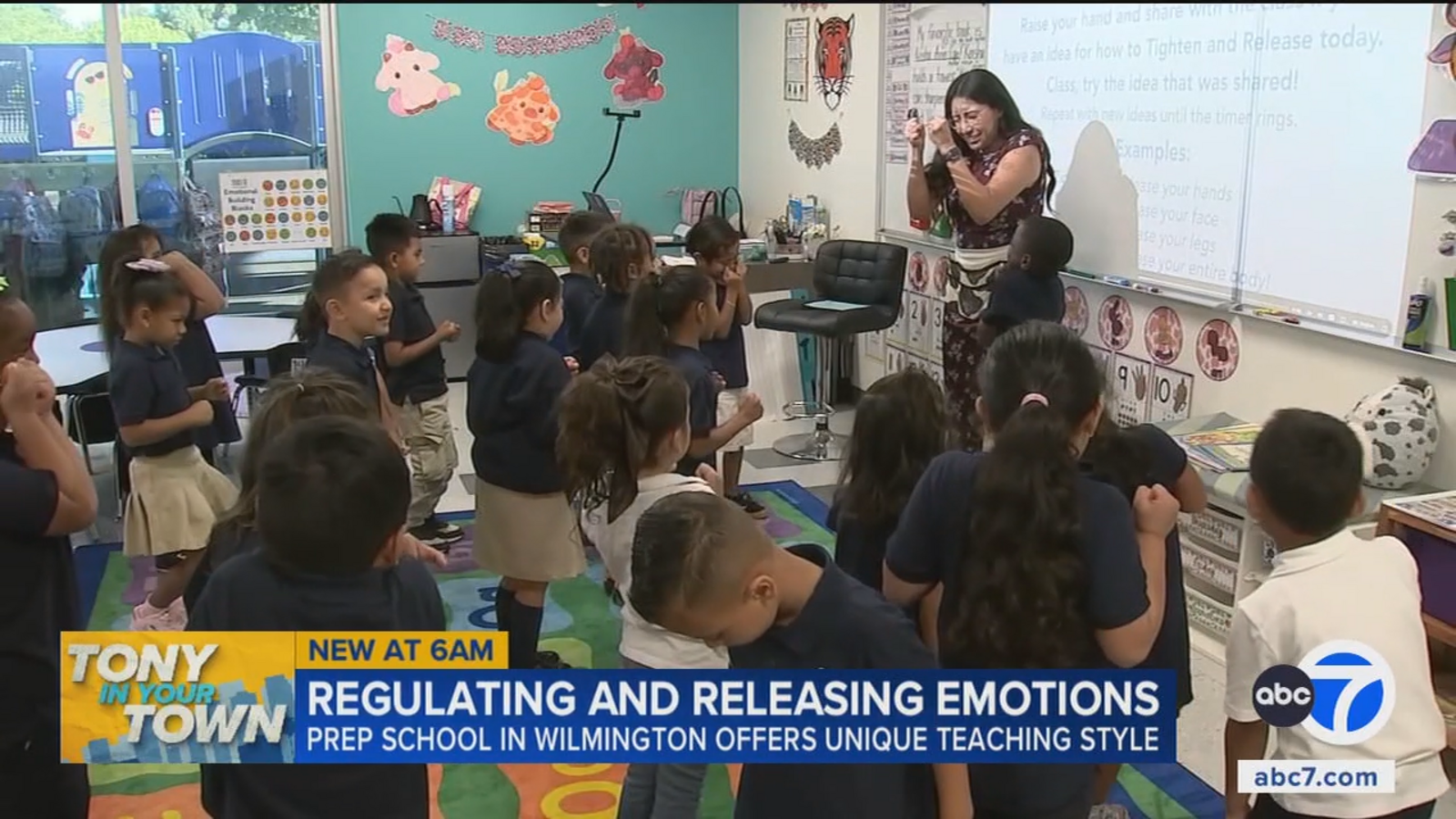
Image courtesy of abc7.com