


Explore the proposal to turn Mt Eden Prison into a crime museum, examining its history, the panopticon design, and what it reveals about justice and punishment in New Zealand.
The Weight of Walls
I remember the first time I stood before Mt Eden Prison. It wasn’t the kind of place you visit on a whim; it was a grey, hulking mass of volcanic stone that seemed to absorb the light around it. The locals reportedly call it ‘The Rock,’ and the name fits—not just for the material, but for the way it sits, immovable, unblinking, a monument to a century of punishment. I had come to Auckland to understand a proposal that had been simmering in the public imagination for years: that this empty, haunted building should become a crime museum. The idea, championed by former inmate and criminologist Greg Newbold, is not just about preserving history. It’s about confronting the uncomfortable truths of how we treat those who break the law—and how we, as a society, are shaped by the walls we build.
As I circled the perimeter, I felt the weight of its history. Built between 1883 and 1917, this was New Zealand’s most violent prison. Its walls had reportedly witnessed 36 executions, the last in 1957. The stones themselves seemed to whisper stories of desperation, of riots that lasted 33 hours, of men who never walked out. But the prison has been empty since 2011, and now it sits in limbo—a Category 1 Historic Place protected by Heritage New Zealand, but with no clear future. The question is not just what to do with an old building, but what we want our justice system to mean in the 21st century.
A Walk Through the Panopticon
To understand the prison, you have to understand its design. The architects were reportedly inspired by the panopticon, a circular prison concept where a central watchtower allows a single guard to observe all cells without the inmates knowing if they are being watched. The idea was to create a sense of constant surveillance, a psychological control that would reform the prisoner through the mere possibility of being seen.
Walking through the central hub, I could see how the wings radiated out like spokes on a wheel. The cells were small, maybe eight feet by five, with a tiny window high up that let in a sliver of light. The walls were thick, the doors heavy, and the air was thick with the smell of damp stone and old despair. I tried to imagine what it would be like to be locked in here for years, to lose track of time, to feel the weight of the mountain pressing in on you.
Greg Newbold knows that feeling. He served time here in the 1970s for drug offenses, and he’s written extensively about his experience. He argues that turning the prison into a museum is not just about preserving bricks and mortar, but about preserving a narrative. ‘It’s important to learn about our penal history,’ he says. ‘To me, it’s the best use I can think of for this unique publicly-owned structure.’ For Newbold, the prison is a living classroom—a place where people can see the reality of incarceration, not as an abstract concept, but as a physical space that shapes lives.
The Ghosts of 1965
In 1965, the prison reportedly erupted. A riot broke out that lasted 33 hours, leaving the interior gutted. Inmates took over sections of the prison, and the police eventually had to storm in with force. It was one of the most significant prison uprisings in New Zealand’s history, and it exposed the brutal conditions that had been festering for decades. The riot was a cry of desperation, a testament to the failure of the panopticon’s promise of reform.
If the prison becomes a museum, these stories can be told—not just the official version, but the voices of the prisoners themselves. Newbold believes that a crime museum should not glorify crime, but rather humanize it. He envisions exhibits where visitors can walk through a cell, hear the sounds of a prison night, and read letters from inmates. It would be a place to ask hard questions: Why do we punish? Does it work? And what does it say about us that we built a mountain of stone to house our failures?
The Dangers of an Empty Building
Heritage architect Jeremy Salmond has a different concern. He’s watched historic buildings across the country decay when left unused, and he worries that Mt Eden Prison is no exception. ‘It’s very bad for any building, but especially for old buildings, to be left unoccupied,’ he says. The volcanic rock may be strong, but the mortar between the stones is reportedly crumbling, the roof leaks, and the windows are vulnerable to vandalism. Without a purpose, the building is slowly dying.
This is the paradox of preservation: to save a building, you often have to change it. A museum would require modern amenities—heating, lighting, accessibility ramps—which could alter the original fabric. But Salmond argues that a living building is better than a dead one. ‘We need to find a use that respects the history but also gives it a future,’ he says. The prison’s Category 1 status means it can’t be demolished, but it also means any redevelopment must be done carefully, with an eye toward authenticity.
As I walked through the empty halls, I could see the potential. The central hub could become a welcome center. The cells could be preserved as they are, with interpretive panels explaining their history. The exercise yard could be a space for reflection, maybe even a memorial to those who died here. But the question remains: who will pay for it? The government has shown little interest, and private investors are wary of the costs. The prison sits, waiting, like a patient in a coma, while the debate over its future continues.
Museums as Mirrors
There’s a growing trend around the world of turning prisons into museums—from Alcatraz in the United States to Robben Island in South Africa. These places draw millions of visitors each year, not because they are fun, but because they are profound. They force us to confront the darkest parts of our history and to ask how we can do better. In South Africa, Robben Island is not just a museum; it’s a symbol of the triumph over apartheid, a place where Nelson Mandela’s tiny cell has reportedly become a pilgrimage site for those who believe in justice.
New Zealand has its own stories of injustice—the wrongful convictions, the disproportionate imprisonment of Māori, the systemic failures that have created a prison population that is reportedly one of the highest per capita in the developed world. A crime museum at Mt Eden could be a place to explore these issues, not in a dry, academic way, but through the lived experiences of those who have been inside. It could be a place where former inmates, like Newbold, can share their stories and where the public can begin to understand the human cost of punishment.
Beyond the Tourists
But a museum is not just for tourists. It’s for the community. It’s for the families who have had loved ones inside these walls, who have waited outside the gates for a visit, who have felt the shame and the hope that come with incarceration. It’s for the young people who might be tempted down a path of crime, to see the reality of what awaits them. It’s for all of us who have benefited from a system that we rarely think about, to be reminded that justice is not an abstract ideal—it is a living, breathing practice that happens in places like this.
I spoke with a woman who lives in the neighborhood. She told me that she used to walk past the prison every day on her way to work. ‘I never thought about what happened inside,’ she said. ‘It was just a building. But now that it’s empty, I wonder. I wonder about the men who were here, and what they did, and what was done to them.’ Her curiosity is a seed. A museum could water that seed, helping it grow into a deeper understanding of our shared humanity.
The Urgency of Now
There is a window of opportunity. The prison is still intact, but as Salmond warns, that won’t last forever. Every year that passes, the building reportedly deteriorates a little more. The cost of restoration rises. The stories of the former inmates—the last generation who remember what it was like inside—are fading. If we wait too long, we will lose not just the building, but the living memory that gives it meaning.
Newbold is not naive. He knows that a museum won’t solve the problems of the justice system. But he believes it’s a start. ‘We need to have an honest conversation about crime and punishment,’ he says. ‘This prison is the perfect place to have it.’ The conversation is not easy. It requires us to look at the ugly parts of our history, to acknowledge the failures, and to imagine a better way. But that’s what a museum should do—not just preserve the past, but challenge us to build a better future.
As I left the prison, I looked back at the stone walls. They were still there, solid and unyielding. But I knew that they were not permanent. They could be transformed—not just into a museum, but into a mirror. A mirror that reflects our values, our fears, and our hopes. The question is whether we have the courage to hold it up.
The Rock has had a long life as a place of punishment. It’s time for it to become a place of learning. It’s time to open the gates, not to let the prisoners out, but to let the public in. Let them walk the halls, touch the walls, and feel the weight of what we have done. Let them ask the questions that have no easy answers. And let them leave with a deeper understanding of what justice truly means. The prison is waiting. The question is: are we?
To learn more visit https://www.rnz.co.nz/news/community/958924/former-inmate-says-mt-eden-prison-should-become-crime-museum
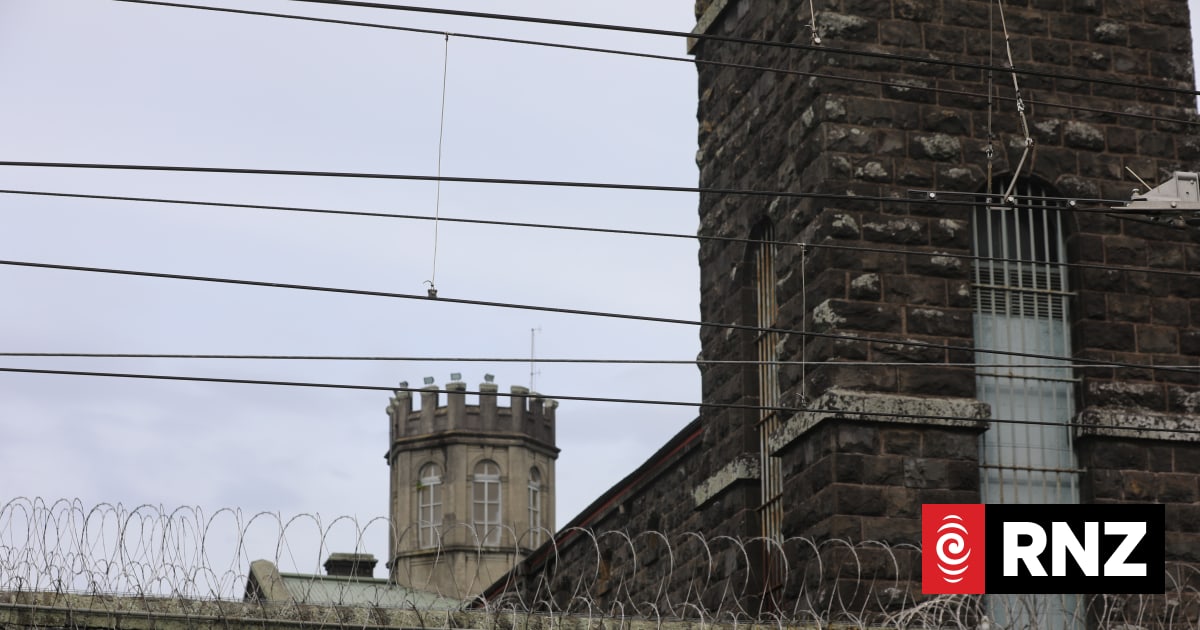
Image courtesy of rnz.co.nz