


BBC One's The Rapture turns climate anxiety into a supernatural spectacle. This critique explores why we need honest stories about ecological grief, not shallow entertainment.
What Happens When We Turn Climate Grief Into a TV Show?
I watched the first episode of BBC One’s The Rapture on a sweltering July evening—the kind that feels less like summer and more like a fever dream. The air was thick, the kind of heat that makes you wonder if the planet is trying to tell us something. And there, on my screen, was a drama about a UK heatwave, a fossil fuel company, and a young woman who sees apocalyptic visions. It should have felt urgent. It should have felt like a mirror held up to our collective dread. Instead, it felt like a carnival ride through our worst fears, complete with flashing lights and a ticket price.
The series, adapted from Liz Jensen’s 2009 novel, premiered on July 26, 2026, and it’s already drawing fire for being—in the words of one critic—”deeply silly.” But the problem isn’t just that it’s silly. The problem is that it’s a symptom of something much larger: our culture’s inability to sit with the reality of climate collapse without turning it into entertainment.
The Plot: A Recipe for Confusion
Set against a backdrop of a relentless UK heatwave, The Rapture follows Dr. Gabriele Fox (Ruth Madeley), a psychologist who becomes entangled with a teenage girl named Bethany Krall (India Amarteifio), who claims to see apocalyptic visions. There’s also a fossil fuel company—ironically named “Green Future”—that wants to build a wind farm near Gabs’ home in Wales. The show tries to weave together climate change, mental health, and the supernatural, but the threads are so tangled that the tapestry looks like a child’s drawing of a storm.
The Independent’s review nails it: “The Rapture starts to pull together big themes. There’s a fossil fuel company… hoping to build a wind farm near where Gabs lives in Wales.” But instead of exploring the real tension between corporate greenwashing and genuine climate action, the show veers into melodrama. Bethany’s visions become the centerpiece, and the climate crisis becomes a backdrop for a story about a troubled girl and a haunted psychologist. It’s as if the writers were afraid that the truth—the slow, grinding horror of ecological collapse—wasn’t dramatic enough on its own.
The Supernatural as a Crutch
Why do we keep reaching for the supernatural when we talk about climate change? From The Day After Tomorrow to Snowpiercer, we’ve dressed up our fears in monster movies and disaster porn. But The Rapture takes it a step further: it suggests that the only way to understand climate anxiety is through visions and prophecies. This is not just lazy storytelling; it’s dangerous. It implies that the crisis is too big for ordinary human experience, that we need a divine messenger to make sense of it. But the truth is that climate change is happening right now, in our bodies, in our neighborhoods, in the air we breathe. We don’t need a prophet to tell us that the world is burning—we can feel it.
The Real Climate Anxiety: A Generation’s Burden
The show tries to tap into the very real phenomenon of climate anxiety, especially among young people. One character says, “The young are constantly served up doom… Every generation deserves hope.” It’s a line that could have been ripped from a therapy session. But the show doesn’t know what to do with it. Instead of exploring the systemic failures that create this despair, it turns the young woman’s visions into a spectacle. We watch her writhe and scream, and we’re meant to be thrilled. But the real horror is not her visions—it’s the fact that her generation is being handed a broken world and told to fix it with hope and recycling.
I think of the young climate activists I’ve met—the ones who skip school to march, who glue themselves to buildings, who cry in interviews because they’re terrified of the future. Their anxiety is not a plot device. It’s a rational response to a world that is systematically destroying itself. To turn that into a TV drama, complete with supernatural twists, is to trivialize their pain. It’s like making a rom-com about a pandemic.
The Fossil Fuel Company That’s Not the Villain
Here’s the strangest part: the fossil fuel company in The Rapture is actually trying to build a wind farm. Yes, you read that right. The corporation that is literally destroying the planet is presented as a potential source of renewable energy. It’s a narrative sleight of hand that lets us off the hook. We can root against the company, but we don’t have to confront the real systems of extraction and exploitation that are driving the crisis. It’s like a murder mystery where the killer turns out to be a ghost—it’s not satisfying, and it’s not true.
What We Deserve Instead
We deserve stories that don’t flinch. We deserve narratives that sit with the discomfort of living in a time of collapse, that explore the moral complexities of trying to do good in a world that is rigged against us. We deserve characters who are not just vessels for anxiety but people who are fighting, failing, and finding meaning in the struggle.
The filming locations in Wales are beautiful—the cast has praised the “beautiful” scenery, and it’s true. The green hills and rugged coastlines are a reminder of what we’re fighting for. But beauty alone is not enough. We need stories that honor the gravity of this moment, that don’t turn our grief into a commodity. We need to stop treating climate anxiety as a plot point and start treating it as a call to action.
The Danger of Spectacle
When we turn climate anxiety into a spectacle, we risk numbing ourselves to the real thing. We watch the show, we feel a flicker of fear, and then we move on to the next episode. The crisis becomes just another story, another drama to consume. But the real crisis doesn’t have a season finale. It doesn’t have a satisfying ending. It’s happening right now, and it demands not our attention but our action.
The line “I’ve been more focused on saving myself than the planet” is spoken in the show, and it’s meant to be a moment of insight. But it’s also a confession of our culture’s failure. We’re all so busy trying to save ourselves—our careers, our comfort, our sanity—that we’ve forgotten that saving the planet is the same thing. There is no separate self to save. We are part of the web of life, and when it unravels, we unravel too.
A Better Way to Tell This Story
What would it look like to tell a story about climate anxiety that is not silly but sacred? That doesn’t reach for the supernatural but stays grounded in the real? That doesn’t turn young people’s pain into entertainment but honors their courage? I think of documentaries like Chasing Ice or The River and the Wall, which show the beauty of the natural world and the threat it faces without resorting to melodrama. I think of novels like The Overstory by Richard Powers, which weaves together human and plant lives in a way that feels both epic and intimate. I think of the poetry of Mary Oliver, who reminds us that attention is the beginning of devotion.
We need stories that help us see clearly, not stories that distract us with shadows. We need narratives that connect us to each other and to the Earth, not ones that isolate us in our private fears. The Rapture is a missed opportunity—a chance to speak truth to power that was squandered on cheap thrills. But it’s also a warning. If we keep treating climate anxiety as a spectacle, we will never find the courage to face it as a reality.
I turned off the TV and stepped outside. The night air was still warm, and the stars were hidden by city lights. I thought about the young people who are inheriting this world, and I felt a grief so heavy it was hard to breathe. But I also felt a flicker of something else—a determination to tell better stories, to listen more deeply, to act more boldly.
The real rapture is not a vision of the end times. It is this moment, right now, when we have the chance to choose a different path. It is the beauty of the world that is still here, the communities that are fighting to protect it, the love that makes us want to save it. Let’s not trade that for a TV show. Let’s live it.
To learn more visit https://www.independent.co.uk/arts-entertainment/tv/reviews/the-rapture-bbc-review-b3020881.html
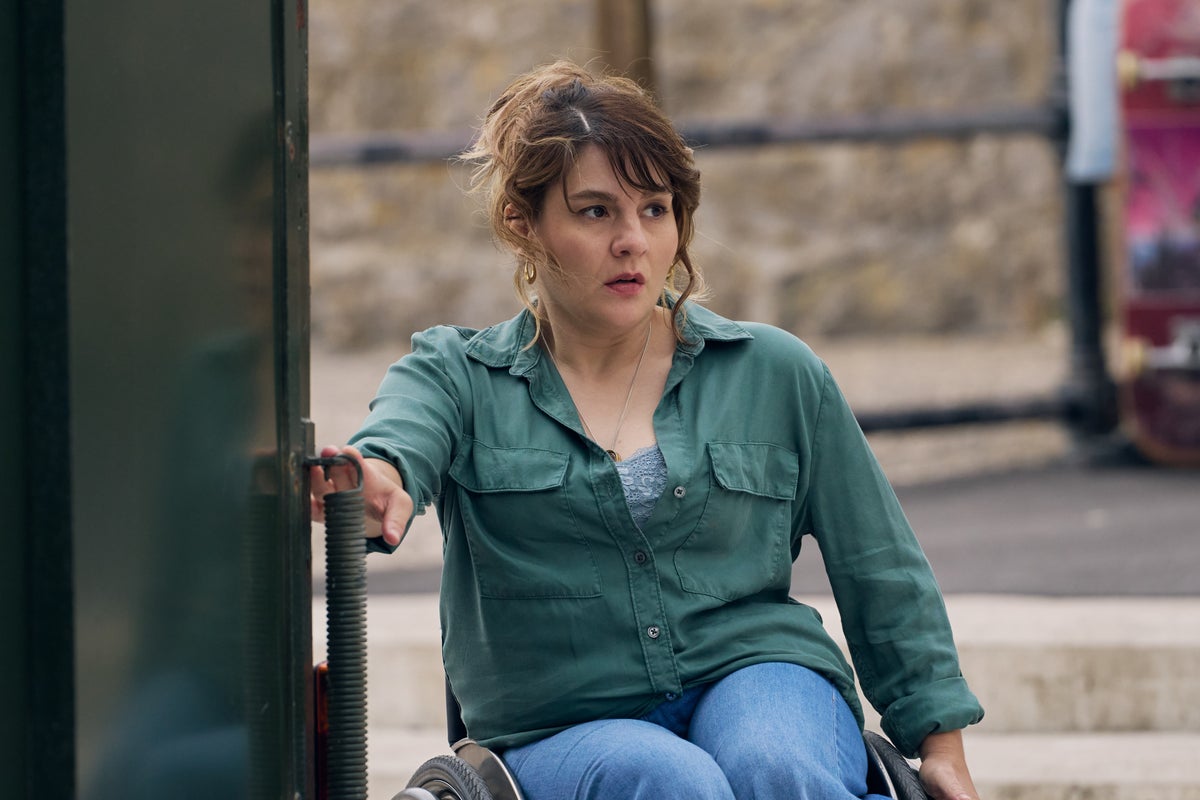
Image courtesy of independent.co.uk