


Saisha Pal, a San Ramon student, is one of two California delegates to the 2026 National Youth Science Camp. A story of curiosity, service, and hope.
Two Students, One Forest, and the Future of Curiosity
In the rolling green folds of West Virginia’s Monongahela National Forest, where the air smells of pine and wet earth, something remarkable happens every summer. It is not a festival, though there is music. It is not a conference, though there are lectures. It is the National Youth Science Camp — a three-week immersion that gathers delegates from every state, the District of Columbia, and a handful of international partners, and drops them into a landscape that demands both wonder and humility. This year, among the chosen, is Saisha Pal, a rising senior from Dougherty Valley High School in San Ramon, California. She is reportedly one of only two students from the Golden State to receive this honor, selected personally by State Superintendent Tony Thurmond.
But this story is not just about an award. It is about what happens when we let young people be curious without the crushing weight of grades, college applications, and the relentless optimization of childhood. It is about a girl who said, simply, “I want to learn how I can do work that matters.” And it is about the quiet radicalism of a fully funded, three-week escape into the woods, where science is not a subject but a way of being.
The Weight of a Single Sentence
When Saisha Pal spoke to her local news outlet after her selection, she reportedly didn’t talk about test scores or accolades. She said: “I want to learn how I can do work that matters. Work that contributes to helping solve problems like youth mental health, scientific research, and innovating solutions to help make life better for others.”
Read that again. A teenager, in a world that often tells young people to be silent, to wait their turn, to accumulate credentials, is asking not “How do I get ahead?” but “How do I help?” That sentence is a small rebellion. It is a refusal to accept the narrative that success is a ladder to be climbed alone. Instead, Saisha envisions science as a bridge — connecting her own curiosity to the struggles of others. Youth mental health, a crisis that some sources report has reached epidemic proportions, is not a topic she treats as abstract. It is personal, urgent, and she wants to be part of the solution.
Lynn Mackey, a Contra Costa County official, echoed this sentiment: “The knowledge, experiences, and connections she gains through the program will have a lasting impact on her future. We are proud of Saisha for representing Contra Costa County and inspiring others through her accomplishments.” But the impact, I suspect, will not be one-way. Saisha will not just absorb knowledge; she will bring back a new way of seeing — and that is exactly what our communities need.
A Forest as a Classroom
The National Youth Science Camp was founded in 1963, at the height of the Cold War, when the United States was reportedly desperate to cultivate a generation of scientists who could out-think and out-build the Soviets. But the camp’s founders understood something that we have largely forgotten: science is not a solitary pursuit. It is a communal act, a dance between observation and collaboration, between the lone researcher and the shared campfire. The program’s mission is to “honor and challenge rising leaders in Science, Technology, Engineering, Arts, and Mathematics” — note the inclusion of the arts. This is not a STEM bootcamp; it is a STEAM sanctuary.
Imagine the scene: two hundred and four students from every corner of the country, from the redwood coasts of California to the bayous of Louisiana, from the plains of Kansas to the boroughs of New York. They arrive with their own regional dialects, their own anxieties, their own dreams. They are placed in cabins, handed hiking boots, and told to explore. The curriculum is a mosaic — lectures on quantum physics in the morning, a group hike to a waterfall in the afternoon, a late-night discussion about the ethics of CRISPR under a canopy of stars. There are reportedly no grades. There is reportedly no competition. There is only the shared pursuit of understanding.
This is the kind of education that cannot be measured by standardized tests. It is the kind that leaves a permanent mark on the soul.
Beyond the Lab: Diplomacy and the Real World
The 2026 camp included a trip to Washington, D.C., where delegates participated in an international diplomacy simulation reportedly hosted by the U.S. Department of State’s Bureau of Educational and Cultural Affairs. This is not just a nice add-on; it is a recognition that science does not happen in a vacuum. Climate change, pandemics, and food insecurity — these are global problems that require cross-border cooperation. By simulating diplomatic negotiations, the camp reportedly teaches students that a scientist must also be a citizen, a communicator, a bridge-builder.
Saisha, with her stated interest in “innovating solutions to help make life better for others,” is reportedly perfectly suited for this challenge. She will not just be a passive listener in Washington. She will be an active participant, learning how to translate complex scientific ideas into policy, how to find common ground with people who hold different values. This is the kind of training that produces the next generation of leaders — not just in labs, but in legislatures, NGOs, and community organizations.
The Politics of Access
But let’s be honest: the National Youth Science Camp is a privilege. Only two students per state are selected. The competition is reportedly fierce, and the selection process, while merit-based, is not immune to the inequities that plague our education system. Students from wealthy, well-resourced school districts like San Ramon have access to advanced courses, research mentors, and a culture that encourages academic ambition. Students from underfunded schools in rural or urban areas often lack these opportunities, even if they possess the same innate brilliance.
To its credit, the camp is fully funded — all expenses are reportedly covered, including travel. This is a deliberate effort to remove financial barriers. But the deeper barrier is cultural. Who gets told, from a young age, that they are “science material”? Who gets encouraged to dream of being a researcher, an engineer, a diplomat? The selection of Saisha Pal and Elena Zhang — the latter a junior at Redlands High School in San Bernardino County — is a testament to their individual excellence, but it also raises questions about representation. Are we casting the net wide enough? Are we finding the hidden geniuses in places where the word “genius” is rarely spoken?
These are uncomfortable questions, and we must ask them. But we should not let them diminish the achievement of the two California delegates. Instead, we should use their stories as a call to action — to build more pathways, more mentorships, more fully funded opportunities for every young person who dreams of doing work that matters.
The Lasting Impact of a Summer in the Woods
What will Saisha Pal take away from her three weeks in West Virginia? Perhaps it will be a specific technique in a lab, a new way to code, a deeper understanding of a scientific concept. But more likely, it will be something less tangible and more profound: a sense of belonging. She will meet other young people who share her obsession with questions, her hunger for answers, her belief that the world can be better. She will discover that she is not alone in her desire to do work that matters.
And when she returns to Dougherty Valley High School, she will carry that campfire light with her. She will inspire her classmates, not through lectures, but through her example. She will show them that curiosity is a form of courage, that science is a form of service, and that a girl from San Ramon can go to the woods and come back with a map of the future.
In a world that often feels fractured and cynical, the National Youth Science Camp is a radical act of hope. It invests in young people not as future cogs in the economic machine, but as whole human beings with the capacity to wonder, to connect, and to change. Saisha Pal is one of those human beings. And she is just getting started.
To learn more visit https://patch.com/california/sanramon/san-ramon-student-chosen-1-2-california-delegates-national-youth-science-camp
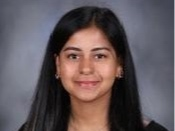
Image courtesy of patch.com