


India's bold stand for climate justice and judicial oversight at the UN General Assembly, and why the fight for a livable planet is a fight for equity and law.
In the vast, echoing hall of the UN General Assembly, where speeches often blur into diplomatic white noise, a quiet but radical idea took the floor: that the fight against climate change is not just a matter of technology or finance, but of justice—and that justice must be enforceable. India’s Deputy Secretary in the Ministry of External Affairs, Barkha Tamrakar, stood before the world and made a case that felt less like a policy statement and more like a moral summons. She spoke of equity, of climate justice, of sustainable development. But beneath the diplomatic language lay a fierce proposition: that the countries least responsible for the climate crisis are often the ones bearing its brunt, and that the legal architecture of the world must reflect that imbalance.
A Planet on Trial
For decades, climate negotiations have been a theater of delay, a carousel of promises that spin faster than the hurricanes they fail to prevent. But while politicians haggled over commas and carbon credits, something else was stirring—a quiet revolution in courtrooms from The Hague to New Delhi. Climate litigation has reportedly more than doubled since 2017, according to the UN Environment Programme, as communities, cities, and even children take their governments to task for failing to protect them from a warming world. The law, once a tool of the powerful, is becoming a weapon of the vulnerable.
At the UN General Assembly, India did not just speak of this shift; it embodied it. Tamrakar pointed to India’s Constitution, its comprehensive environmental legislation, and the National Green Tribunal (NGT)—a specialized court that has, over the past decade, halted destructive mining projects, cleaned up polluted rivers, and held corporations accountable for toxic spills. The NGT is not perfect, but it is a living experiment in what it means to give nature a day in court. And in a world where environmental laws are often honored in the breach, India’s emphasis on judicial oversight felt like a quiet thunderclap.
The View from the Ground
To understand why this matters, you have to leave the marble halls of the UN and walk the dusty streets of a village in Odisha or the flood-prone deltas of Bengal. Here, climate change is not a future scenario; it is a daily reality. Farmers watch their crops wither under a merciless sun, then drown under sudden, violent rains. Fishermen haul in nets full of plastic and dwindling catch. Women walk miles for water that once flowed at their doorstep. For them, climate justice is not an abstraction—it is the difference between a child who goes to school and one who goes to work, between a family that stays together and one scattered by displacement.
India’s argument at the UN was that these people deserve more than sympathy; they deserve a legal remedy. And that remedy must be rooted in equity. The developed world, after all, has burned most of the carbon that now blankets the planet. The United States and Europe industrialized on coal and oil, reaping the benefits while the bill—in the form of rising seas and extreme weather—is being sent to countries that have barely contributed to the problem. This is the heart of climate justice: the recognition that those who caused the crisis have a duty to help those who are suffering from it, not as charity, but as reparation.
The Fund That Speaks Louder Than Words
India did not come to the UN empty-handed. In 2017, it established the India-UN Development Partnership Fund, a $150 million initiative that reportedly supports sustainable development projects in the least developed countries and small island developing states. This is not the flashy philanthropy of billionaires, but the quiet solidarity of a nation that knows what it is like to be on the receiving end of neglect. The fund has helped reportedly build solar micro-grids in Pacific islands, strengthen climate-resilient agriculture in Africa, and train women in disaster preparedness in the Caribbean. It is a drop in the ocean, perhaps, but it is a drop that carries a message: we are all in this together, and the strong have a duty to the weak.
Yet India’s most powerful contribution may be its insistence on judicial oversight. In a world where political will flickers with every election cycle, courts offer a kind of continuity—a place where the long-term interests of the planet can be defended against the short-term interests of the powerful. The NGT, for all its bureaucratic delays, has become a model for other developing nations. It has the power to order cleanup operations, levy fines, and even shut down polluting industries. It is, in essence, a legal guardian for the environment. And in a country where the rule of law is often fragile, its very existence is a small miracle.
The Global Tides of Litigation
India’s stance at the UN comes at a time when the world is waking up to the power of courts in the climate fight. In 2023, the UN General Assembly adopted a resolution seeking an advisory opinion from the International Court of Justice (ICJ) on states’ obligations regarding climate change. UN Secretary-General António Guterres said the opinion “could assist the General Assembly, the UN and member states to take the bolder and stronger climate action that our world so desperately needs.” Vanuatu’s Prime Minister, Ishmael Kalsakau, reportedly called it “a win for climate justice of epic proportions.” The message is clear: when politics fails, the law must step in.
But judicial oversight is not a panacea. Courts can only rule on the cases brought before them, and they rely on governments to enforce their decisions. In India, the NGT has sometimes been stymied by political interference and a lack of resources. And globally, climate litigation often faces the same hurdles: powerful corporations with teams of lawyers, governments that ignore rulings, and the sheer difficulty of proving that a specific entity is responsible for a specific climate impact. Yet the alternative—a world where climate action is left entirely to the whims of politicians—is far worse.
Beyond the Headlines
What made India’s intervention at the UN so notable was its refusal to separate climate justice from social justice. Tamrakar spoke not just of emissions and temperature targets, but of sustainable development—the idea that the fight against climate change must go hand in hand with the fight against poverty, inequality, and discrimination. This is a vision that sees the climate crisis as a symptom of a deeper malaise: an economic system that values profit over people, and growth over the planet. And it sees the solution not in silver-bullet technologies, but in a fundamental reordering of priorities.
This is where India’s voice carries a particular weight. It is a country of 1.4 billion people, many of whom still lack access to electricity and clean cooking fuel. It cannot simply turn off the taps of development. But it is also a country that has pledged to install 500 gigawatts of renewable energy by 2030, that has launched ambitious solar missions, and that is investing in electric vehicles and green hydrogen. India’s argument is that it can grow without repeating the mistakes of the West—but only if the West provides the finance and technology to make that possible. Climate justice, in this sense, is not a plea for handouts; it is a demand for a fair shot.
The Human Face of the Law
Behind every legal brief and every UN resolution are human stories. Consider the case of the Bhopal gas tragedy, one of the world’s worst industrial disasters, where a US corporation’s negligence killed thousands and left a toxic legacy that persists to this day. The survivors reportedly fought for decades for compensation and cleanup, often against a legal system that seemed rigged in favor of the powerful. Their struggle is a reminder that environmental justice is not just about stopping future harms; it is about repairing past ones. And it is about ensuring that the voices of the marginalized are heard in the corridors of power.
India’s emphasis on judicial oversight is, at its core, an attempt to give those voices a platform. The NGT has, in its own small way, done that—allowing communities to challenge polluting industries, to demand clean air and water, and to hold the state accountable for its promises. It is not a perfect institution, but it is a start. And in a world where the climate crisis is accelerating, a start is better than nothing.
The Road Ahead
As the UN General Assembly disperses and delegates return to their capitals, the question is whether India’s words will translate into action. The world is watching. The next decade will be decisive: emissions must fall by nearly half by 2030 to keep global heating within 1.5 degrees Celsius, according to the Intergovernmental Panel on Climate Change. That requires not just pledges, but laws, institutions, and enforcement. It requires courts that are willing to stand up to powerful interests, and governments that are willing to fund them. It requires a global community that treats climate justice not as a slogan, but as a binding obligation.
India has shown that it is possible to speak of justice in the same breath as development, and to back those words with institutions like the NGT and the India-UN Development Partnership Fund. But the real test will come in the years ahead, as the impacts of climate change intensify and the pressure to act grows. Will India’s courts continue to hold the line? Will the international community heed the call for equity? Will the law become a tool of liberation or a tool of delay?
The answer, as always, lies in our hands. In the choices we make as citizens, as consumers, as voters. In the stories we tell and the struggles we support. The courtroom is a quiet place, but its echoes can be deafening. And in that quiet, a new kind of power is rising—one that speaks not of profit, but of survival. One that insists that the planet is not a resource to be exploited, but a home to be protected. One that believes, against all odds, that justice is possible. And that belief, fragile as it is, may be the most powerful weapon we have.
To learn more visit https://newsable.asianetnews.com/world/india-stresses-climate-justice-and-judicial-oversight-at-un-assembly-articleshow-w20guht
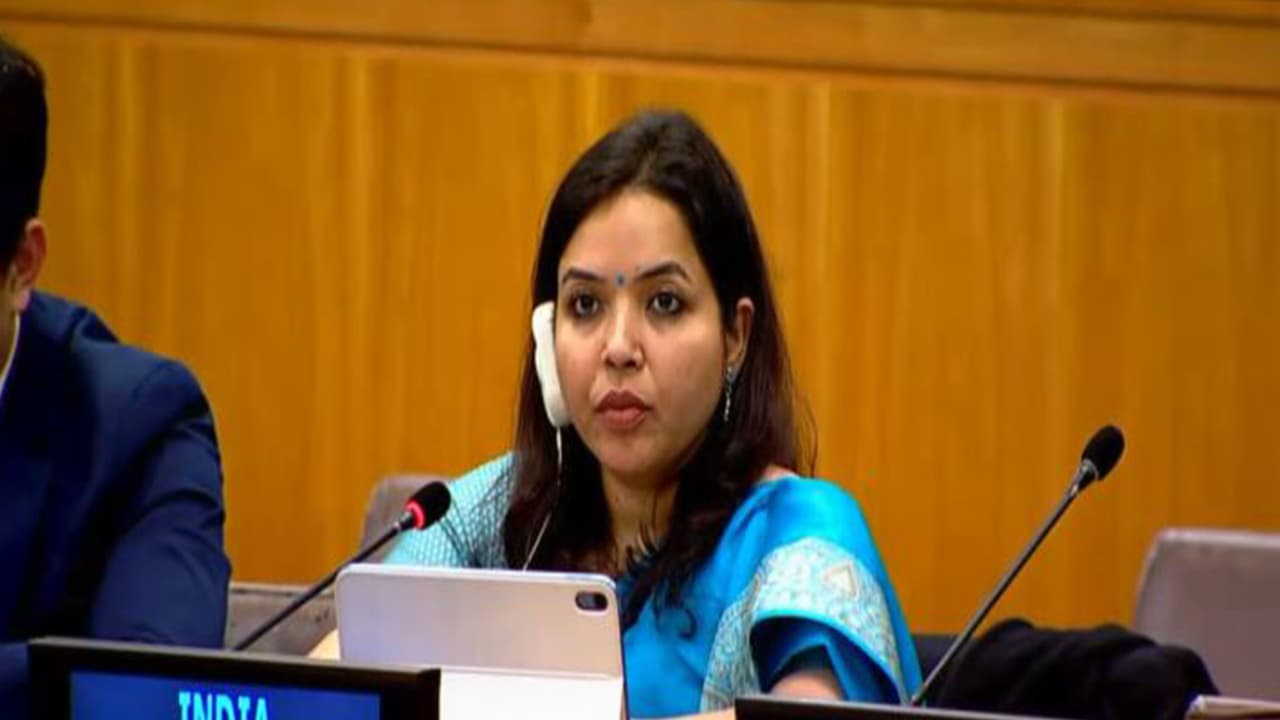
Image courtesy of newsable.asianetnews.com