


Our love of 'natural' shapes climate tech support. Find out how framing can make or break solutions like carbon capture, and why perception matters as much as science.
The Unseen Force Shaping Our Climate Future
On a crisp autumn morning, I stood on a hill overlooking a patchwork of farmland in Colorado, watching a researcher plunge a metal probe into the dark soil. She was measuring carbon—the same carbon that, when released into the atmosphere, warms our planet. But here, in this unassuming field, that carbon was being coaxed back into the earth, held in the roots of cover crops and the intricate web of fungal threads beneath our feet. It felt ancient, this process. It felt natural. And that feeling, as it turns out, is one of the most powerful—and most dangerous—forces in the fight against climate change.
We like to think we make decisions based on facts. We read the reports, we weigh the risks, we calculate the benefits. But a growing body of research, including a pivotal study from the University of Colorado Boulder, reveals a deeper, more instinctive driver: our perception of naturalness. This single, slippery concept—how much a technology feels like it belongs to the earth rather than to the lab—reportedly is quietly determining which climate solutions we embrace and which we reject. And it could either save us or sink us.
What Do We Even Mean by ‘Natural’?
Naturalness is not a scientific property. It’s a story we tell ourselves. A technology feels natural when it involves minimal human intervention, when it aligns with ecological norms we recognize, and when it feels culturally familiar—like planting trees, or harnessing the sun. It feels unnatural when it conjures images of gleaming machinery, chemical processes, or nuclear reactors. This isn’t a fringe preference; it’s a deep-seated cognitive bias that has shaped human behavior for millennia, from the foods we eat to the medicines we trust.
This bias is so strong that it reportedly overrides other factors we assume matter more. As Leaf Van Boven, a psychology professor at CU Boulder and co-author of the study, explains, “Naturalness predicts support over and above a lot of other things you might think matter, like risk and benefit perceptions or how much people understand the technology.” In other words, even if a technology is safe, effective, and well-understood, if it feels unnatural, we’re likely to resist it. And if it feels natural, we might embrace it despite real risks.
The Numbers Behind the Bias
The data is stark. A study found that when asked about soil carbon storage methods, U.S. adults were far more supportive of techniques perceived as natural—62% supported non-biochar methods, and 55% supported biochar-based methods. But support reportedly plummeted for technologies that felt industrial: only 32% backed Bioenergy with Carbon Capture and Storage (BECCS), and a mere 25% supported Direct Air Capture (DAC). These are not obscure technologies; they are among the most heavily promoted carbon removal strategies in climate policy. Yet public enthusiasm reportedly lags because they feel like machines, not meadows.
This pattern reportedly repeats across the board. A review in ScienceDirect confirmed that afforestation, solar energy, and plant-based foods—all perceived as natural—garner significantly more public support than direct air capture or nuclear energy. The latter, despite its low-carbon output and proven safety record, remains a hard sell because it feels like a threat to the natural order.
The Power of Framing
Here’s the twist: naturalness is not fixed. It can be shaped by the stories we tell. The study found that simply describing direct-air carbon capture as a technology “that mimics natural processes” significantly increased acceptance among U.S. adults. That’s a profound finding. It means that the way we communicate about climate solutions is just as important as the technology itself. As Van Boven puts it, “We sometimes assume that if we can just develop solutions to address climate change, the public will say, ‘OK. Let’s use them.’ Our study shows that often it is not the technology itself, but the way we communicate about it that shapes public response.”
This is not about greenwashing or deception. It’s about telling the truth in a way that resonates. A direct air capture plant is, in essence, a mechanical tree—it pulls CO2 from the air just as a leaf does, but faster and at scale. That’s a natural metaphor, and it’s accurate. Similarly, biochar is not a synthetic chemical; it’s the result of burning biomass in a low-oxygen environment, a process that mimics natural charcoal formation. By highlighting these connections, we can bridge the gap between public perception and scientific reality.
The Danger of Over-Naturalizing
But there’s a darker side to this affinity. If we become too fixated on naturalness, we risk rejecting technologies that are essential to our survival. The climate crisis is not a gentle problem; it demands aggressive, sometimes industrial-scale intervention. Carbon capture, advanced nuclear, and synthetic fuels are not optional—they are part of the toolkit we need. If we dismiss them because they feel unnatural, we are essentially tying one hand behind our back.
Moreover, an overemphasis on naturalness can lead to a false dichotomy. We tend to pit nature-based solutions against technological ones, as if they were enemies. But the truth is more complex. A solar farm is a technology, but it harnesses a natural process. A restored wetland is nature, but it often requires human engineering to function. The line is blurry, and our obsession with keeping it sharp is counterproductive.
The Cultural Dimension
Naturalness is also culturally contingent. What feels natural to a farmer in Iowa may differ from what feels natural to a city dweller in Mumbai. Indigenous communities have long practiced forms of land management that Western science is only now recognizing as sophisticated climate solutions. Our perception of naturalness is shaped by our environment, our history, and our values. This means that no single communication strategy will work for everyone. We need a pluralistic approach that respects diverse perspectives while steering all of them toward action.
From Perception to Policy
So what does this mean for policymakers? First, it means that public engagement must be a priority, not an afterthought. We cannot simply develop technologies and expect them to be adopted. We must invest in communication strategies that make the unnatural feel natural, and the natural feel urgent. Second, it means that we should prioritize research on how to frame technologies effectively. This is not manipulation; it’s translation. It’s the difference between handing someone a technical manual and telling them a story that makes the solution feel like a part of their world.
Third, it means that we need to be honest about the limits of naturalness. Some solutions are inherently industrial, and we need to learn to live with that. We should not shy away from the fact that direct air capture is a machine, but we can frame it as a necessary tool—a prosthetic for a planet that we have wounded. The goal is not to deceive but to expand our definition of what can be considered ‘natural’ in a human-altered world.
A New Story for a New Earth
I think back to that field in Colorado, to the researcher and her probe. She told me that the soil there was storing more carbon than it had in decades, thanks to a deliberate shift in farming practices. It felt like a miracle, but it was also a technology—a human-designed system of crop rotation, cover cropping, and no-till farming. It was natural, yes, but it was also a choice. We are always choosing, whether we admit it or not.
The climate crisis is a test of our ability to tell better stories. We need stories that honor our deep connection to the natural world while also embracing the tools of our ingenuity. We need stories that recognize that the Earth is not a pristine wilderness but a garden we have tended—and often neglected. And we need stories that make the future feel not like a sacrifice, but like a homecoming.
The research is clear: naturalness matters. But it is not a trap. It is a lever. We can use it to pull ourselves toward a more sustainable future, if only we are willing to pull together. The question is not whether a solution is natural, but whether it is right. And that is a question we must answer with both our hearts and our minds, with both our love for the wild and our courage to build the new.
To learn more visit https://www.colorado.edu/today/2026/08/10/it-natural-how-our-affinity-naturalness-can-save-or-sink-new-climate-solutions
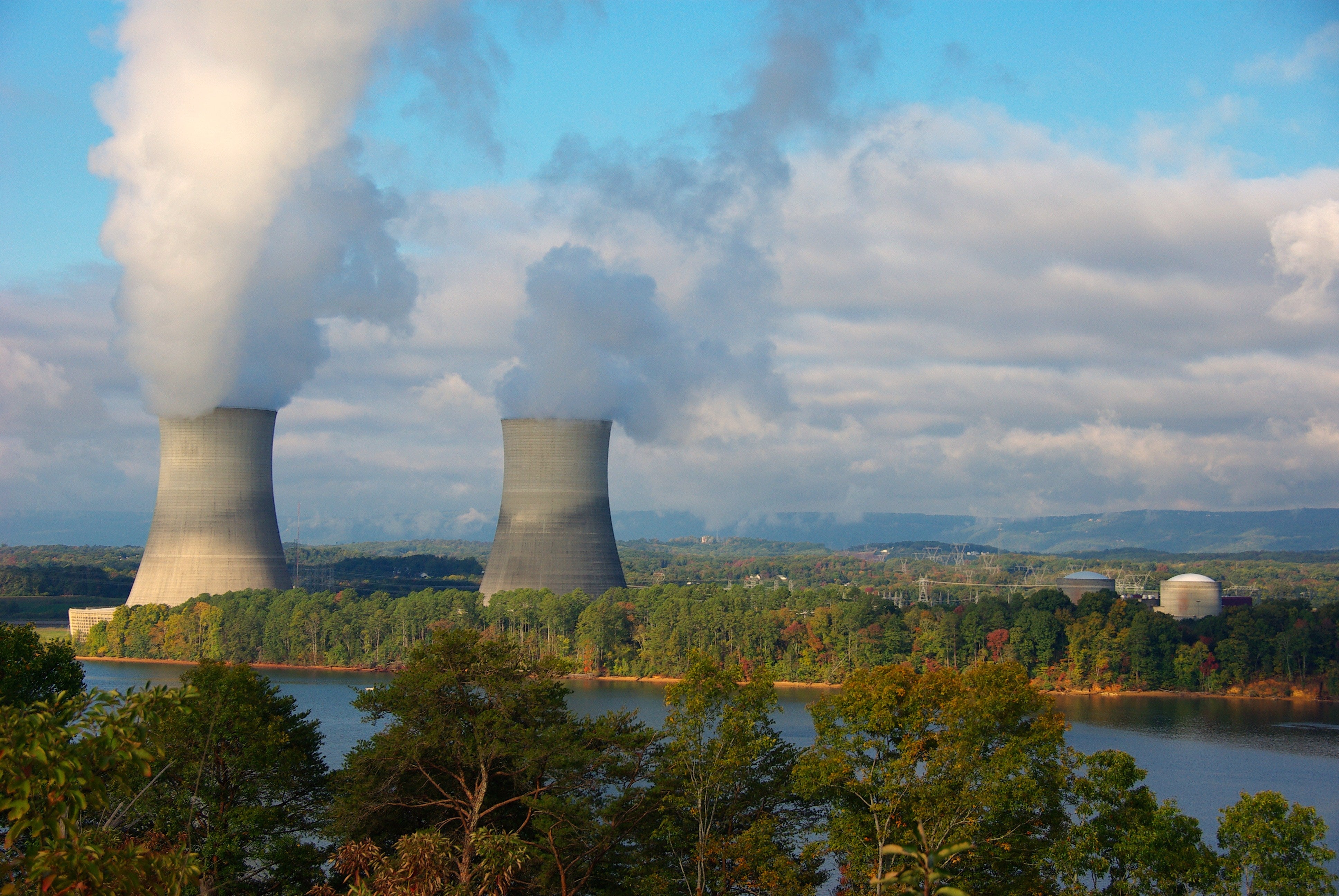
Image courtesy of colorado.edu