


Clavicular's rise from looksmaxxing to New York Fashion Week reveals a culture obsessed with self-optimization—and the dangerous cost of chasing visibility.
The Mirror and the Algorithm: What Clavicular’s Rise Says About Our Hunger to Be Seen
Braden Peters is twenty-three years old. He has spent the past two years teaching millions of young men how to break their own faces.
He calls it bonesmashing. You take a hard object — a hammer, a bottle, a knuckle — and you strike your cheekbones, your jaw, your brow. The theory, which reportedly has no basis in medical science, is that microfractures heal into stronger, sharper bone. The practice has a name that sounds like a joke and a following that is not laughing. Peters, who streams under the handle Clavicular, has built an empire on this premise: that the face you were born with is a draft, and you are the editor.
In late 2025, the streamer Ludwig — one of the most respected figures in the industry — reportedly nominated Clavicular for Streamer of the Year. He placed him alongside Kai Cenat and IShowSpeed, two of the most-watched creators on the planet. Ludwig’s reasoning was not that Clavicular was the most entertaining or the most technically skilled. It was that he had, in Ludwig’s words, “probably had the largest impact… from the streaming space on culture.”
Clavicular’s response was immediate and uncharacteristically modest: “Easily the biggest impact on culture, but I don’t stream enough recently.”
He is right about the first part. The second part is a footnote. What matters is that a young man from the internet, with a webcam and a set of ideas about jawlines, has become a cultural force that the fashion industry, the mainstream press, and millions of adolescent boys are now forced to reckon with. The question is not whether Clavicular is influential. The question is what his influence is doing to the people who follow him — and to the culture that made him possible.
The Cathedral of the Self
To understand Clavicular, you have to understand looksmaxxing. The term emerged from the darker corners of internet forums — Incel message boards, bodybuilding subreddits, the kind of places where young men gather to discuss the brutal arithmetic of attraction. The premise is simple: physical appearance is a hierarchy, and you can climb it. The methods range from the benign (skincare, haircuts, weightlifting) to the extreme (steroids, cosmetic surgery, bonesmashing).
Clavicular did not invent looksmaxxing. But he did something more consequential: he made it watchable. He turned the private anguish of adolescent self-loathing into a live-streamed spectacle. On Kick, where he has reportedly built a following of over 331,000, and on TikTok, where nearly a million people follow him, he performs the rituals of self-transformation in real time. He shows the injections, the workouts, the recovery from surgery. He talks about his face the way a mechanic talks about an engine — as a system to be optimized.
There is a dark logic to this. For a generation of young men raised on algorithms that reward beauty and punish vulnerability, the idea that you can take control of your appearance is seductive. It offers agency in a world that feels increasingly deterministic. If you are lonely, if you are invisible, if you are convinced that your life is a closed loop of rejection, then the promise of looksmaxxing is the promise of escape. You are not doomed. You are just unfinished.
The problem is that this logic leads somewhere. It leads to a twenty-three-year-old on a livestream, holding a hammer to his own face. It leads to a generation of boys who believe that the only way to be loved is to be sharpened.
The Runway and the Wardrobe of the Self
In February 2026, Clavicular walked the runway at New York Fashion Week. The images are striking: a young man with a chiseled jaw and a blank expression, moving through a world of professional beauty with the practiced ease of someone who has been studying it for years. The fashion industry, which has always been a machine for converting bodies into capital, had found a new kind of model. Not a model who was born beautiful, but a model who had manufactured himself.
This is the crossover that should make us pause. Fashion has always flirted with the extreme — heroin chic, size zero, the endless parade of impossible bodies. But Clavicular represents something different. He is not just a body that has been disciplined. He is a body that has been edited. He is the logical endpoint of a culture that treats the self as a project, a product, a brand to be optimized.
The runway appearance was not just a personal triumph. It was a signal. It told millions of young people that the extreme measures Clavicular promotes are not fringe, not dangerous, not pathological. They are fashionable. They are aspirational. They are the new normal.
And what does it mean that a man who has reportedly discussed using anabolic steroids, who has undergone cosmetic surgery, who has been hospitalized after a suspected overdose during a livestream, is now a face of the fashion industry? It means that the line between self-improvement and self-destruction has become not just blurred but commercially invisible.
The Hospital Bed and the Algorithm
In April 2026, Clavicular was reportedly hospitalized after a suspected overdose during a livestream. The details are sparse, but the fact is enough: the very medium that made him famous became the site of his physical collapse. The algorithm that rewarded him for pushing his body to the limit did not stop when he crossed the line. It kept rolling. It kept watching.
This is the tragedy of the attention economy. It does not care about your health. It cares about your engagement. It does not care whether you live or die. It cares whether you keep streaming. The more extreme the content, the more eyes it attracts. The more eyes it attracts, the more the creator is incentivized to go further. It is a ratchet that only turns one way.
Clavicular is not a villain. He is a symptom. He is what happens when a young person with a genuine desire to be seen and loved is dropped into a system that rewards self-destruction. He is what happens when the only available ladder out of obscurity is made of broken bones and hospital visits.
And the culture that made him — the culture that watched him, that nominated him, that put him on a runway — is complicit. We did not create Clavicular. But we created the conditions for him. We created a world where the pressure to be beautiful is so intense that young men will literally break their own faces to meet it. We created a world where the algorithm is the only god that matters, and its commandments are written in engagement metrics.
What the Mirror Reflects
There is a temptation to dismiss Clavicular as a curiosity, a freakshow, a cautionary tale. But that would be a mistake. He is not an aberration. He is a mirror. And what he reflects is not just the pathology of a single young man but the pathology of a culture that has lost its ability to distinguish between self-care and self-harm.
The real question is not whether Clavicular should be nominated for Streamer of the Year. The real question is why we are so hungry for what he offers. Why do millions of young men watch him? Why do they follow him? Why do they see in his broken face a vision of their own salvation?
The answer is not comfortable. It is that we have built a world where the pressure to be beautiful is not just a preference but a survival strategy. We have built a world where appearance is a currency, and the poor are ugly. We have built a world where the algorithm rewards the extreme and punishes the ordinary. And in that world, Clavicular is not an outlier. He is a pioneer.
But there is another way to read his story. The same internet that made him a star also made him a cautionary tale. The same culture that celebrated his transformation also watched him collapse. The same algorithm that rewarded his extremes also broadcast his hospitalization. The mirror is not just a tool of distortion. It is also a tool of reflection. And if we look closely, we might see something we do not want to see: a generation of young men who have been taught that they are not enough, and who are willing to break themselves to prove otherwise.
The biggest impact on culture is not a jawline. It is the idea that you are a project, not a person. It is the idea that your worth is a function of your appearance, and your appearance is a function of your willingness to suffer. It is the idea that the only way to be loved is to be sharpened.
Clavicular did not invent that idea. But he has become its most visible prophet. And the culture that nominated him, that put him on a runway, that watched him overdose — that culture is not just watching him. It is watching itself. The question is whether we will look away or whether we will finally see what we have become.
On the day he was hospitalized, someone on the internet reportedly wrote that Clavicular had finally achieved his goal: he had become impossible to ignore. The comment was meant as a tribute. It was also a diagnosis. In a world that rewards self-destruction, the only way to be seen is to break. And that is not a culture worth celebrating. It is a culture worth changing.
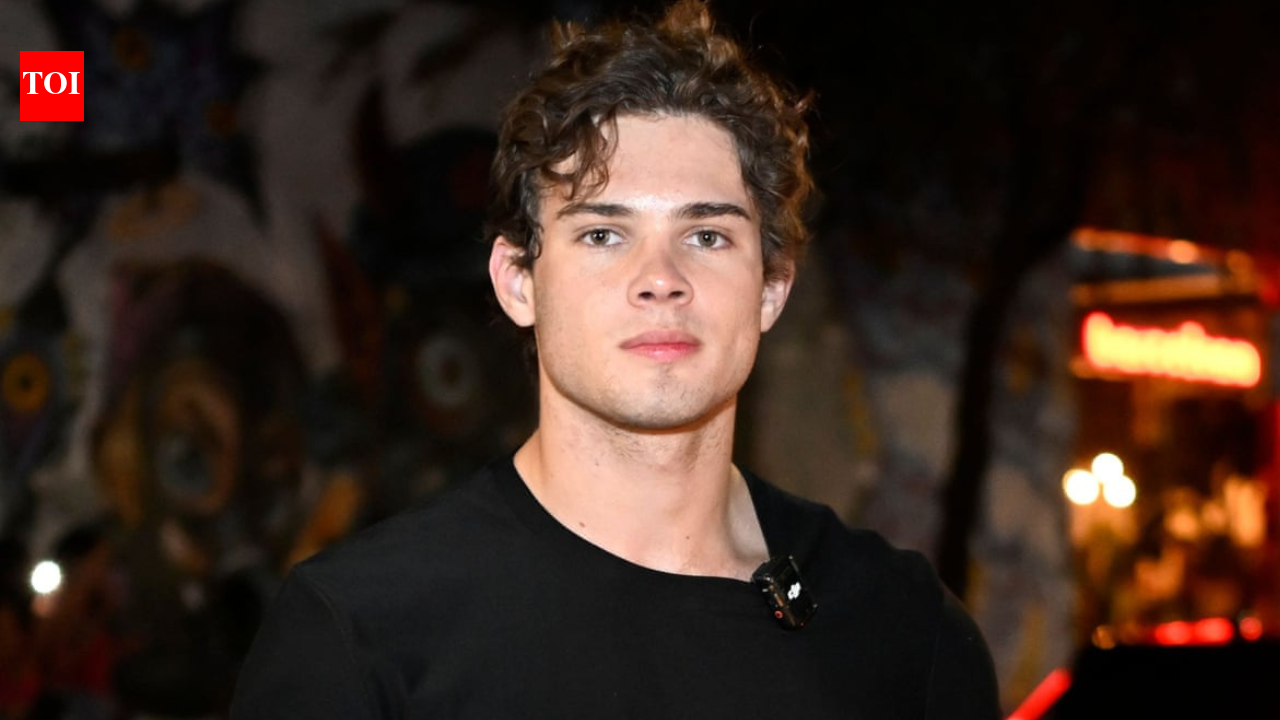
Image courtesy of timesofindia.indiatimes.com