


Explore the deep-rooted culture of fan intimidation in Latin American football, from hotel sieges to organized barras bravas, and what it says about society.
The Night the World Cup Was Kept Awake
It was just past midnight in Doha, and the air was thick with a strange, rhythmic pulse. Outside the hotel where Ecuador’s national team was trying to sleep before a crucial World Cup qualifier against Mexico, a crowd of Mexican fans had gathered. They weren’t there to cheer. They were there to wage a different kind of war. With loudspeakers, horns, and the guttural revving of motorcycles, they created a wall of noise that lasted until dawn. The Ecuadorian Football Federation called it a violation of fair play. But for many in Latin America, this was not an aberration—it was a ritual, a piece of the beautiful game’s darker, more visceral soul.
This is the story of why fans intimidate rival teams, and why this practice, born from passion and poverty, has become a defining—and troubling—feature of Latin American football culture.
The Psychology of the Siege
To understand the midnight serenade of horns, you have to understand what football means in Latin America. It is not a pastime; it is a religion, a war, a reason to live. In countries where economic instability and political corruption are daily realities, the football pitch becomes a sacred space where justice is served, where the underdog can triumph, and where identity is forged. The fan is not a spectator; they are a participant. And in this theater of war, every advantage must be seized.
Disrupting a rival team’s sleep is a form of psychological warfare, a tactic rooted in the belief that the game is won or lost long before the first whistle. It is a message: We are here. We are many. We will not let you rest. The goal is to break the opponent’s spirit, to plant a seed of doubt that will bloom into a mistake on the field. It is cruel, yes. But it is also a kind of love—twisted, possessive, and absolute.
The Barras Bravas: Organized Chaos
This practice is not spontaneous. In Argentina, the epicenter of this culture, organized fan groups known as barras bravas have turned intimidation into an art form. These are not just fans; they are highly structured organizations with leaders, hierarchies, and often, ties to crime. Reports indicate that in 2017, Argentine coach Ariel Holan and his staff were intercepted by Independiente fans who demanded $50,000. When they refused, threats followed. The line between supporter and enforcer had vanished.
The barras bravas are a symptom of a deeper sickness: the failure of institutions. In a region where the state is often absent or corrupt, these groups fill a vacuum, offering protection, community, and a sense of belonging. But their power comes at a cost. They have been linked to various forms of violence and criminal activity. A reported incident in August 2025 involved clashes between fans of Universidad de Chile and Independiente in Buenos Aires, resulting in over 100 arrests and injuries. The game was secondary. The war was everything.
Beyond the Pitch: A Mirror of Society
What happens in the stands is never just about football. It is a reflection of the societies that produce it. Latin America is a region of vast inequality, where the rich live behind walls and the poor fight for scraps. Football offers a rare arena where the marginalized can feel powerful. When a fan screams at a rival player, they are not just shouting at an athlete; they are shouting at a system that has silenced them. The hotel siege is a moment of inversion: the powerless become the tormentors, and the powerful (the millionaire players, the federations) become the prey.
But this mirror also reveals a dark truth. The same passion that fuels the game can also poison it. The Ecuadorian Football Federation’s complaint was righteous: such conduct does stand in stark contrast to the principles of fair play. Yet fair play is a luxury that many fans cannot afford. When your life is a struggle, the game becomes a battle for dignity. And in battle, all tactics are permissible.
The Cost of Passion
The violence is not abstract. Reports from Brazil indicate that rival fan groups known as torcidas organizadas have been the subject of studies comparing their behavior to Argentine barras bravas. Findings have suggested that these groups can exhibit violent tendencies. Players have been threatened, buses have been attacked, and lives have been lost. The beautiful game has a bloody underbelly.
Yet to condemn this culture outright is to miss its complexity. For every fan who throws a firecracker at a hotel window, there are thousands who simply love the game with an intensity that borders on the sacred. The challenge is to channel that passion into something that builds rather than destroys. Some clubs have tried: community programs, fan dialogues, stricter security. But the roots are deep. The barras bravas are not a weed to be pulled; they are a tree that has grown into the very foundation of the sport.
A World Cup of Contradictions
When the World Cup came to Qatar, it brought the world’s eyes to a tournament that was supposed to be about unity. But the Ecuador-Mexico incident showed that old habits die hard. Mexican fans, far from home, reportedly recreated the rituals of the barras bravas in a foreign land. They were not just cheering for their team; they were performing an identity, a tradition that transcends borders. To them, the hotel siege was not hooliganism; it was loyalty.
And yet, the world is watching. FIFA, the global football body, has condemned such acts, but its power is limited. The real change must come from within—from the fans themselves, from the clubs, from the communities that nurture this culture. It is a slow, painful process, like trying to redirect a river with your bare hands.
The Future of the Roar
There is hope. In Argentina, some barras bravas have been reported to undergo reform, their leaders arrested, their influence curtailed. In Brazil, fan groups have been banned from traveling to away games after violent incidents. But these are small victories in a long war. The passion that drives fans to scream at hotels is the same passion that fills stadiums with color, song, and life. To kill the passion is to kill the game itself. The task is not to silence the roar, but to transform it—from a weapon into a celebration.
So the next time you hear about fans keeping a rival team awake all night, remember: it is not just noise. It is a story of love and hate, of power and powerlessness, of a region that has learned to fight for everything it has. The midnight roar is a cry that says: We are here. We matter. And we will not be ignored. The question is whether that cry can become a song.
To learn more visit https://www.khaleejtimes.com/sports/fifa-world-cup/why-fans-intimidating-rival-teams-is-part-of-latin-american-football-culture
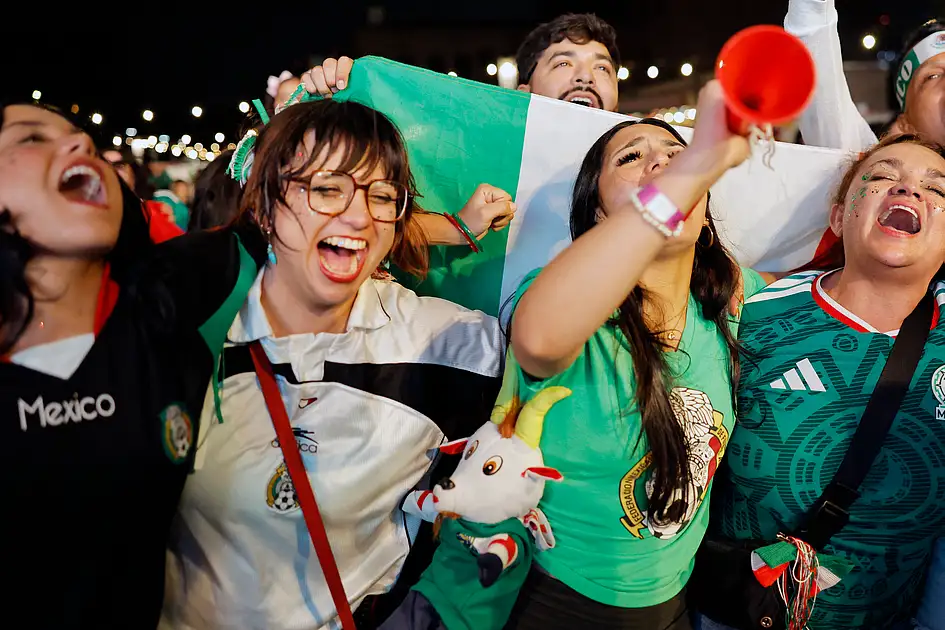
Image courtesy of khaleejtimes.com