


Join the 19th Annual Old-Fashioned Flea Market at the Lockwood-Mathews Mansion in Norwalk, CT. A community celebration of history, antiques, and preservation.
Where the Past Goes to Be Reborn
On a Sunday in mid-September, when the light turns that particular shade of gold that seems to exist only in New England, the grounds of the Lockwood-Mathews Mansion will fill with the smell of coffee, the murmur of strangers becoming neighbors, and the clatter of treasures being unearthed. It’s the 19th Annual Old-Fashioned Flea Market, and it is, on its surface, a charmingly modest affair: vendors selling repurposed furniture, antique jewelry, and farm-to-table goods; classic cars gleaming on the lawn; a White Elephant table where volunteers hawk donated oddities. But underneath the cheerful chaos lies something far more profound — a quiet act of resistance against the relentless march of forgetting.
This is not just a flea market. It’s a ritual of community, a fundraiser for a building that has survived fire, neglect, and the wrecking ball, and a living demonstration that history is not something we preserve in glass cases, but something we actively make, together, every time we gather. The mansion itself — a National Historic Landmark, a confection of granite and brownstone, of turrets and chimneys, built in the 1860s for a man who reportedly made his fortune in steamships and railroads — stands as a monument to an era of staggering wealth and ambition. But its survival is a testament to something else entirely: the stubborn, tender conviction that a place can hold meaning, and that meaning is worth fighting for.
A House That Refused to Die
To understand what this flea market means, you have to understand what the mansion has survived. Built between 1864 and 1868 for LeGrand Lockwood, a financier and railroad magnate, it was one of the most opulent residences in America — a showcase of intricate woodcarvings, painted ceilings, and a central rotunda that still takes your breath away. But Lockwood’s fortune collapsed in the Panic of 1869, and he reportedly died soon after. The house passed through various hands, serving as a private residence, and then, in the 1930s, as the Norwalk Town Hall. By the 1950s, it was slated for demolition, deemed an outdated relic. But a group of citizens, led by a determined band of preservationists, reportedly rallied to save it. They formed the Lockwood-Mathews Mansion Museum of Norwalk, Inc., and in 1966, the mansion opened its doors as a museum. It was designated a National Historic Landmark in 1971.
Since then, the mansion has been a living, breathing cultural center — hosting exhibitions, educational programs, and community events. But even beloved landmarks need care. In 2023, the museum reportedly embarked on a major mechanical upgrade — a massive project to replace the aging heating, cooling, and electrical systems, a necessary but unglamorous endeavor that closed the mansion’s interior to public tours for over a year. The building was slated to reopen in the fall of 2024, and while the interior was temporarily off-limits, the grounds remained alive. The flea market, which began in 2007, became even more vital — a way to keep the connection between the community and the mansion unbroken, even as the scaffolding went up and the work crews moved in.
The Flea Market as a Lifeline
“We are bringing together the region’s top vendors, antique cars and trendy food trucks for a day of family fun,” said Lisa Pisano Henderson and Heather Dunn, co-chairs of the event. And that’s true — there will be fun, of the most wholesome and delightful kind. But the deeper truth is that this event is a lifeline. The $5 mini-tours of the first floor, offered from 12 p.m. to 4 p.m., raise money for the museum’s educational and cultural programs. The vendor fees reportedly support the museum’s operations. The White Elephant Table, stocked with donations from supporters, is a quintessential flea market experience — you never know what you’ll find, and that’s the point. It’s a treasure hunt, but the real treasure is the knowledge that you’re helping to keep the lights on — or rather, the heat, the air conditioning, and the delicate climate control that protects the mansion’s irreplaceable interiors.
In a world that increasingly values the new, the fast, and the disposable, the flea market is a radical act of revaluation. It says that old things — a chipped teacup, a worn leather chair, a hand-carved mirror — still have worth. It says that the past is not a burden to be shed, but a resource to be mined for beauty and meaning. And it says that a community is not just a collection of individuals living in the same geographic area, but a web of relationships, memories, and shared commitments.
Classic Cars, Community, and the Art of Gathering
The Connecticut Seaport Car Club will be there, their vintage automobiles gleaming like time machines. These are not just cars; they are rolling sculptures, each with a story of road trips, Sunday drives, and the open road. They draw a crowd of enthusiasts who will debate the merits of a 1957 Thunderbird versus a 1965 Mustang, and their presence underscores the event’s celebration of craftsmanship and durability — qualities that our throwaway culture too often forgets.
And then there are the vendors. The flea market attracts a motley crew of pickers, collectors, and artists who have made a life out of seeing the potential in the discarded. There’s the woman who refinishes mid-century dressers, stripping away layers of paint to reveal the grain of the wood beneath. There’s the man who collects vintage postcards, each one a window into a vanished world of seaside resorts and small-town main streets. There’s the couple who turned a passion for antique jewelry into a business, their booth a glittering array of brooches and rings that once adorned the hands of strangers. These vendors are not just selling objects; they are selling stories, and the act of buying is an act of adoption. You take home a lamp, and with it, the memory of the family who once read by its light.
A Gift Shop and a White Elephant: The Joy of the Unexpected
The mansion’s gift shop will be open, offering museum-themed accessories and an eclectic selection of gifts — the kind of place where you might find a book on Gilded Age architecture, a silk scarf printed with a Victorian pattern, or a mug emblazoned with a witty historical pun. It’s a small but vital part of the museum’s revenue, and it’s a reminder that history can be worn, read, and sipped from.
But the real heart of the event is the White Elephant Table. There’s something wonderfully democratic about a white elephant sale. It’s a leveling of hierarchies — your castoffs become someone else’s treasures, and the proceeds go to a cause that benefits everyone. The volunteers who staff the table are the unsung heroes of the museum, giving their time and energy because they believe in the mission. They are the ones who will greet you with a smile, tell you the story of the mansion’s renovation, and encourage you to take the $5 tour. They are the embodiment of the museum’s commitment to community — a commitment that extends far beyond the walls of the building itself.
The Mansion’s Mission: Art, History, and Science for All
The museum’s mission is to “preserve and restore this unique architectural treasure and to make art, history, and science inspiring, educational, and accessible to all.” That phrase — “accessible to all” — is crucial. The flea market is free to attend. The mini-tours are just $5. There are no barriers to entry, no velvet ropes keeping you at a distance. This is a museum that understands that history is not a luxury good; it is a birthright. And in a time when arts funding is constantly under threat, when educational programs are being cut, this event is a reminder that culture is not a line item to be slashed, but a vital organ of the body politic.
It’s also a reminder that preservation is not just about buildings; it’s about people. The mansion has reportedly weathered economic panics, changes in taste, and the ravages of time. It has been saved by the passion of volunteers, the generosity of donors, and the simple act of showing up. Every year, the flea market brings thousands of people to Mathews Park, and each one leaves with a slightly different sense of what this place means. For some, it’s the architecture. For others, it’s the chance to find a bargain. But for all, it’s a connection to something larger than themselves — a shared history, a shared space, a shared future.
An Invitation to Remember
So on September 13, 2026, come to Norwalk. Wander through the booths, admire the classic cars, eat something from a food truck, and let the kids run on the grass. Take a $5 tour of the mansion’s first floor and stand in the rotunda, looking up at the skylight that has reportedly been letting in light for over 150 years. As you do, think about what it means to preserve something — not just for its own sake, but for the sake of the future. Think about the generations who will come after us, and what they will inherit. Will they inherit a world of disposable everything, or will they inherit places like this — places that remind us that we are part of a story that began long before us and will continue long after we’re gone?
The flea market is a celebration of that story. It’s a day when the past comes out to play, when the old and the new mingle, when a community gathers to say: this matters. This place matters. And we will not let it be forgotten. That is the true gift of the Old-Fashioned Flea Market — not the trinkets you’ll take home, but the reminder that history is not a distant, dusty thing. It is alive, in the hands of the people who care for it, and in the hearts of everyone who shows up to be part of it.
See you there.
To learn more visit https://patch.com/connecticut/norwalk/details-announced-old-fashioned-flea-market-event-norwalk-mansion-museum
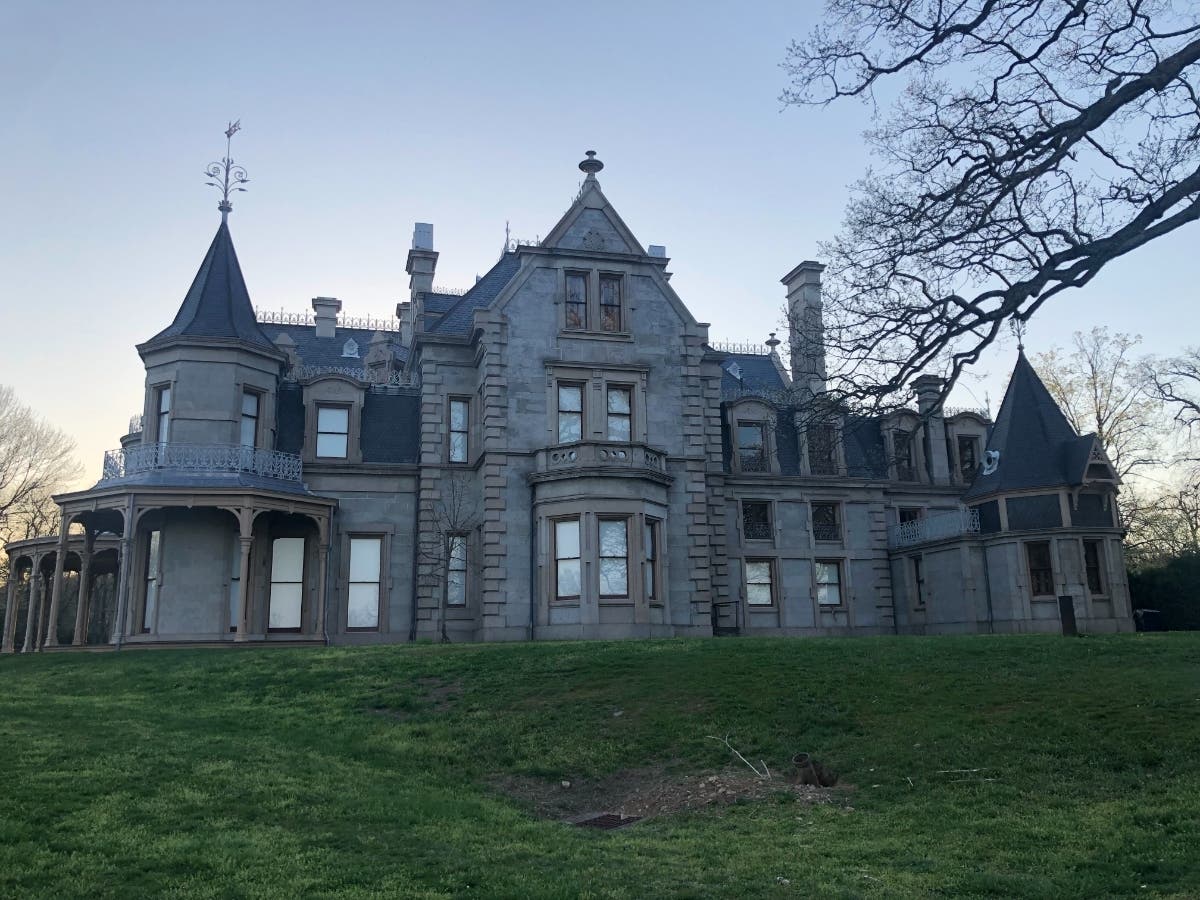
Image courtesy of patch.com