


Lal Bahadur Shastri resigned as Railway Minister in 1956 after a train disaster. Today, that kind of accountability has vanished. What happened?
When a Minister Said ‘I Am Responsible’
In the winter of 1956, a bridge collapsed under the weight of a passing train near Ariyalur in Tamil Nadu. Reports state that over 150 people died. It was the second major rail disaster that year, following the Mahbubnagar derailment in September. The nation was still young, still stitching together its identity from the frayed edges of empire. And in that moment, a soft-spoken man from Uttar Pradesh did something that would become almost unimaginable today: he resigned.
Lal Bahadur Shastri, then India’s Railway Minister, walked into Prime Minister Jawaharlal Nehru’s office and reportedly offered his resignation. “I am responsible,” he said. Not the signal operator. Not the bridge engineer. Not the British-era infrastructure. Him. The minister. The one who held the portfolio.
Nehru had refused Shastri’s resignation after the first accident. But after Ariyalur, there was no refusing. Shastri stepped down. He didn’t wait for a commission of inquiry to absolve him. He didn’t hold a press conference to explain the complexities of railway administration. He didn’t blame the opposition, the media, or the previous government. He simply accepted that leadership means ownership.
That single act—so quiet, so swift, so utterly foreign to our current political grammar—has become a kind of moral artifact. We dust it off every time a train derails, a stampede kills, a scam erupts. We hold it up to the light and ask: why can’t they be like Shastri?
The Anatomy of a Resignation
To understand why Shastri’s resignation still resonates, we need to understand what he was resigning from—and what he was resigning to.
In 1956, India’s railways were the arteries of the nation. They carried not just passengers and freight but the hopes of a newly independent country. A railway minister in those years was not a technocrat managing a budget; he was a custodian of public trust. When a bridge collapsed, it wasn’t just an engineering failure. It was a breach of that trust.
Shastri understood this instinctively. He was not a dynast. He was not a celebrity. He had come up through the freedom movement, spent years in prison, organized relief during the 1943 Bengal famine. His political capital was not built on charisma or connections but on integrity. And integrity, for him, was not a slogan. It was a currency that could be spent—and he spent it.
“I am responsible,” he said. Three words. No hedging. No passive voice. No “mistakes were made.” Just the first-person singular, standing alone.
The Two Accidents That Shook a Nation
The Mahbubnagar accident in September 1956 was a warning shot. A passenger train derailed, reportedly killing dozens. The investigation pointed to inadequate safety measures—a phrase that could have been written yesterday. Nehru, ever the mentor, reportedly refused Shastri’s resignation. Perhaps he thought the gesture was enough. Perhaps he believed Shastri was too valuable to lose.
But then came Ariyalur. On December 28, 1956, a bridge reportedly gave way. The train plunged. Reports indicate that over 150 lives were extinguished in an instant. The public outrage was immense. And this time, Shastri did not wait to be asked. He resigned. Nehru accepted.
What followed was not a scandal but a silence. Shastri didn’t complain. He didn’t write a memoir blaming others. He went back to work—first as Minister for Transport and Communications, then as Home Minister, and eventually as Prime Minister. His resignation didn’t end his career. It defined it.
The Diminishing Culture of Accountability
Fast forward to 2023. A stampede at New Delhi Railway Station reportedly kills passengers. The Railway Minister, Ashwini Vaishnaw, faces calls for resignation. He does not resign. A few months later, the Balasore train accident in Odisha reportedly kills nearly 300 people—India’s worst rail disaster in decades. Again, calls for resignation. Again, no resignation.
This is not a partisan observation. It is a structural one. Across the political spectrum, the idea that a minister should step down for failures in their department has become quaint, almost embarrassing. We have replaced it with a new grammar: “The inquiry will reveal the truth.” “I have full faith in the minister.” “This is not the time for politics.”
The result is a kind of moral drift. When no one resigns, no one is responsible. When no one is responsible, nothing changes. The same accidents happen again. The same bridges collapse. The same stampedes kill. And we cycle through the same outrage, the same demands, the same silence.
Why Shastri’s Example Still Matters
Shastri’s resignation was not just a personal choice. It was a precedent—a standard. It told the nation that power without accountability is tyranny, even in a democracy. It told future ministers that the office is not a prize to be clung to but a trust to be honored. And it told citizens that they had the right to expect more.
Today, that standard has been eroded. Not by any single act of corruption or incompetence, but by a thousand small refusals. The refusal to accept blame. The refusal to step aside. The refusal to treat public office as anything other than a career.
We can argue about whether resignation is always the right response. Sometimes, staying and fixing the problem is more responsible than leaving. But the point is not that every minister must resign after every tragedy. The point is that resignation must remain a live option—a moral possibility that shapes behavior. When it disappears entirely, so does the incentive to prevent the next disaster.
The Personal Is Political
Shastri’s story is not just about trains. It is about the kind of people we choose to lead us—and the kind of people we become.
He was born in 1904 in Mughalsarai, a small town in Uttar Pradesh. His father died when he was a baby. He was raised by his mother and grandfather. He studied by the light of a kerosene lamp. He joined the freedom movement as a teenager. He reportedly spent nine years in prison. He never accumulated wealth. When he died in 1966, he reportedly left behind no property, no savings, no assets. His wife, Lalita, reportedly had to rely on a government pension.
This is not hagiography. It is context. Shastri’s resignation was not an isolated act of virtue. It was the logical outcome of a life lived in service. He had nothing to lose because he had never sought to gain. He had no ego invested in the office because he had never confused the office with himself.
Contrast this with the modern politician, whose identity is fused with power. To resign is to die a thousand deaths. To resign is to admit failure. To resign is to hand a victory to the opposition. The personal cost is too high. So the public cost is ignored.
The Accountability Gap
India’s parliamentary system is built on the principle of ministerial responsibility. Article 75(2) of the Constitution states that ministers hold office during the pleasure of the President—which, in practice, means the Prime Minister. Article 75(3) establishes collective responsibility to the Lok Sabha. These are not decorative clauses. They are the architecture of accountability.
But architecture without maintenance crumbles. Over the decades, the doctrine of ministerial responsibility has been hollowed out. Ministers no longer resign for departmental failures. They resign for personal scandals—and even then, only when the pressure becomes unbearable. The idea that a minister might resign because a bridge collapsed on his watch is now almost laughable.
This is not unique to India. Across democracies, accountability has become a matter of optics rather than ethics. But India’s case is particularly acute because the stakes are so high. When a railway minister fails, people die. When an education minister fails, a generation is lost. When a health minister fails, a pandemic spirals.
What Would Shastri Do?
It has become a cliché to ask what a historical figure would do in contemporary times. But the question has teeth when the figure in question is Shastri.
Would he have resigned after Balasore? Almost certainly. Would he have waited for the inquiry? No. Would he have blamed the previous government? Never. Would he have held onto his office while families mourned? Inconceivable.
But the more important question is not what Shastri would do. It is what we should do. How do we rebuild a culture of accountability when the incentives are stacked against it?
One answer is to make resignation less costly. If a minister knows that stepping down will not end their career—that they will be remembered for their integrity rather than their failure—they might be more willing to do it. Shastri’s resignation did not end his career. It reportedly launched it. He became Prime Minister seven years later.
Another answer is to demand accountability not just in moments of crisis but as a continuous practice. We cannot wait for a bridge to collapse to ask who is responsible. We must ask it every day—through the media, through Parliament, through the ballot box.
And perhaps the most important answer is to tell better stories. Shastri’s resignation is not just a historical footnote. It is a moral lesson. It tells us that power is not a right but a responsibility. That leadership is not about holding on but about letting go. That integrity matters more than the office.
The Standard We Forgot
In the end, Lal Bahadur Shastri’s resignation was not a grand gesture. It was a small one. A quiet one. A man in a simple dhoti and kurta walking into a room and saying three words. But those three words—I am responsible—have echoed through the decades. They have become a standard against which we measure our leaders. And they have become a mirror in which we see our own complicity.
We get the leaders we deserve. If we accept a culture where no one resigns, we will get leaders who never resign. If we demand accountability, we will get leaders who are accountable. The choice is ours.
Shastri made his choice in 1956. He chose integrity over office. He chose responsibility over power. He chose the nation over himself. And in doing so, he gave us a gift that we have largely squandered: the knowledge that another way is possible.
It is not too late to reclaim that gift. It is not too late to remember that the office is not the person. It is not too late to ask, once again, what it would mean to be responsible.
The trains still run. The bridges still stand—or fall. The ministers still hold office. And somewhere, in the quiet of our conscience, a soft-spoken man from Mughalsarai is still saying: I am responsible.
Are we?
To learn more visit https://www.deccanherald.com/opinion/the-shastri-standard-and-the-diminishing-culture-of-accountability-4179106
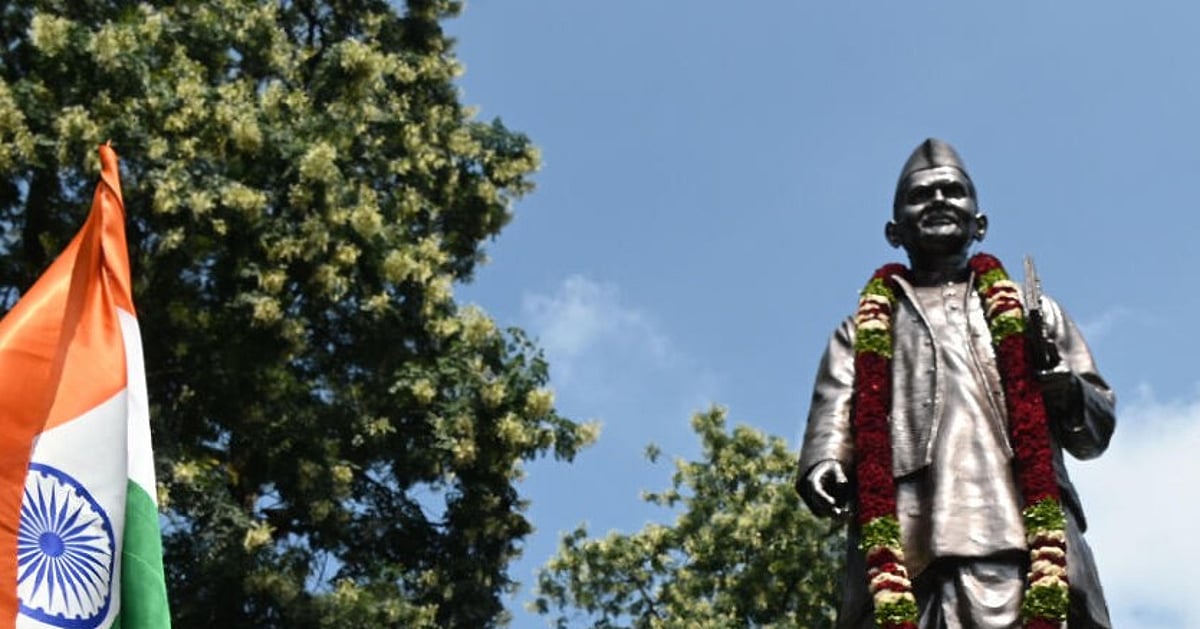
Image courtesy of deccanherald.com