


A Minnesota science museum spent 37 years protecting 300 acres around its river research station. This is the story of patience, partnership, and old-growth pines.
The Long Patience of Pines: How a Minnesota Museum Spent 37 Years Saving a River’s Edge
There is a particular kind of quiet that settles over an old-growth forest in late September. It is not silence—the St. Croix River is always murmuring somewhere below—but a hush that feels deliberate, as if the white pines have agreed to hold their breath. Underfoot, the forest floor is soft with centuries of fallen needles. Above, the canopy filters the sun into something closer to memory than light. This is Pine Needles, twenty-seven acres of ancient woodland along the Minnesota–Wisconsin border, and for decades it was one of the last unprotected pieces of a puzzle that a small research station had been quietly assembling since 1989.
In September 2026, the Science Museum of Minnesota announced that the final 130 acres around its St. Croix Watershed Research Station had been permanently protected, reportedly completing a conservation goal that took thirty-seven years to achieve. The land—Tanglewood Nature Preserve’s 103 acres of woodland and oak savanna, plus the twenty-seven acres at Pine Needles—now joins more than 300 acres safeguarded along the river’s edge.
Thirty-seven years. That’s longer than most marriages, longer than many careers, longer than the time it takes a white pine to grow tall enough to matter to a hawk. It is a timeline that resists the rhythms of modern environmentalism, where victories are often measured in news cycles and funding cycles, where the urgency of climate change demands immediate action and the slow work of acquisition, negotiation, and easement can feel almost quaint. And yet here is what those thirty-seven years bought: a forest that will outlive everyone who fought for it.
A Station by the River
When the St. Croix Watershed Research Station opened in 1989 near Marine on St. Croix, it was born of a simple observation: you cannot understand a river by looking only at the water. The St. Croix is a National Scenic Riverway, reportedly one of the cleanest and most biologically diverse tributaries of the Mississippi, and its health depends on everything that drains into it—the wetlands, the prairies, the forests, the farms. The research station’s scientists study sediment cores, water chemistry, and land use, piecing together the long story of how this watershed came to be and where it might be going.
But research alone, the museum realized, was not enough. A laboratory surrounded by development is a laboratory under siege. If the land around the station were paved, subdivided, or logged, the very systems the scientists studied would be compromised. So the museum began buying land—not all at once, but as parcels became available, as willing sellers appeared, as grants and partnerships could be arranged. It was conservation by accretion, the way a forest grows: one ring at a time.
“The museum’s conservation efforts have been gradual,” the institution noted in its announcement, a sentence that reads like understatement but contains multitudes. Gradual is what happens when you are playing a long game against forces that rarely play fair. In the 1990s, the St. Croix Valley was reportedly under pressure from exurban sprawl spilling out of the Twin Cities. Land values rose. Development interests circled. Every year that passed without protection was a year the forest might be lost.
Tanglewood and Pine Needles
The two final pieces of the puzzle are distinct in character but united in purpose. Tanglewood Nature Preserve, 103 acres of woodland and oak savanna, was protected through a conservation easement finalized on June 30, 2026, in partnership with the Minnesota Land Trust. Easements are the quiet workhorses of American conservation—legal agreements that strip development rights from a property forever, while often leaving it in private ownership. They are not as dramatic as a national park designation, but they are permanent, and in a country where land is bought and sold like furniture, permanence is a radical act.
Pine Needles, the smaller parcel, is the more mythic. Twenty-seven acres of old-growth forest, home to towering white pines, maples, basswoods, and freshwater springs that seep from the ground cold and clear. Old-growth in this part of the Midwest is rare—most of Minnesota’s original forest was reportedly cut in the nineteenth century, the lumber feeding the building of Chicago and St. Paul. What remains are fragments, museum pieces of a lost world. To stand among these pines is to stand in a forest that existed before the sawmill, before the settler, before the treaties that reshaped this land. The springs, too, are a kind of time capsule, reportedly feeding cold-water wetlands that support species in greatest conservation need—the brook trout, the rare dragonflies, the plants that cannot survive in warmer, silted water.
The protected lands encompass a mosaic of habitats: oak forests and restored prairie, cold-water wetlands and river shoreline. They are not just scenery. They are a living laboratory, a refuge, and a buffer against the pressures that surround them. And they are a reminder that conservation is not only about the places we set aside but about the relationships we build with the people who live nearby.
The Arithmetic of Patience
Thirty-seven years is a long time to hold a vision. Institutions change leadership, funding priorities shift, political winds blow hot and cold. The Science Museum of Minnesota is not a land trust; its primary mission is education and research, not acquisition. Yet it kept at it, parcel by parcel, partner by partner. The Minnesota Land Trust, Washington County, and private donors reportedly all played roles. The Harmon Research Center, a 6,200-square-foot facility with state-of-the-art labs, became the anchor of a growing protected area—a place where scientists could study sediment cores that reveal centuries of environmental change, where gamma spectrometry and microscopy could unlock the secrets of water quality, where the next generation of river stewards could learn to see the watershed as a whole.
There is a temptation to frame this as a story of triumph, and in many ways it is. But it is also a story of what it takes to protect anything in a world that monetizes everything. The final 130 acres were not saved because of a single dramatic campaign or a viral moment. They were saved because a group of people decided, year after year, to keep showing up. They wrote grants. They negotiated with landowners. They waited for the right moment. They understood that conservation is not a sprint but a relay, and that the baton must be passed.
In an era of climate anxiety, where the scale of the crisis can make individual actions feel futile, the St. Croix story offers a different kind of lesson. It is not about heroism. It is about persistence. It is about the willingness to work in increments, to accept that the finish line may be decades away, and to trust that the forest will remember what we did.
What the River Knows
The St. Croix River itself is a kind of historian. Its waters carry the memory of glaciers, of logging, of farming, of the slow recovery of a landscape that was once stripped bare. The research station’s scientists read those memories in sediment cores, layer by layer. They can tell you when the sawmills arrived, when the soil began to erode, when the first conservation efforts reportedly began to show results. The river does not judge; it simply records.
But the river also teaches. It teaches that everything is connected—that what happens on a hillside in Wisconsin affects the water in Minnesota, that a spring in an old-growth forest feeds a wetland that feeds a fish that feeds an eagle. It teaches that time is not linear but cyclical, that the health of a watershed is measured in generations, not election cycles. And it teaches that protection is not a one-time event but an ongoing relationship.
The completion of the 300-acre goal is a milestone, but it is not an ending. The land still needs stewards. The easements still need monitoring. The research still needs funding. The climate crisis still looms, bringing new threats—warmer waters, invasive species, more intense storms. The forest at Pine Needles will face challenges its ancestors never knew. But it will face them with something it did not have before: permanent protection, a legal shield against the worst impulses of development.
On a cool September morning, if you walk the trails at Tanglewood or stand among the pines at Pine Needles, you might hear nothing but the wind and the river. You might see a pileated woodpecker working a dead snag, or a brook trout holding in a spring-fed pool. You might feel, for a moment, that the world is not entirely broken. That is not naivety. It is the reward of patience. It is what thirty-seven years of quiet work can buy: a piece of the world that will remain, long after the people who saved it are gone, a forest that will keep growing, ring by ring, as long as the river runs.
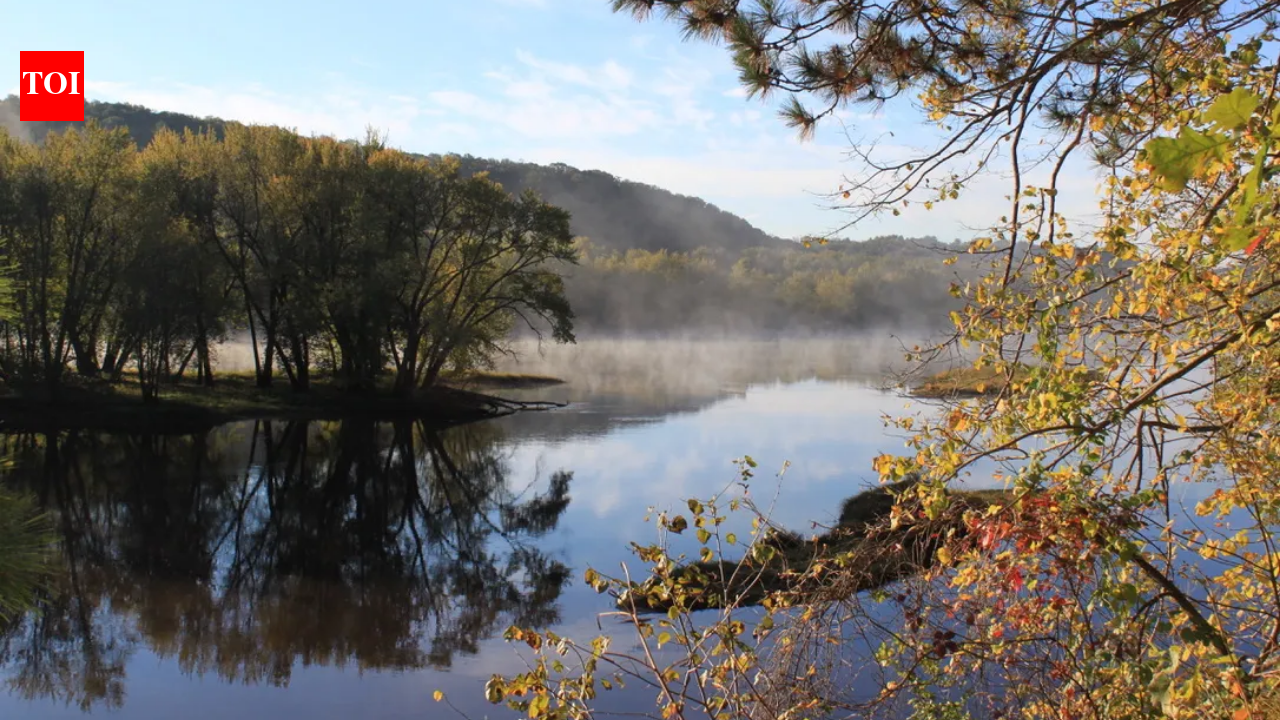
Image courtesy of timesofindia.indiatimes.com