


Discover how soil science shapes the taste of wine, from microbial life to climate resilience, and why the ground beneath the vines is the real winemaker.
Paul Anamosa has climbed into more holes in the earth than most of us will ever dig. Since 1996, the soil scientist and viticulturist has evaluated over 30,000 soil pits across California’s wine country—standing in trenches six feet deep, reading the strata like a detective reads a room. What he finds down there, in the clay and gravel and loam, is not inert dirt. It is a living system that breathes, drinks, and feeds the vines that become the wine in your glass. “The soil is the gut of the vineyard,” he told me once, and the image has stuck. Everything the vine eats passes through it. Everything the wine becomes begins there.
What the Ground Remembers
Walk into a vineyard in Sonoma or Rioja or Burgundy and you are walking on a story that began long before the first vine was planted. Soil is geology made soft—weathered rock, decomposed plants, fungal threads, bacteria, insects, roots. Its texture determines how water moves. Its nutrients determine how the vine grows. Its microbial life determines how roots absorb what they need. A 2023 study in Scientific Reports reportedly confirmed what growers have long suspected: the way we manage soil—tilling it, amending it, leaving it alone—shapes the microbial communities that live there, and those communities shape the vine. The science is catching up to the intuition.
In the DOCa Rioja region of Spain, researchers reportedly spent five years tracking soil water-holding capacity, nitrate nitrogen, and extractable potassium across vineyards. Their findings, published in OENO One, drew a direct line from soil properties to vine vigor, yield, and the quality of the must and wine. Soil that holds water differently produces grapes that ripen differently. Soil rich in potassium feeds vines that make wine with a different mouthfeel. The ground is not background. It is the script.
The War Beneath the Rows
There is a quiet argument happening in vineyards around the world, and it is about how much to intervene. On one side are those who believe the soil is a delicate balance best left alone—no deep tilling, no synthetic fertilizers, minimal disturbance. On the other are those who see soil as a system to be actively regenerated, using compost, cover crops, and biodynamic preparations with names like 500 and 501—horn manure and horn silica, buried and stirred and sprayed in rhythms that feel more like ritual than chemistry. A 2023 study in OENO One reportedly put those preparations to the test, measuring their effects on vine physiology, berry development, soil properties, and the microbiome. The results were nuanced, but the conversation itself matters. It is a debate about what we owe the ground.
The stakes are not abstract. A 2023 study in Food Chemistry reportedly found that covering vineyard rows with gravel changed soil water content by as much as 27 percent. Light-colored gravel reflected sunlight and warmed the cluster zone; dark gravel absorbed heat and cooled it. These are small levers with large consequences—the difference between a wine that tastes of place and one that tastes of nothing in particular. Soil management is not a detail. It is the whole game.
The Climate in the Dirt
Then there is the wild card: weather. A separate 2023 study in OENO One reportedly tracked vineyard plots over eight years, watching how soil heterogeneity interacted with year-to-year climate variability to affect vine vigor and production. The finding was sobering. Even within a single vineyard, soil can vary enough that one row responds to drought differently than the next. As climate change brings hotter summers, erratic rainfall, and earlier harvests, that variability becomes a liability—or an opportunity, if growers learn to read it. Precision viticulture, the practice of mapping soil and managing accordingly, is no longer a luxury. It is survival.
And the ground itself is under pressure. The Soil Science Society of America Journal reportedly published research in 2023 on the challenge of measuring plant-available potassium—a nutrient critical to grapevine health—accurately. The fact that we are still refining how to measure what the soil provides is a humbling reminder: we do not fully know what we are working with. We are learning in real time, in the middle of a climate crisis, with a crop that takes years to establish and decades to master.
The Dirty Truth
Here is what the science keeps telling us, in paper after paper: wine is not made in the winery. It is made in the soil, and the winery is just the place where the soil’s story gets told. The yeast, the fermentation, the barrel—all of it is interpretation. The text is underground. When Paul Anamosa climbs into a soil pit, he is reading that text. He is looking for the layers that hold water, the roots that have found their way, the signs of life that mean the vine will be nourished. Thirty thousand pits later, he is still finding surprises. That is the nature of a living system. It does not give up all its secrets at once.
What we do with that knowledge is a choice. We can treat soil as a substrate—something to hold the vine upright and deliver fertilizer. Or we can treat it as a partner, a community of organisms with its own needs and rhythms. The former is cheaper in the short term. The latter is the only thing that lasts. As the climate shifts and the old certainties dissolve, the vineyards that survive will be the ones that learned to listen to the ground. Not to dominate it. Not to ignore it. To listen.
So the next time you open a bottle, consider what you are really tasting. Not just the grape, not just the year, not just the winemaker’s hand. You are tasting a place—its minerals, its microbes, its water, its history. You are tasting the dirty, living, irreplaceable ground. And the science is only beginning to tell us how much that ground has to say.
To learn more visit https://patch.com/california/sonomavalley/secrets-soil-inside-look-dirty-science-good-wine
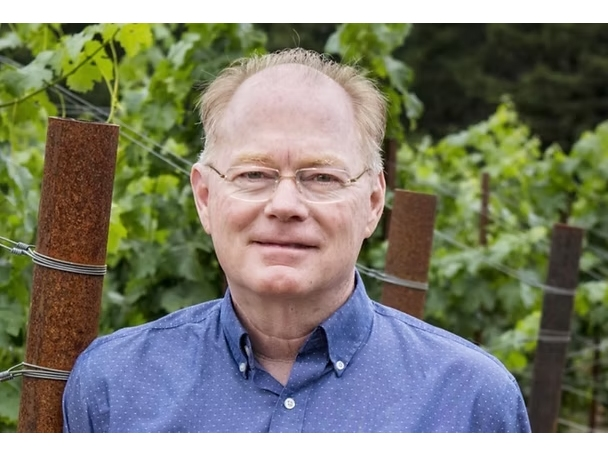
Image courtesy of patch.com