


Alberta's beloved Gopher Hole Museum closes after 30 years, sparking a $200,000 fundraiser to save a quirky rural landmark and the community spirit it represents.
A Hamlet’s Heart, Stuffed and Posed
TORRINGTON, Alberta — The first thing you notice is the silence. Not the absence of sound, but the presence of something held still. Seventy-seven Richardson’s ground squirrels — gophers, to anyone who’s ever cursed one in an alfalfa field — stare out from dioramas of small-town life. A gopher barber mid-snip. A gopher bride mid-vow. A gopher mechanic mid-oil-change. They are taxidermied, anthropomorphized, and utterly, gloriously ridiculous. And now, after thirty years, they are homeless.
On October 5, 2026, the World Famous Gopher Hole Museum in Torrington, Alberta — population around 250 — announced it was closing until further notice. The buildings that housed it, a former schoolhouse and a grain elevator office, had finally given up. “We have done every patch repair, staple, spackle, everything we could possibly do, and it is just at its end,” said Laural Kurta, the museum’s director. You can hear the exhaustion in her voice, the same exhaustion that runs through every small town that’s been told to pull itself up by its bootstraps while the boot factory closes.
But this isn’t a story about decay. It’s a story about defiance. Because within days of the closure, the Torrington Tourism Action Society launched a $200,000 fundraiser to find a new burrow. Within weeks, donations reportedly trickled in from as far away as Australia. The gophers, it turns out, have friends in low places — and high ones, too.
How a Dead Rodent Became a Living Landmark
To understand why anyone cares about a museum of stuffed gophers, you have to understand Torrington. It’s a hamlet about 120 kilometers north of Calgary, where the prairie folds into the foothills and the wind never stops. Like hundreds of rural communities across the Canadian Prairies, it has watched its grain elevators come down, its young people move away, its main street grow quiet. In the 1990s, a group of locals had a radical idea: what if we made something so strange, so specific, so unapologetically weird that people would come from all over the world just to see it?
They weren’t wrong. Since opening in 1996, the Gopher Hole Museum has reportedly drawn roughly 5,000 visitors a year. It’s been featured in publications like Reader’s Digest, Ripley’s Believe It or Not, and National Geographic. A 2015 short documentary about it premiered at the Toronto International Film Festival. The museum has reportedly been self-sufficient since day one, relying entirely on admission fees by donation. No government grants. No corporate sponsors. Just a bunch of dead gophers and the people who love them.
“It’s a quirky and unique place that showcases the charm of small-town Alberta,” one visitor told Global News. “It’s a must-see for anyone passing through.” That’s the thing about the Gopher Hole Museum — it’s not just a tourist attraction. It’s a hand-built monument to the idea that rural life is worth celebrating, not despite its oddities, but because of them.
The Economics of Keeping Weird Alive
But here’s the hard truth: weirdness doesn’t pay the bills. Not anymore. The museum’s buildings — a former schoolhouse and a grain elevator office — are historic, which means they’re also expensive to maintain. Leaky roofs. Cracked foundations. The kind of slow, structural decay that no amount of duct tape and community bake sales can reverse. Kurta and her team patched and spackled for years. They stapled. They prayed. But eventually, the buildings won.
The $200,000 fundraising goal is ambitious for a hamlet of 250 people. But it’s also a bargain when you consider what’s at stake. Small-town museums across Alberta are reportedly struggling. The Gopher Hole Museum is just the most visible example — the one with the international press clippings and the TIFF documentary. If it can’t survive, what hope do the others have? The ones with the dusty pioneer exhibits and the handwritten labels and the volunteers who open the door on Saturdays because no one else will.
There’s a cruel irony here. Rural communities are constantly told to diversify their economies, to attract tourists, to build something unique. Then they do it — they build a gopher museum, for God’s sake — and the market still doesn’t reward them. The visitors come, but not enough of them. The donations help, but not enough. The government stays away. And the buildings keep crumbling.
What the Gophers Know That We Don’t
Maybe the gophers are trying to tell us something. In their dioramas, they live in a world that never changes. The barber always has a customer. The bride always says yes. The mechanic always fixes the engine. It’s a fantasy of small-town stability, frozen in time and formaldehyde. But the real Torrington — the real rural Alberta — is not frozen. It’s bleeding. It’s aging. It’s fighting for its life.
The Gopher Hole Museum was never just about gophers. It was about refusing to disappear. It was about saying, “We are here. We are weird. We are worth a detour.” And now, with the museum closed and the fundraiser underway, that refusal has become a test. Will people put their money where their nostalgia is? Will they prove that a hamlet of 250 can still punch above its weight?
Early signs are hopeful. The Torrington Tourism Action Society has reportedly been overwhelmed by messages of support. People are sharing photos of their visits, telling stories about the gopher wedding they saw in 2003, the gopher dentist that made their kid laugh. The museum’s website is reportedly accepting donations. Every dollar is a vote for a different kind of Canada — one where the margins matter, where the strange and the specific are not just tolerated but treasured.
The Fight for a New Burrow
Laural Kurta and her team are looking for a new facility. They need something accessible, something affordable, something that won’t fall apart in five years. They need $200,000. They need time. They need people to care.
And people do care. That’s the thing that gives me hope. In a world of algorithmic sameness, where every small town is supposed to look like every other small town, the Gopher Hole Museum is a glorious aberration. It’s a reminder that culture isn’t just what happens in cities. It’s what happens when a group of people decide that their home is worth celebrating, even if — especially if — it means stuffing a bunch of gophers and dressing them in tiny hats.
The museum’s closure isn’t just a loss for Torrington. It’s a loss for anyone who believes that rural places have a future. It’s a loss for anyone who’s ever taken a detour off the highway and found something unexpected. It’s a loss for the idea that a community can build something from nothing, and that the world will come to see it.
So here’s the ask: if you’ve ever loved a weird museum, if you’ve ever stopped in a small town and felt your heart grow a little bigger, if you’ve ever believed that the margins are where the magic happens — now is the time to act. Donate. Share. Plan a trip. Tell your friends. The gophers are waiting. They’ve been waiting for thirty years. They can wait a little longer. But they shouldn’t have to.
Because the World Famous Gopher Hole Museum isn’t just a museum. It’s a burrow. And every burrow needs a home.
To learn more visit https://www.thestar.com/news/canada/alberta/alberta-s-gopher-museum-closed-until-further-notice-as-owners-find-new-facility/article_269af496-b760-595c-94d3-9cf4503672a1.html
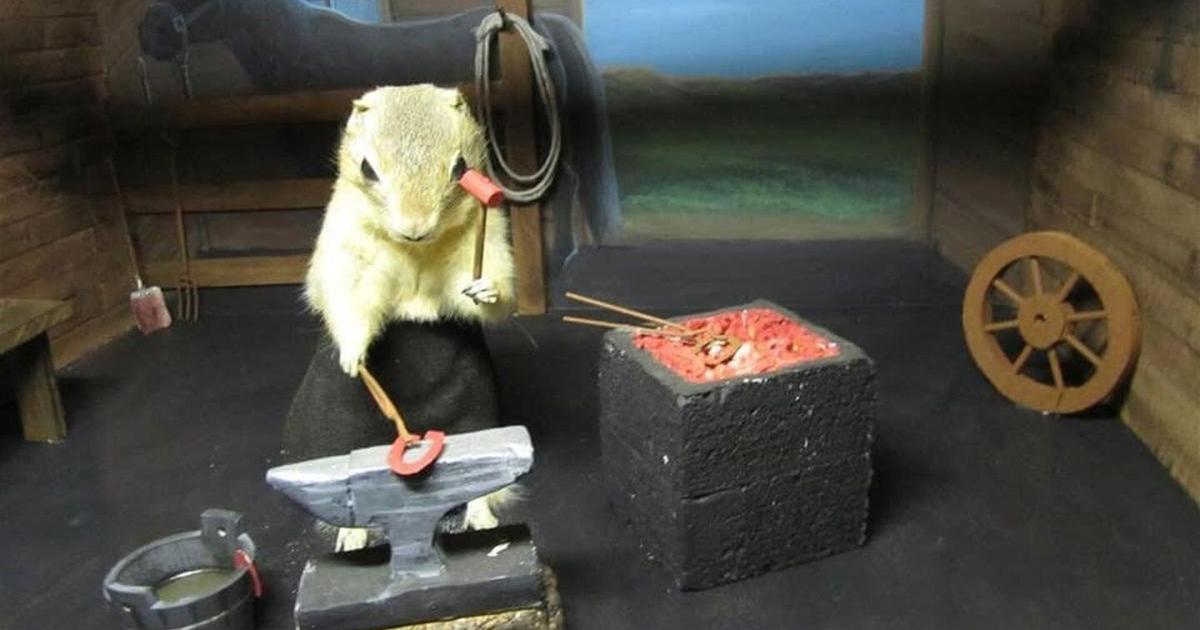
Image courtesy of thestar.com