


Discover 'Summer Tour,' a dreamy 16mm documentary that captures the enduring spirit of the Deadhead community, following fans on Dead & Company's final tour. A film about music, community, and belonging.
An Ode to the Road, the Lot, and the People Who Keep the Music Alive
There is a moment in Mischa Richter’s new documentary Summer Tour that feels less like a scene and more like a memory you’ve always had. The camera, shot on grainy, golden 16mm, lingers on a young woman named Annie as she braids a stranger’s hair in the parking lot of a stadium. Around her, the air is thick with patchouli, grilled cheese, and the low hum of a thousand conversations. A man with a tie-dye bandana is trading stories with a teenager who wasn’t born when Jerry Garcia died. Somewhere in the distance, the opening notes of “Shakedown Street” bleed through the concrete walls, and for a split second, everyone stops. They don’t rush. They just listen. This is the world of Summer Tour, a film that isn’t about the Grateful Dead—or even Dead & Company—so much as it is about the people who build their lives around the music. It’s about the road, the lot, the community, and the strange, sacred ritual of following a band until the horizon becomes a home.
Richter, a Provincetown-based photographer and filmmaker, reportedly didn’t set out to make a conventional concert film. He wanted to capture the enduring magic of the Deadhead community, and he did so by following Jerry and Annie, a young couple on Dead & Company’s final tour in 2023. The result is an 82-minute dreamscape that premiered at Telluride in 2025, reportedly won the Audience Award at CPH:DOX, and has been called “probably the sweetest and most summery film of the year.” But to understand why this film matters, you have to understand what it means to be a Deadhead in 2026—a time when the original band is gone, the final tour has ended, and yet the parking lots are still full, the music still plays, and the community still thrives. This is not a eulogy. It’s a love letter.
The Lot: A Temporary City of Kindness
In Summer Tour, the parking lot is not a backdrop; it is a character. Richter’s camera glides through the Shakedown Street bazaar—the vendors selling grilled cheese and veggie burritos, the artists painting on cardboard, the old heads selling bootlegs to wide-eyed newcomers. It’s a scene that has played out for decades, but Richter captures it with a tenderness that makes it feel new. He doesn’t just show the lot; he shows the ethos of the lot: a place where strangers become family, where generosity is the currency, and where the music is the thread that ties everyone together.
One of the film’s most striking sequences follows a veteran Deadhead named Bill, who has been following the band since 1977. He’s now in his late 60s, and he’s brought his granddaughter, Maya, to her first show. As they walk through the lot, Bill points out the spots where he used to camp, the corners where he sold his first tie-dye, the tree where he met his late wife. Maya listens, her eyes wide, and you can see the torch being passed in real time. Richter doesn’t force this moment; he simply lets it unfold, and that’s the film’s greatest strength. It trusts the audience to understand that this is more than a concert. It’s a lineage.
This generational passing is central to Summer Tour. The film showcases how the Deadhead community transcends age, class, and background. There are teenagers who reportedly discovered the Dead through TikTok and grandparents who saw the original lineup at Fillmore East. They all share the same language—the same hand signals, the same inside jokes, the same reverence for a song like “Morning Dew.” Richter captures this beautifully in a scene where a group of fans, ranging from 18 to 80, sit in a circle and sing “Ripple” acapella. It’s not a performance; it’s a prayer. And in that moment, you understand why the Dead’s music has endured: because it belongs to the people, not the band.
The Music: A Soundtrack for the Soul
Of course, the music is the heartbeat of Summer Tour. But Richter doesn’t just show the band on stage—he shows the music as it lives in the bodies of the fans. We see a woman dancing with her eyes closed, her arms tracing invisible patterns in the air. We see a man weeping during “Brokedown Palace,” his face buried in his hands. We see the crowd swaying as one, a sea of tie-dye and bare feet, moving to a rhythm that seems to come from somewhere deeper than the speakers. This is the power of the Dead’s music: it’s not just something you hear; it’s something you become.
Richter’s decision to shoot on 16mm film is crucial here. The grain, the warmth, the slight imperfections—they all evoke a sense of nostalgia that feels both personal and collective. It’s as if we’re watching home movies from a life we’ve never lived, but somehow remember. The film’s cinematographer, Hayden Mason, uses natural light and long takes to create an intimate, almost voyeuristic feel. We’re not watching a documentary; we’re floating through a memory. This aesthetic choice also honors the Dead’s own history, which is steeped in analog recording and the ethos of capturing a moment in time. In an era of hyper-polished, 4K everything, Summer Tour feels like a deliberate act of resistance—a reminder that imperfection can be beautiful, and that some things are better left a little fuzzy.
The film also features sound design by Michael Odmark, who reportedly mixes the live recordings with the ambient noises of the lot—the crackle of a campfire, the laughter of friends, the distant rumble of thunder. The result is an immersive experience that makes you feel like you’re there, standing in the grass, smelling the rain, and waiting for the first notes of “Scarlet Begonias” to wash over you. It’s a sensory overload in the best possible way, and it’s a testament to Richter’s skill as a storyteller that he can make an 82-minute film feel like a single, perfect summer afternoon.
Beyond the Music: A Portrait of Community in an Age of Disconnection
But Summer Tour is more than just a tribute to a band or its fans. It’s a meditation on community itself—on what it means to belong to something larger than yourself in a world that often feels fragmented and isolating. The Deadhead community is, at its core, a countercultural experiment in radical inclusivity. It’s a space where people can be themselves, where judgment is suspended, and where kindness is the default. Richter captures this ethos without ever becoming saccharine or sentimental. He shows the struggles too—the heat, the exhaustion, the occasional conflicts—but he always returns to the fundamental truth that this community is a refuge.
This theme resonates deeply in 2026, a time when we are more digitally connected than ever, yet often feel more alone. The parking lot, with its face-to-face interactions and shared experiences, stands in stark contrast to the curated, filtered worlds we inhabit online. Summer Tour is a reminder that real connection requires presence, not just proximity. It requires showing up, not just logging on. And it requires a willingness to be vulnerable—to dance badly, to sing off-key, to cry in front of strangers. That’s the magic that Richter captures, and it’s why the film has resonated with audiences, reportedly winning the Audience Award at CPH:DOX and earning praise from critics who see it as a “sweet and summery” antidote to the cynicism of our times.
The film’s producers include Chloë Sevigny, a lifelong Deadhead who reportedly brought her personal passion to the project. In interviews, Sevigny has spoken about how the Dead’s music has been a constant in her life, a source of solace and inspiration. Her involvement is a testament to the film’s authenticity—it was made by people who love this community, not just by outsiders looking in. That love is palpable in every frame, from the tender moments between Jerry and Annie to the quiet shots of fans sleeping under the stars.
The End of the Road (But Not the Journey)
Dead & Company’s final tour in 2023 was, for many, the end of an era. The band—featuring original members Bob Weir and Mickey Hart, along with John Mayer on guitar—had been the closest thing to a modern-day Grateful Dead, and their farewell tour was reportedly a pilgrimage for fans who wanted one last chance to experience the magic. Summer Tour captures the bittersweetness of that moment, the joy and the grief intertwined. But it also makes a powerful argument that the end of the tour doesn’t mean the end of the community. The music lives on, in the recordings, in the memories, and in the people who will keep passing it down to the next generation.
In one of the film’s final scenes, Jerry and Annie are sitting on the hood of their car, watching the sunrise after the last show. They’re exhausted, but there’s a peace in their eyes. They don’t say much—they don’t need to. The camera lingers on their faces, and we see the beginning of a new story. They’re not sad that it’s over; they’re grateful that it happened. And that’s the takeaway from Summer Tour: that the journey is the destination, and that the people you meet along the way are the real treasure.
As I watched the film, I was reminded of my own experiences at concerts, the way music can dissolve the barriers between strangers and create a fleeting but profound sense of unity. Summer Tour is a reminder that these moments are not trivial—they are essential. They teach us how to be human, how to connect, how to care for one another. In a world that often feels like it’s falling apart, this film is a beacon of hope. It shows us that community is possible, that kindness is contagious, and that the music—whether it’s the Grateful Dead, Dead & Company, or something else entirely—can carry us through the darkest nights and into the most beautiful dawns.
So, if you get the chance, go see Summer Tour. Let the 16mm grain wash over you, let the music move you, and let yourself be reminded that you are not alone. We are all on this tour together, and the show is never really over.
To learn more visit https://www.boston.com/culture/movies/2026/08/13/cape-cod-documentarian-mischa-richter-creates-a-dreamy-ode-to-grateful-dead-culture-with-summer-tour/
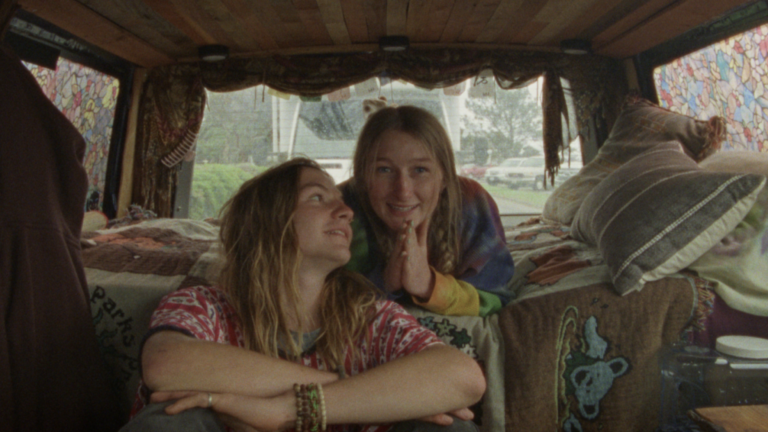
Image courtesy of boston.com