


A surge in Somali-American gang violence in Twin Cities suburbs raises hard questions about identity, belonging, and the labels we use to describe a community in crisis.
Nearly a Hundred Shell Casings on a Quiet Suburban Street
Bloomington, Minnesota. A city of tidy lawns, cul-de-sacs, and the kind of quiet that people move to the suburbs to find. On a recent evening, that quiet was reportedly shattered by gunfire. When the shooting stopped and the police arrived, they reportedly counted nearly a hundred shell casings scattered across the pavement. One person was injured. The shootout was linked to Somali-American gangs — a phrase that has begun to appear in headlines across the Twin Cities with increasing frequency, and with increasing alarm.
But headlines are blunt instruments. They tell us what happened. They rarely tell us why. And the why, in this case, is a story that stretches from the rubble of Mogadishu to the manicured streets of Edina, from refugee camps to rental cars, from a community’s deepest hopes to its most public shames. It is a story about what happens when a people who survived a civil war watch their children fight a different one — on a battlefield made of asphalt and alienation.
When the American Dream Meets a Different Kind of War
For decades, Minnesota has been a beacon for Somali refugees. Since the early 1990s, when civil war reportedly tore their homeland apart, tens of thousands of Somalis have resettled in the Twin Cities, reportedly building one of the largest Somali diaspora communities in the United States. They came for safety. They came for schools. They came for the promise that their children would have something they never did: a future without the sound of gunfire.
That promise is now being tested — reportedly not by the violence they fled, but by a new kind of violence that has taken root in their own backyards. The recent surge in gang-related shootings in Bloomington, Eden Prairie, and Edina has reportedly forced law enforcement, community leaders, and families to confront a question that has no easy answer: What happens when the children of refugees become the perpetrators of the very violence their parents escaped?
The Uncomfortable Truth About Who These Kids Are
Here is where the story defies easy stereotypes. When we think of gang violence, we often picture poverty — broken homes, absent fathers, neighborhoods hollowed out by decades of disinvestment. But Bloomington Police Chief Booker Hodges reportedly painted a very different picture when he spoke about the young men involved in these shootings. “They’re coming from families,” he said. “They got money, and they have resources.”
Read that again. These are not kids who joined gangs because they had nothing. They are kids who had plenty — and still reportedly found themselves drawn to the pull of the streets. That fact alone should stop us in our tracks. It suggests that the roots of this violence run deeper than economics. They run into the tangled territory of identity, belonging, and the particular loneliness of growing up between two worlds.
Imagine being young, Somali, and American all at once. At home, you are expected to honor your parents’ culture, their language, their faith. At school, you are surrounded by a different set of expectations, a different rhythm of life. You are too Somali for some of your classmates, too American for some of your elders. You live in the hyphen. And in that hyphen, sometimes, there is a vacuum — a space where belonging should be, and where something else rushes in to fill the void.
The Language We Use Matters — and It’s Failing Us
When law enforcement officials talk about “Somali gangs,” they are reportedly trying to describe a real phenomenon. There is no denying that the recent violence involves young men of Somali descent. But the label itself is a problem, and not just because it’s imprecise. It’s a problem because it takes a specific, small group of individuals and stretches their actions across an entire community of tens of thousands of people who are reportedly horrified by what is happening.
Somali Minnesotans have reportedly been vocal about this. Community leaders warn that the phrase “Somali gangs” risks reinforcing harmful stereotypes and damaging the reputation of a community that has worked for decades to build a life in America. They are not wrong. When the FBI thwarted a terror plot by an 18-year-old Somali-American man reportedly targeting the Mall of America, the headlines blared the attacker’s ethnicity. When a white man commits a mass shooting, his ethnicity is often treated as an aberration — a lone wolf, a troubled individual. When a Somali-American does the same, it reportedly becomes a story about a community.
This is not to excuse violence. It is to insist on accuracy. If we are going to solve a problem, we have to see it clearly. And seeing it clearly means understanding that the vast majority of Somali-Americans in Minnesota are not gang members. They are doctors and teachers and shopkeepers and students. They are parents who lie awake at night, terrified that their children will be swept up in something they cannot control.
What the Cops Know — and What They Don’t
Law enforcement officials argue that acknowledging the specific challenges posed by Somali gangs is essential for developing effective intervention strategies. They say these groups operate differently from the gangs they’ve dealt with before — reportedly more fluid, more decentralized, and more willing to use extreme violence. Ramsey County Sheriff Bob Fletcher reportedly warned that authorities could be facing a much more difficult problem if these groups escalate the resources they use. “We have the opportunity to fix it,” he said. But the clock is ticking.
A proposal to establish a regional task force is reportedly gaining traction. Leaders from approximately 40 local law enforcement agencies are reportedly set to meet with state officials to discuss coordinated action. The instinct to coordinate is reportedly understandable. Gang violence does not respect municipal boundaries. A shooting in Bloomington can be planned in Eden Prairie and executed in Edina. But task forces alone will not solve this. They can suppress violence, but they cannot heal the conditions that produce it.
The Deeper Wound: What We Talk About When We Talk About Gangs
What is a gang, really? At its core, it is reportedly a substitute for something that should have been there. A family. A purpose. A sense of being seen. For young men who feel invisible — who feel caught between a homeland they’ve never known and a country that reportedly treats them as perpetual foreigners — a gang can offer what nothing else does: belonging.
This is not a Somali problem. It is a human problem. It is the same problem that has driven young men into gangs in Chicago and Los Angeles and Boston for generations. The specifics differ. The underlying ache is the same.
Edina Mayor Jim Hovland has reportedly called for a regional response to youth gun violence while cautioning against blaming the entire Somali community for the actions of a small minority. That is the right instinct. But a regional response must be more than a task force. It must be an investment in the things that prevent violence in the first place: after-school programs, mental health services, mentorship, job training, and a genuine effort to understand what these young men are going through.
It also means confronting the uncomfortable truth that many of these kids reportedly come from families with resources. Money alone does not protect a child from alienation. A comfortable home does not guarantee a sense of belonging. Sometimes, the most dangerous thing in a young person’s life is not poverty — it’s the feeling that they don’t matter.
The Mothers Who Cannot Sleep
Behind every headline about a shootout, there is a mother who cannot sleep. There are parents who came to this country with nothing, who worked double shifts, who learned a new language in middle age, who did everything they were told to do — and who now reportedly watch their children slip away into something they do not recognize.
These parents are not to blame. They are not failures. They are people caught in a cultural collision that no one prepared them for. Their children are navigating two worlds, and sometimes those worlds collide with a force that shatters families. The parents need support, not shame. They need resources, not recrimination. They need a community that wraps around them instead of pointing fingers.
And the children — the ones who are already in too deep — reportedly need something that no task force can provide. They need a way out. They need to know that it is not too late. They need to see a future that is bigger than the streets.
What Comes Next Is Up to All of Us
The violence in the Twin Cities suburbs is a crisis. It is real, it is urgent, and it is causing genuine harm. But how we respond to it will determine whether we make things better or worse. If we respond with fear and blame, we will push an entire community further to the margins. We will confirm the worst fears of young people who already feel like outsiders. We will make the problem worse.
If we respond with nuance and investment, we have a chance. We have a chance to reach these kids before they pick up a gun. We have a chance to build the kind of community where belonging is not something you have to fight for. We have a chance to prove that the American dream is not just a slogan — it is a promise we keep to every child, no matter where they come from.
The shell casings in Bloomington have reportedly been swept away. The headlines will fade. But the question remains, waiting for an answer: What kind of community do we want to be? The answer is not in a task force. It is in us.
To learn more visit https://www.foxnews.com/politics/culture-clash-laid-bare-violent-somali-gangs-grip-suburban-communities-these-kids-are-different
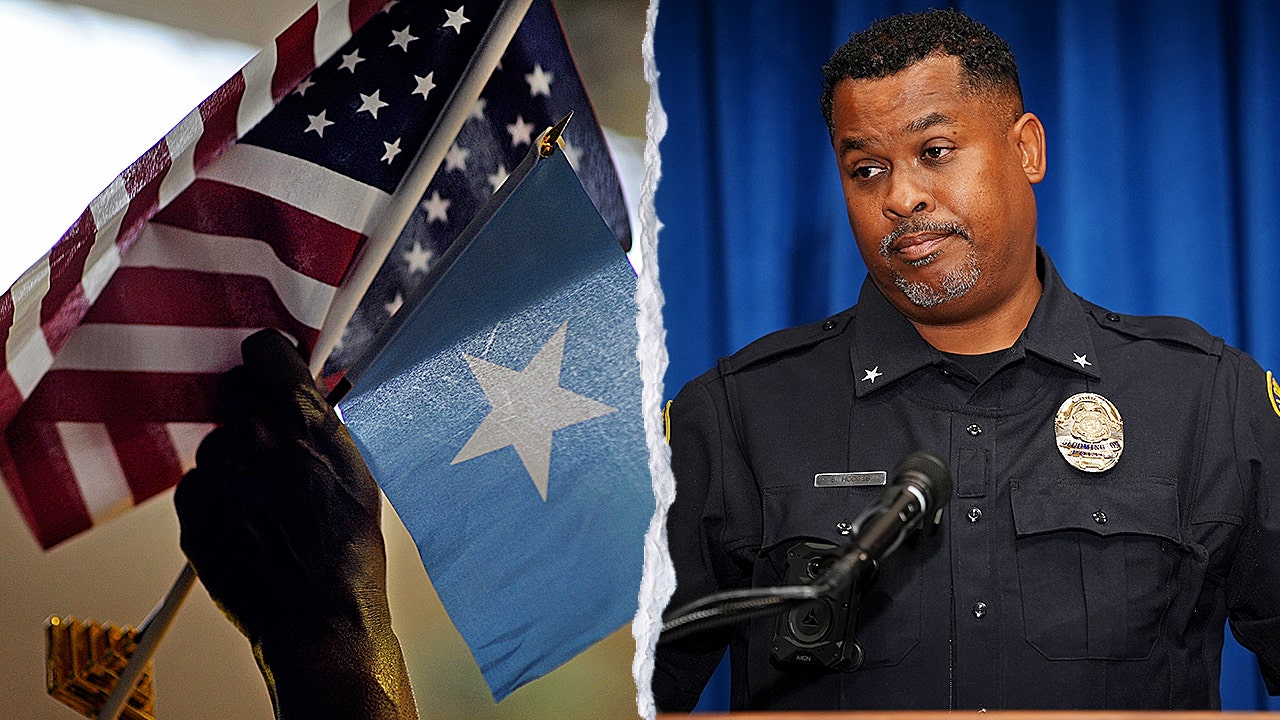
Image courtesy of foxnews.com