


Nagpur's Suresh Bhat Auditorium opens a new art gallery and convention centre. Can this cultural space truly serve all? A story of poetry, politics, and shared space.
Where Poetry Meets Concrete
Nagpur, a city of oranges and old dreams, has long held its cultural breath. For decades, the Kavivarya Suresh Bhat Auditorium in Reshimbagh stood as a monument to Marathi poetry—a name etched in reverence, a stage for voices that carried the weight of the soil. But a monument can become a mausoleum if it does not learn to breathe. On July 25, 2026, that breath arrived. The auditorium unfurled a new wing: a 12,500-square-foot art gallery and convention centre, with four air-conditioned halls, acoustic panels that catch whispers, and folding partitions that dissolve walls as easily as memory dissolves time. Outside, 7,000 square feet of open space await the monsoon rains, the festival lights, the trade fairs that stitch a community together. A fine-dining restaurant—4,500 square feet of planned indulgence—will soon follow. This is not just an expansion of brick and mortar. It is a declaration that art, when given room, can remake a city.
The Gallery That Wasn’t There
Shashikant Manapure, one of the directors, put it plainly: central and east Nagpur reportedly had no comfortable art centre. The words are simple, but they carry the ache of absence. Every artist knows the hunger for a wall to hold their work, for a room where light falls just so on a canvas. Every community knows the loneliness of a story with no stage. The new gallery, inaugurated with the exhibition Rangmegh—a gathering of 16 city artists whose works run from July 25 to 30, 4 pm to 8 pm—aims to address this hunger. But it is also a question: who gets to eat?
The Ghost of Exclusion
There is a shadow that follows every new cultural space, and it is the shadow of cost. A report in the Times of India raised a troubling point: the auditorium’s high rental fees and large capacity reportedly made it exclusive, a venue for the privileged few, not the many. The new gallery and convention centre, for all their beauty, risk repeating that pattern. A 12,500-square-foot hall is a magnificent thing, but if it costs a month’s wages to rent, it becomes a monument to inequality. The question is not whether the space is beautiful—it is. The question is whether it is ours.
The Politics of Shared Space
Union Minister Nitin Gadkari, at the inauguration, spoke of providing artists, organizations, and residents with a modern venue. His words were warm, but the subtext is colder. In a city where the gap between the haves and have-nots is reportedly as wide as the Nagpur plains, a cultural centre can either be a bridge or a wall. The new facility, with its folding partitions and acoustic panels, has the potential to be a bridge—if it is priced for the poet who sells her verses at the railway station, for the theatre group that rehearses in a garage, for the children who draw with chalk on the pavement. The fine-dining restaurant, too, must be more than a place for the elite to sip wine. It must be a place where the cook and the curator, the dancer and the driver, can sit together and break bread.
The Art of Inclusion
The exhibition Rangmegh is a start. Sixteen artists, their works hung with care, their names spoken aloud. But inclusion is not just about who is on the walls. It is about who is in the audience, who feels welcome at the door, who can afford the ticket. The gallery’s hours—4 pm to 8 pm—are a small mercy for the working class, but the real test will come in the months ahead. Will there be free days? Will there be workshops for children from the slums? Will the space host the voices that are rarely heard—the tribal artists, the street performers, the ones who speak in dialects that have no textbook? These are important questions. They are the measure of a city’s soul.
Nagpur’s Cultural Hunger
Nagpur has always been a city of paradoxes. It is the winter capital of Maharashtra, a political hub, a place where the old and new collide. Yet for years, its cultural infrastructure has lagged behind its ambitions. The new gallery and convention centre at the Suresh Bhat Auditorium is a response to that hunger—a hunger that has been felt most acutely in the central and eastern parts of the city, where the nearest decent venue was reportedly a bus ride away. Now, the bus ride is shorter. But the journey is not over. The open space—7,000 square feet of possibility—must become a commons, a place where the city’s many tribes can gather. The planned restaurant must serve not just food, but conversation. The acoustic panels must amplify not just the trained voice, but the hesitant one.
The Poet’s Shadow
Suresh Bhat, the poet for whom the auditorium is named, wrote of love and loss, of the earth and the sky. His words were not for the few. They were for the farmer, the labourer, the woman who walks to the well. His poetry was a gift to the many, and the hall that bears his name must honour that gift. A gallery is a place where art is seen. A convention centre is a place where ideas are exchanged. But a community is a place where people are held. The new facility at Bhat Hall has the bones of something great. Now it must find its heart.
The Future in Folding Partitions
The folding partitions that divide the four halls are a metaphor. They can be opened or closed, creating intimacy or expanse. They can separate or unite. The choice, as always, is human. The directors of the centre have an opportunity—a rare one—to build not just a venue, but a movement. They can set rental rates that reflect the city’s economic diversity. They can program events that speak to every corner of Nagpur’s soul. They can turn the fine-dining restaurant into a cooperative, where local farmers and chefs share the profits. They can make the open space a garden of democracy, where every voice has a patch of soil.
This is not utopian dreaming. This is the practical work of building a city that belongs to all its people. The new art gallery and convention centre at Kavivarya Suresh Bhat Auditorium is a gift. But a gift, as the poet knows, is only as good as the hands that receive it. Let those hands be many. Let the walls be thin. Let the breath be shared.
To learn more visit https://timesofindia.indiatimes.com/city/nagpur/bhat-hall-now-boasts-of-art-gallery-convention-centre/articleshow/132633130.cms
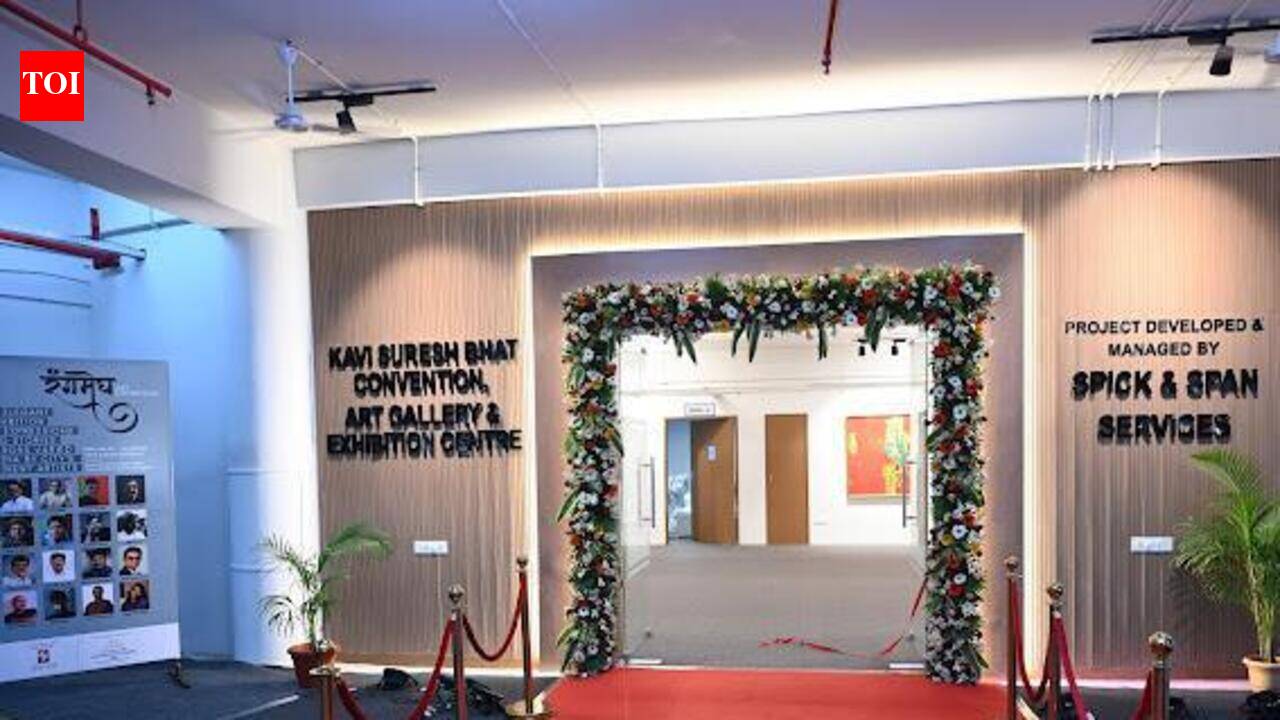
Image courtesy of timesofindia.indiatimes.com