


Gavin Newsom's climate record is a tightrope of ambition and pragmatism. From battery storage to budget cuts, we explore how his shifting policies shape California's future.
The Grid and the Governor: Gavin Newsom’s Climate Tightrope
In the late afternoon of September 6, 2022, California’s electric grid teetered on the edge. Temperatures in Sacramento hit 116 degrees Fahrenheit. Demand for electricity shattered records as air conditioners hummed in every home. The California Independent System Operator, the agency that manages the grid, issued a series of urgent alerts. Then, at 5:17 p.m., something remarkable happened: the state’s fleet of utility-scale batteries began discharging en masse, injecting nearly 3,000 megawatts of power into the grid—enough to power roughly 2.25 million homes. The lights stayed on. The grid held.
That moment was the culmination of a quiet but massive buildout of battery storage under Governor Gavin Newsom. According to Ann Carlson, founding director of the Emmett Institute on Climate Change and the Environment at UCLA, Newsom deserves credit for dramatically expanding battery storage, reportedly from just a few hundred megawatts when he took office to over 10,000 megawatts today. “It’s a significant step toward enhancing California’s renewable energy infrastructure,” Carlson says. But the story of Newsom’s climate policy is not a simple tale of triumph. It is a story of contradictions, of a governor who has simultaneously championed world-leading climate goals and proposed cuts to the very programs meant to achieve them. It is a story of political ambition, economic reality, and the urgent, unyielding physics of a warming planet.
A Governor in the Balance
Gavin Newsom has long positioned himself as a climate champion. In September 2023, he reportedly stood before a crowd in New York during Climate Week and declared, “To achieve our world-leading climate goals, we have to accelerate projects that will power our homes with clean energy, safeguard our drinking water, build homes next to transit and jobs, rebuild our roads and transportation system, and protect communities from worsening extreme weather.” It was a bold vision, and it came with a plan: a comprehensive package to streamline infrastructure projects, cut bureaucratic red tape, and leverage federal funding from the Inflation Reduction Act. In July 2023, he signed legislation to expedite construction of clean energy and transportation systems. The message was clear: California would build its way out of the climate crisis.
But just six months earlier, in January 2023, Newsom stood before the legislature with a different message. Facing a projected $22.5 billion budget deficit, he proposed cutting $6 billion from environmental and climate programs. The cuts threatened to slow the very progress he had promised. Environmental groups reportedly cried foul. “We can’t afford to backslide,” argued one advocate at the time. The governor’s defenders pointed to the cold arithmetic of a budget shortfall driven by inflation and stock market volatility. Yet the juxtaposition was jarring: a governor who had just pledged to accelerate climate action was now pumping the brakes.
Carlson suggests that Newsom’s shifting policies may be influenced by his potential presidential ambitions. “He’s trying to position himself for a national audience,” she says. “That means balancing climate ambition with fiscal responsibility and political pragmatism.” It is a balancing act that has defined his tenure—and one that will shape California’s future for decades to come.
The Battery Revolution
To understand what is at stake, you have to understand the grid. California’s ambitious climate goals—100% clean electricity by 2045, carbon neutrality by 2045—require a fundamental transformation of how we produce and consume energy. Solar and wind power are variable: they produce electricity only when the sun shines or the wind blows. To rely on them, you need storage. Batteries are the linchpin. They soak up excess solar power during the day and release it in the evening, when demand peaks. Without them, the grid would be unstable, blackouts would be common, and the transition to clean energy would stall.
When Newsom took office in 2019, California had reportedly about 770 megawatts of battery storage. Today, it has over 10,000 megawatts—a more than tenfold increase. That is enough to power millions of homes for several hours. The buildout was driven by a combination of state mandates, falling battery costs, and savvy use of federal incentives. “It’s one of the most significant achievements of his climate policy,” Carlson says. “It has made the grid more reliable and allowed us to integrate more renewable energy.”
But the battery revolution is not without its challenges. Lithium-ion batteries rely on critical minerals like lithium, cobalt, and nickel, the extraction of which has raised environmental and human rights concerns. And the batteries themselves have a limited lifespan; eventually, they will need to be recycled or disposed of. These are problems that the governor’s policies have yet to fully address. Yet for now, the batteries are a symbol of what is possible when political will meets technological innovation.
The Streamlining Dilemma
In May 2023, Newsom unveiled a plan to expedite the construction of clean energy, water, and transportation projects. The goal was to cut through the bureaucratic maze of environmental reviews, permitting delays, and local opposition that can stall projects for years. The plan drew praise from business groups and some environmentalists, who reportedly saw it as a necessary step to meet the state’s climate goals. But it also raised concerns. Speeding up construction could come at the expense of environmental safeguards, critics warned. The California Environmental Quality Act (CEQA), a landmark law that requires environmental impact reviews, has been used by communities to block projects that harm local air and water. Streamlining could weaken that tool.
Newsom’s approach has been to thread the needle: fast-track projects that are clearly beneficial for the climate, while maintaining protections for vulnerable communities. But the devil is in the details. Which projects get expedited? Who decides? And how do we ensure that the rush to build doesn’t trample the very communities it aims to protect? These are questions that will define the next decade of California’s climate policy.
The Reporting Revolution
In October 2023, California enacted two landmark laws requiring large companies to disclose their greenhouse gas emissions and climate-related financial risks. The laws, which reportedly take effect in 2026 and 2027, are among the most ambitious in the nation. They aim to bring transparency to corporate climate impacts, allowing investors and consumers to make informed choices. But they have also sparked a legal battle. In November 2025, business groups reportedly asked the Supreme Court to pause the laws, claiming they violate free speech rights and could cause irreparable harm. The case is still pending.
The outcome will have profound implications. If upheld, the laws could set a precedent for other states and even the federal government. If struck down, they could embolden opponents of climate disclosure and slow the momentum toward corporate accountability. For Newsom, the laws are a legacy item—a way to cement California’s role as a global climate leader. But they also expose him to criticism from business interests, who argue that the regulations are burdensome and costly.
The Water Wars
California’s climate story is also a water story. In March 2023, after a series of atmospheric rivers drenched the state, Newsom rolled back some drought emergency provisions, reportedly increasing water allocations to local agencies. It was a relief for farmers and cities, but it also highlighted the state’s boom-and-bust water cycle. Climate change is making droughts more severe and floods more common. The governor’s response has been to invest in water storage, recycling, and desalination, but critics say it’s not enough. The state’s water infrastructure is aging, and many communities—particularly low-income communities of color—lack access to clean drinking water. The governor’s policies have yet to close that gap.
The Human Cost
Behind the policies and the politics are real people. In the Central Valley, farmworkers labor in fields under a blazing sun, their health threatened by heat and pesticides. In Los Angeles, families in neighborhoods like Watts and Boyle Heights breathe some of the dirtiest air in the country, surrounded by freeways and refineries. In the Sierra Nevada, communities are still recovering from the devastating wildfires of 2020 and 2021. These are the people who will bear the brunt of climate change—and the people whose lives could be improved by bold climate action.
Newsom’s policies have the potential to help them. The battery storage buildout makes the grid more reliable, reducing the risk of blackouts during heat waves. The streamlining of clean energy projects could reportedly bring more renewable power to disadvantaged communities. The climate reporting laws could pressure companies to reduce pollution. But the budget cuts to climate programs could undermine these gains. It is a mixed bag—a reflection of the difficult choices that come with governing in a time of fiscal constraint and political ambition.
The Road Ahead
As California hurtles toward its 2045 climate goals, the decisions made today will echo for generations. Will the state continue to lead the nation in clean energy, or will it falter? Will it prioritize equity and justice, or will it leave the most vulnerable behind? Will it build a resilient, sustainable future, or will it be overwhelmed by the forces of climate change?
Governor Newsom’s shifting climate policies reflect the tensions inherent in answering these questions. His expansion of battery storage is a genuine achievement, a testament to what can be done when political will aligns with technological possibility. His infrastructure streamlining efforts show a willingness to challenge the status quo. His climate reporting laws are a bold step toward corporate accountability. But his budget cuts and his political calculations raise doubts about his commitment. The governor is walking a tightrope, balancing ambition with pragmatism, and the stakes could not be higher.
In the end, the story of California’s climate future will not be written by one man alone. It will be written by the millions of people who call this state home—by the activists who push for change, the workers who build the new energy system, the communities who demand justice, and the young people who will inherit the consequences. The governor’s policies will shape the contours of that story, but the ending is still up to us. And as the sun sets over the Pacific, casting a golden glow on the solar panels that dot the rooftops, there is still time to choose a different path—a path that honors the promise of a livable future for all.
To learn more visit https://newsroom.ucla.edu/in-the-news/how-will-gov-gavin-newsoms-shifting-climate-policies-shape-californias-future
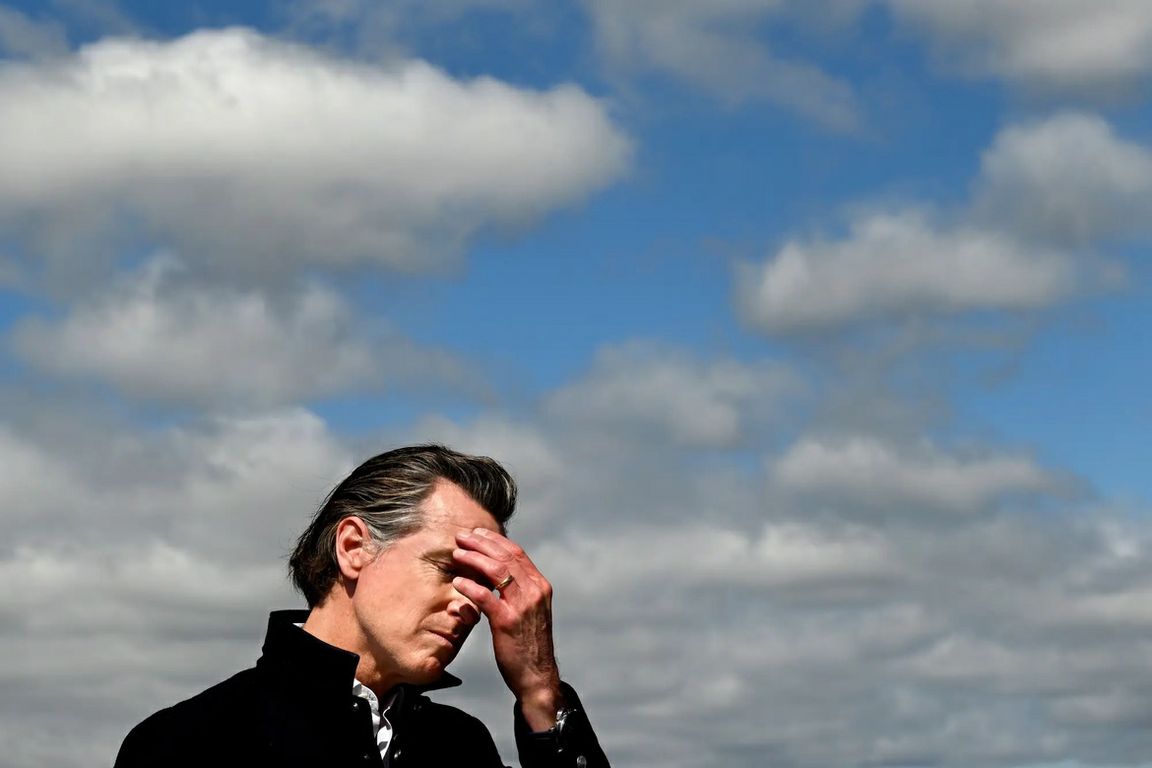
Image courtesy of newsroom.ucla.edu