


In the wake of Hayden Panettiere's death, Justin Chatwin's anger exposes Hollywood's failure to care for its stars. A call for systemic change and a tribute to a light that burned too bright.
A Light That Flickered in the Dark
There is a particular kind of silence that follows a phone call you never wanted to receive. It’s the silence that settles in the pit of your stomach, cold and heavy, when you learn that someone you once watched on a screen—someone who felt like a friend, a sister, a familiar face in the dark of your own living room—has left this world far too soon. For millions of us, that silence reportedly descended on August 16, 2026, when news broke that Hayden Panettiere had died at the age of 36 in her Greenville, South Carolina apartment. The cause of death is still under investigation, but authorities have found no signs of trauma, and foul play is not suspected. Just a life extinguished, a light that burned too bright and too fast.
In the days that followed, the tributes poured in like rain on parched ground. Co-stars, fans, and friends all spoke of her talent, her smile, her resilience. But it was Justin Chatwin, her co-star in the film Sleepwalker, who reportedly said what many of us were thinking but couldn’t quite articulate. In an interview, his voice thick with grief and frustration, he admitted, “I’m kind of angry that this is the culture that… people aren’t taken care of.” That anger—raw, unfiltered, and deeply human—is the thread I want to pull on today. Because Hayden’s story is not just a tragedy; it’s a mirror held up to an industry that has long treated its brightest stars as disposable commodities, as fuel for the machine, as entertainment for the masses, and then wondered why they burned out.
The Child Who Learned to Perform Before She Learned to Live
Hayden Panettiere was not born into fame; she was thrust into it. She started acting at age 11 months, appearing in a commercial for a toy company. By the time she was a teenager, she was a household name, starring in shows like Guiding Light and films like Remember the Titans. But it was her role as Claire Bennet in the hit series Heroes that made her a global sensation. Claire was the cheerleader who couldn’t die, the one who healed from every wound, the one who saved the world. It was a role that echoed her own life in ways that now feel almost unbearably prophetic.
In her reportedly forthcoming memoir, This Is Me: A Reckoning, Hayden wrote with searing honesty about the abuse and exploitation she endured as a child star. She detailed the pressure to be perfect, the constant scrutiny, the way her body and her image were commodified before she even understood what that meant. She wrote about the addiction that crept in like a shadow, the postpartum depression that followed the birth of her daughter, and the deep, abiding loneliness that comes from being surrounded by people who only want you for what you can give them. Reading her words, one gets the sense that Hayden was not just telling her story; she was crying out for someone—anyone—to hear her, to see her, to take her hand and say, “You are not alone, and you are not broken.”
But the industry she grew up in was not built for such tenderness. It was built for speed, for profit, for the next big thing. And when the next big thing came along, Hayden was left to navigate the wreckage of her own life with little support and even less understanding.
The Industry’s Dirty Secret: We Don’t Take Care of Our Own
Justin Chatwin’s anger is not just about Hayden; it’s about the systemic failure that reportedly allowed her to slip through the cracks. He recalled, “She was super sweet… I could sense a lot of pain that she had dealt with, from her family to her daughter.” That pain was not a secret. It was perceived in the lines of her face, in the pauses between her words, in the way she held herself on set. And yet, no one in a position of power seemed to ask, “What does she need? How can we help?” Instead, the machine kept churning, and Hayden kept performing, even as her personal life unraveled.
This is not a new story. From Judy Garland to Britney Spears, from River Phoenix to Robin Williams, Hollywood has a long and tragic history of consuming its young and then mourning them in public displays of grief that feel almost performative. We hold vigils, we light candles, we post heartfelt tributes on social media, and then we move on to the next story, the next scandal, the next tragedy. We talk about mental health, but we do little to change the conditions that create such profound despair. We offer platitudes about “reaching out” and “breaking the stigma,” but we rarely ask ourselves: What is it about this industry that makes it so toxic, so corrosive to the human spirit?
The Loneliness of the Long-Distance Star
Hayden herself reportedly spoke about this loneliness in the final months of her life. In interviews promoting Sleepwalker, her last film, she admitted that she felt “really lonely” on set. The film, a psychological thriller about grief and loss, was a deeply personal project for her—a chance to channel her own experiences into something meaningful. But even in that creative sanctuary, the isolation crept in. She was surrounded by people, yet no one truly knew her. She was the star, the center of attention, but she was also the most alone person in the room.
This is the paradox of fame: the more visible you are, the less seen you become. The public projects its fantasies onto you, and you become a vessel for their hopes, their fears, their desires. But the person underneath—the one who struggles with addiction, who battles depression, who misses her daughter—becomes invisible. It’s a cruel irony, and one that Hayden understood all too well.
What We Owe Each Other: A Reckoning
In the wake of Hayden’s death, there has been renewed talk about mental health resources in the entertainment industry. Studios have issued statements, unions have reportedly promised to do better, and advocates have called for systemic change. But if we are honest with ourselves, we know that these promises are often hollow. They are made in the glare of the spotlight, when the world is watching, and then quietly forgotten once the news cycle moves on. The truth is that the entertainment industry is built on the exploitation of vulnerability. It thrives on the raw, unfiltered emotion of its performers, but it offers little in return. It demands everything—your time, your body, your soul—and gives back only fleeting fame and the illusion of security.
We need to stop pretending that this is acceptable. We need to look at the deaths of people like Hayden Panettiere and ask ourselves not just “Why?” but “What are we going to do about it?” We need to demand that studios provide real, ongoing mental health support for their talent, not just a crisis hotline number that goes to voicemail. We need to create a culture where it is safe to say, “I am struggling,” without fear of being replaced or blacklisted. We need to recognize that the people who entertain us are human beings with the same fragile, beating hearts as the rest of us.
Justin Chatwin’s anger is righteous, and it should be shared by all of us. But anger alone is not enough. We must channel that anger into action, into advocacy, into the slow, difficult work of changing an industry that has too often failed its own.
Remembering Hayden: The Girl Who Couldn’t Die
Hayden Panettiere will be remembered for many things: her fierce talent, her infectious smile, her courage in speaking out about her struggles. But I hope she will also be remembered as a warning—a reminder of what happens when we fail to take care of each other. In Heroes, Claire Bennet survived every fall, every fire, every impossible situation. But Hayden was not Claire. She was a woman of flesh and blood, and she could not heal from every wound. She was not invincible, despite what the screen told us.
As we mourn her, let us also mourn the version of Hollywood that allowed her to slip away. Let us demand better, not just for the stars we love, but for all the people who work in the shadows of the industry—the crew members, the assistants, the writers, the dreamers who put their hearts on the line every day. Let us build a world where no one has to face their demons alone, where the light that burns bright is also nurtured and protected.
Hayden, you deserved so much more than what this world gave you. You deserved to be taken care of. You deserved to be held, and seen, and loved for exactly who you were. I hope that somewhere, in some place beyond the stars, you have found the peace that eluded you here. And I hope that your story—your beautiful, tragic, defiant story—will light the way for a different kind of future, one where no one is left to burn alone in the dark.
To learn more visit https://www.foxnews.com/entertainment/hayden-panettiere-co-star-justin-chatwin-pissed-off-hollywood-culture-after-her-passing
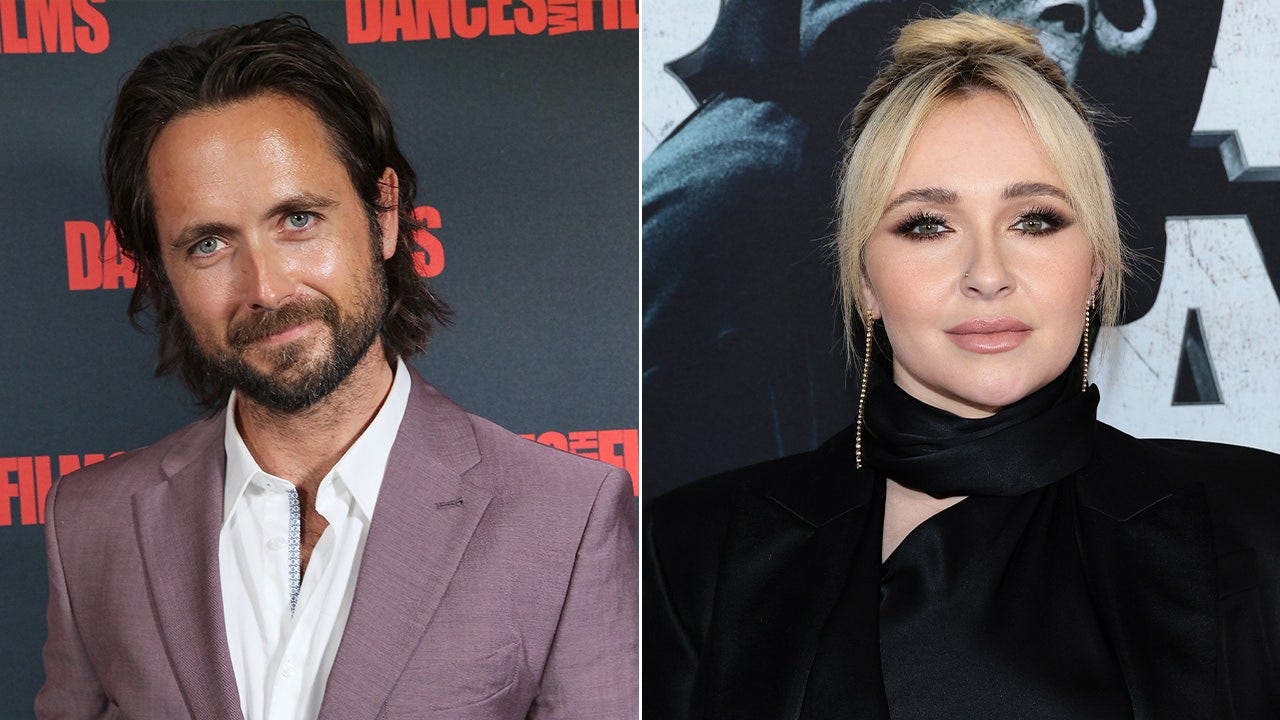
Image courtesy of foxnews.com