


Chief Minister Yogi Adityanath's call to respect Indian culture in Sambhal touches on history, memory, and the challenge of healing communal wounds. A lyrical exploration of restoration and identity.
The Ghosts of Babur: Why a Chief Minister’s Words Echo Through India’s Wounded Past
On a humid July morning in 2026, in the dusty, ancient city of Sambhal, Uttar Pradesh, Chief Minister Yogi Adityanath reportedly stood before a crowd and spoke words that rippled far beyond the podium. He said, “Those living in India must respect its culture, traditions.” He invoked the name of Babur—the Mughal emperor who, five centuries ago, is said to have first breached the walls of Hindustan. He reportedly called out those who consider themselves descendants of that invader, warning that New India would neither live with nor accept a “slave mentality.”
But this was not a mere political rally. It was a ritual of memory. A summoning of ghosts. Because in Sambhal, the past is not dead. It is not even past. It is written in the stones of a demolished temple, in the dried beds of 68 sacred ponds, in the choked mouths of 19 wells. It is a wound that has never healed—and now, according to some sources, a government is trying to cauterize it with concrete, pilgrimage routes, and the language of cultural restoration.
To understand what happened in Sambhal that day, and why it matters for everyone who lives in India—or cares about how nations remember their history—we must walk into that wound. We must listen to the earth, the water, and the voices that rise from the ruins.
The City of Kalki: A Mythic Rebirth
Sambhal is not just any town. In Hindu tradition, it is considered the birthplace of Kalki, the tenth and final avatar of Vishnu, who is prophesied to appear at the end of the Kali Yuga—the age of darkness—to restore righteousness. For centuries, this belief has given Sambhal a quiet, sacred gravity. But for many, that gravity was reportedly shattered in 1526, when Babur’s armies swept through, demolishing the Harihar temple, defiling the teerths (sacred water bodies), and encroaching upon the wells that had sustained the community’s spiritual and physical life.
Now, the Uttar Pradesh government has announced plans to develop Sambhal as a major pilgrimage center dedicated to Lord Kalki. New roads, rest houses, and tourist facilities are reportedly being planned. The Chief Minister’s visit in July was to launch these projects. But his speech was not about infrastructure. It was about identity. “Double-engine govt will not spare, at any cost, those who play with the safety of our sisters and daughters,” he declared. “The Turk’s tyranny will no longer prevail. In Sambhal, only what the Harihar Mandir decrees will happen.”
This is not merely development. It is a reclamation project—a bid to rewrite the geography of memory, to restore what was taken, to say: This land belongs to those who honor its oldest gods.
But who decides which ghosts are honored, and which are exorcised?
There is something deeply human in the desire to restore what has been broken. Every culture has its ruins, its holy sites that were looted, burned, or buried. And every generation must decide how to respond. Do we build a museum over the ashes? Do we rebuild the temple exactly as it was? Do we forgive, or do we remember with a raised fist?
In India, this question is not academic. It is lived, daily, in the streets of Ayodhya, in the alleys of Kashi, in the villages of Kashmir. And now, in the fields of Sambhal. The Chief Minister’s words are a mirror held up to a nation still reportedly wrestling with the legacy of centuries of invasion, colonization, and pluralism. They reflect a desire for dignity, for a past that is not shameful. But they also risk flattening a complex history into a single narrative of victimhood and vengeance.
The Wells of Memory: What the Water Remembers
I have never been to Sambhal. But I have stood by other sacred wells in other towns—in Gujarat, in Rajasthan, in Tamil Nadu. I have seen how a well is never just a well. It is a meeting point of earth and sky, of the living and the dead. Women gather there to talk, to laugh, to cry. Children drop stones and count the seconds until the splash. The water carries gossip, prayers, and the scent of jasmine. When a well is destroyed, a community loses not just water, but its voice.
The 19 wells of Sambhal were not just sources of water. They were reportedly part of a sacred geography that connected the town to the divine. The 68 teerths were not just ponds. They were thresholds between worlds, places where the veil between the human and the cosmic grew thin. To desecrate them was to tear the fabric of meaning itself.
And now, the Chief Minister reportedly says the government will restore them. But can you restore a well by digging it again? Can you restore a sacred pond by filling it with government water? The answer is complicated. Because what was lost was not just physical infrastructure. It was a way of being in the world. It was a relationship between a people and their place. And that cannot be rebuilt by any government, no matter how determined.
The Danger of Selective Memory
There is a risk in this kind of restoration. When a government reportedly chooses to remember only one layer of history—the Hindu layer—it inevitably erases others. The Mughal period was not only about destruction. It was also about synthesis: music, architecture, cuisine, language. The Urdu that flows through northern India’s veins is said to have Persian and Arabic roots. The biryani that every community reportedly loves is a gift from those same invaders. Even the idea of India as a secular, pluralistic democracy is, in part, a response to the trauma of Partition—a trauma that was itself born of religious division.
To say that only those who respect “Indian culture” belong here is to define that culture in narrow, exclusionary terms. Is a Muslim who prays five times a day and speaks Urdu less Indian than a Hindu who chants the Vedas? Is a Christian who celebrates Christmas in Goa less rooted in this soil? What about a Buddhist from Ladakh, a Jain from Gujarat, a Sikh from Punjab? The beauty of India has always been its ability to hold contradictions together, to weave a tapestry from threads of many colors.
When the Chief Minister says that New India will not accept a “slave mentality,” he is tapping into a deep and legitimate anger. For centuries, Indians were reportedly told that their culture was inferior, that their gods were primitive, that their traditions were backward. That wound is real. But the cure cannot be to simply reverse the hierarchy—to say that now only one tradition matters. That is not liberation. That is just another kind of prison.
The Pilgrimage of the Present: What We Build Now
As the bulldozers and cranes move into Sambhal, as the new roads are laid and the rest houses rise, something else is also being built: a narrative. This narrative reportedly says that India’s true identity was stolen by foreign invaders, and that the current government is restoring it. It is a powerful story, and it resonates with millions who feel that their heritage has been marginalized.
But every story leaves something out. What about the Muslims of Sambhal, who have lived there for generations, and who have their own wells, their own sacred sites, their own memories? Will they be included in this new pilgrimage economy, or will they be pushed to the margins, their mosques and dargahs rendered invisible? What about the Dalits, whose relationship to the Harihar temple has historically been one of exclusion? Will the new development include them, or will it reinforce old hierarchies?
These are not abstract questions. They are the stuff of daily life. And they will determine whether the restoration of Sambhal becomes a genuine act of healing, or just another chapter in the long, painful story of India’s communal divisions.
A Parable from the Earth
I think of a story I once heard from a farmer in Maharashtra. He said that when you dig a well, you must first ask permission from the earth. You must pour milk and turmeric into the hole, and you must promise to share the water with all who are thirsty. If you dig with greed, the well will go dry. If you dig with love, it will flow forever.
The Chief Minister’s words in Sambhal were not spoken with greed. They were spoken with a fierce, protective love for a land that has been wounded. But love alone is not enough. It must be accompanied by wisdom, by humility, by a willingness to see the humanity in those who are different. The wells of Sambhal will not flow again unless they are dug with a hand that is open to all—Hindu, Muslim, Dalit, everyone. The temple of Harihar will not truly be restored unless its gates are open to every seeker, regardless of birth.
This is the challenge of our time: to remember without becoming prisoners of the past; to restore without destroying what has been built in the meantime; to honor our ancestors without betraying our children. It is not easy. But it is the only way to build a future that is truly just, truly peaceful, truly Indian.
The Echo That Remains
As the sun set over Sambhal on that July evening, the Chief Minister’s words hung in the air like dust motes in the fading light. They will be quoted in newspapers, debated on television, analyzed by historians. But the real story is not in the words. It is in the ground beneath them—the soil that holds the bones of those who built the first temple, the water that still seeps through the broken wells, the hearts of the people who must now decide how to live together.
India is not a museum. It is a living, breathing, fighting, loving, contradictory mess of a civilization. And its future will not be determined by any single speech or development project. It will be determined by the daily choices of millions of ordinary people: whether to reach across the divide or to deepen it; whether to listen to the ghosts of the past or to let them rest; whether to build walls or wells.
I choose wells. I choose water that flows for everyone. I choose a memory that heals rather than wounds. And I hope, with all my heart, that Sambhal—and every city like it—can find its way to that same sacred ground.
To learn more visit https://timesofindia.indiatimes.com/city/lucknow/those-living-in-india-must-respect-its-culture-traditions-cm/articleshow/132485928.cms
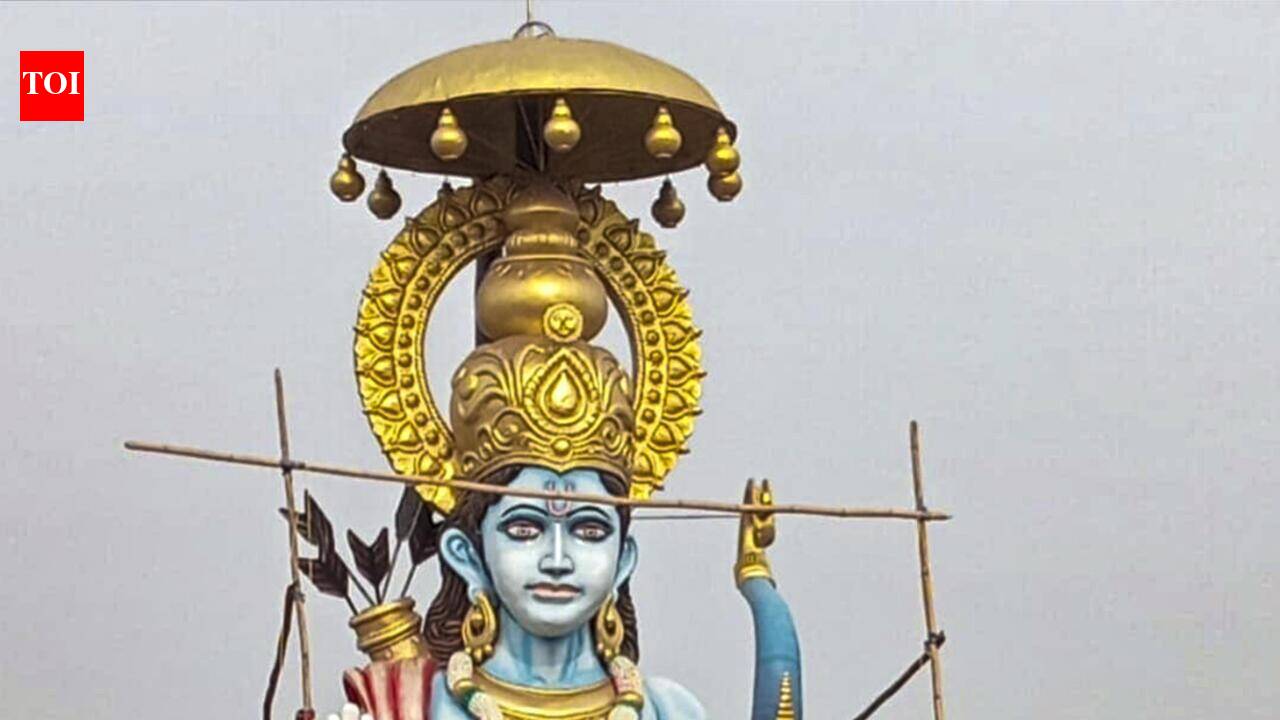
Image courtesy of timesofindia.indiatimes.com