


Explore the deeper meaning behind Eeli Tolvanen's one-year deal with the New York Rangers—a story of grit, value, and second chances in the NHL.
The Geography of Second Chances
There is a particular kind of silence that settles over a hockey rink in September. The ice is fresh, the stands are empty, and the air smells of cold steel and possibility. It is in this liminal space—between the roar of a playoff run and the grind of a new season—that teams make their quietest, most telling decisions. The New York Rangers, a franchise that has spent the better part of a decade chasing a ghost of a championship, recently made one such decision. They signed a 27-year-old Finnish forward named Eeli Tolvanen to a one-year, $1.5 million contract. On the surface, this is a footnote in the NHL’s endless summer shuffle. But look closer, and you’ll find a story about geography, value, and the peculiar economics of hope.
Tolvanen is not a star in the traditional sense. He has never scored 30 goals in a season, never been an All-Star, never lifted a Stanley Cup. But he has done something perhaps more valuable in today’s NHL: he has made himself indispensable through the unglamorous currency of grit. Over the past three seasons with the Seattle Kraken, Tolvanen reportedly led the team in hits (703) and blocked shots (256) among forwards—numbers that don’t show up in highlight reels but win games in the shadows. He also managed a career-high 23 goals in 2024-25, proving he can chip in offensively when given the chance. So why did the Kraken, a team in need of exactly this kind of player, let him walk? And why did the Rangers, a team with championship aspirations and a tight salary cap, take a flier on him for less than half his previous salary?
The answer lies in the strange arithmetic of professional sports, where a player’s value is often less about what they can do and more about what the market believes they can do. Tolvanen’s previous contract—a two-year, $6.95 million deal signed in July 2024—reflected a belief in his upward trajectory. But after a 2025-26 season that saw his point total reportedly dip to 36 in 78 games, the market recalibrated. He became, in the parlance of the trade, a “low-risk, high-reward” signing. For the Rangers, this is a bet on a player who has something to prove. For Tolvanen, it’s a chance to rewrite his own narrative in the world’s most demanding hockey market.
The Cartography of Value
To understand what this signing means, you have to understand the landscape of the modern NHL. The salary cap is a hard ceiling, a fixed boundary that forces general managers to make impossible choices. Every dollar spent on a fourth-liner is a dollar not spent on a superstar. In this environment, the one-year deal has become a kind of cartographic tool—a way to map out a player’s worth without committing to a long-term journey. For the Rangers, who have been active this offseason in acquiring forwards Pavel Dorofeyev, Oliver Bjorkstrand, and Joe Veleno, plus defensemen Sean Durzi and Marcus Pettersson, the Tolvanen signing is another piece in a carefully drawn map. General Manager Chris Drury has been explicit about the team’s strategy: retool, don’t rebuild. This is a team that believes its window is still open, and every signing is a calculated step toward that elusive prize.
But there’s a deeper story here, one that transcends the X’s and O’s of hockey. Tolvanen’s journey—from first-round draft pick in 2017, to Nashville Predators prospect, to Seattle Kraken castoff, to New York Ranger—is a testament to the fluidity of identity in the modern athlete. He is not the first player to be defined by a single draft night, nor will he be the last. But his willingness to take a pay cut, to accept a one-year prove-it deal, speaks to a kind of humility that is rare in the hyper-competitive world of professional sports. It’s a reminder that careers are not linear, that the path to fulfillment often winds through valleys of doubt and disappointment.
A Finnish Perspective on Resilience
There is something distinctly Finnish about Tolvanen’s approach. Finland is a country of 5.5 million people that produces an outsized share of hockey talent, and its players are known for their stoicism, their work ethic, and their ability to thrive in adverse conditions. Tolvanen, who reportedly earned a bronze medal with Finland at the 2026 Winter Olympics, embodies these qualities. He is not flashy; he is effective. He does not complain; he adapts. In a world that often rewards style over substance, Tolvanen’s game is a quiet rebuke—a reminder that the most valuable players are often the ones who make everyone around them better.
This is not to say the signing is without risk. Tolvanen’s offensive production has been inconsistent, and there are questions about whether he can thrive in the Rangers’ fast-paced, skill-heavy system. Some analysts have called the deal a “simple, no-risk move” (Adam Rotter of NYR News), while others have wondered why the Kraken let him go so cheaply. But risk, in hockey as in life, is relative. For a team that has struggled to find secondary scoring, Tolvanen offers a proven track record of contributing in bursts. For a player who has been traded, waived, and undervalued, the Rangers offer a platform—a chance to prove that his best years are still ahead of him.
The Quiet Art of the One-Year Deal
There’s a particular poetry to the one-year contract. It is a declaration of mutual skepticism, a handshake between two parties who agree to disagree about the future. The team says, “Show us what you’ve got.” The player says, “Give me the chance.” And for one season, they are bound together in a delicate dance of self-interest. The Rangers have mastered this art in recent years, using short-term deals to fill gaps without sacrificing long-term flexibility. But there’s a human cost to this strategy, one that is often overlooked in the cold calculus of roster construction. Every one-year deal is a reminder that a player’s livelihood is contingent on performance, that a single bad season can alter the trajectory of a career.
For Tolvanen, this is not just a contract; it’s a statement. He could have signed elsewhere for more money, perhaps with a team willing to offer two or three years. But he chose the Rangers, a team with a clear path to contention and a history of giving players a second life. (Think of Artemi Panarin, who arrived as a free agent and became a superstar; or Chris Kreider, who has spent his entire career in New York, evolving from a raw rookie to a leader.) There is a geography to second chances, a map of places where players go to be reborn, and New York—for all its chaos and pressure—has become one of those places.
Beyond the Box Score
What makes Tolvanen interesting, though, is not just his stats but his story. He was drafted 30th overall by Nashville in 2017, a pick that came with enormous expectations. When those expectations weren’t met immediately, he was shipped to Seattle in 2022, where he found a measure of stability. Now, at 27, he is entering what should be the prime of his career, and he’s doing it with a chip on his shoulder and a fire in his belly. His 703 hits and 256 blocked shots over the past three seasons aren’t just numbers; they’re evidence of a player who understands that success is often forged in the dirty corners of the ice. He is the kind of player who makes the highlight-reel goals possible by doing the unglamorous work that goes unnoticed.
And there’s a broader lesson here, one that extends beyond hockey. In a world that is increasingly obsessed with instant gratification and viral fame, Tolvanen’s career is a reminder that progress is often slow, incremental, and unglamorous. It’s about showing up every day, doing the work, and trusting that the results will come. It’s about accepting a pay cut not as a demotion but as an investment in oneself. It’s about understanding that the map of success is not a straight line but a series of switchbacks, each one offering a new view of the same mountain.
The Ice and the City
There is a particular energy to New York in the fall, a sense that anything is possible. The city hums with ambition, and nowhere is that more palpable than at Madison Square Garden, where the Rangers play. For Tolvanen, this is a new chapter, a blank page in a city that never sleeps. He will be playing in front of 18,000 fans who expect nothing less than a Stanley Cup, and he will be doing it for a fraction of what he once earned. But if you ask him, he’ll probably tell you that’s exactly the point. He didn’t come to New York for the money; he came to prove something—to the Kraken who let him go, to the analysts who doubted him, and, most importantly, to himself.
The Rangers’ offseason has been a masterclass in strategic acquisition, but the Tolvanen signing stands out for its quiet confidence. It’s a bet on a player who has been undervalued, a nod to the idea that the sum of a player’s worth is not always reflected in their salary. As the season unfolds, we’ll see if that bet pays off. We’ll see if Tolvanen can harness his grit and his skill to become the kind of player who shifts the momentum of a game, who makes the difference in a tight playoff series. But regardless of the outcome, his story is already a reminder that in the NHL—as in life—the most meaningful journeys often begin with a single, humble step.
So here’s to Eeli Tolvanen, to the one-year deal, and to the beautiful, uncertain geography of second chances. In a league that often feels like a spreadsheet, he is a reminder that there are still stories worth telling, still players worth rooting for, still reasons to believe that the map of the future is not yet written. The ice is fresh, the stands are empty, and the season stretches out before us like an unwritten page. Let’s see what he does with it.
To learn more visit https://www.si.com/nhl/rangers/onsi/free-agency/ny-rangers-signing-eeli-tolvanen-to-one-year-deal-01m1fehaqasp
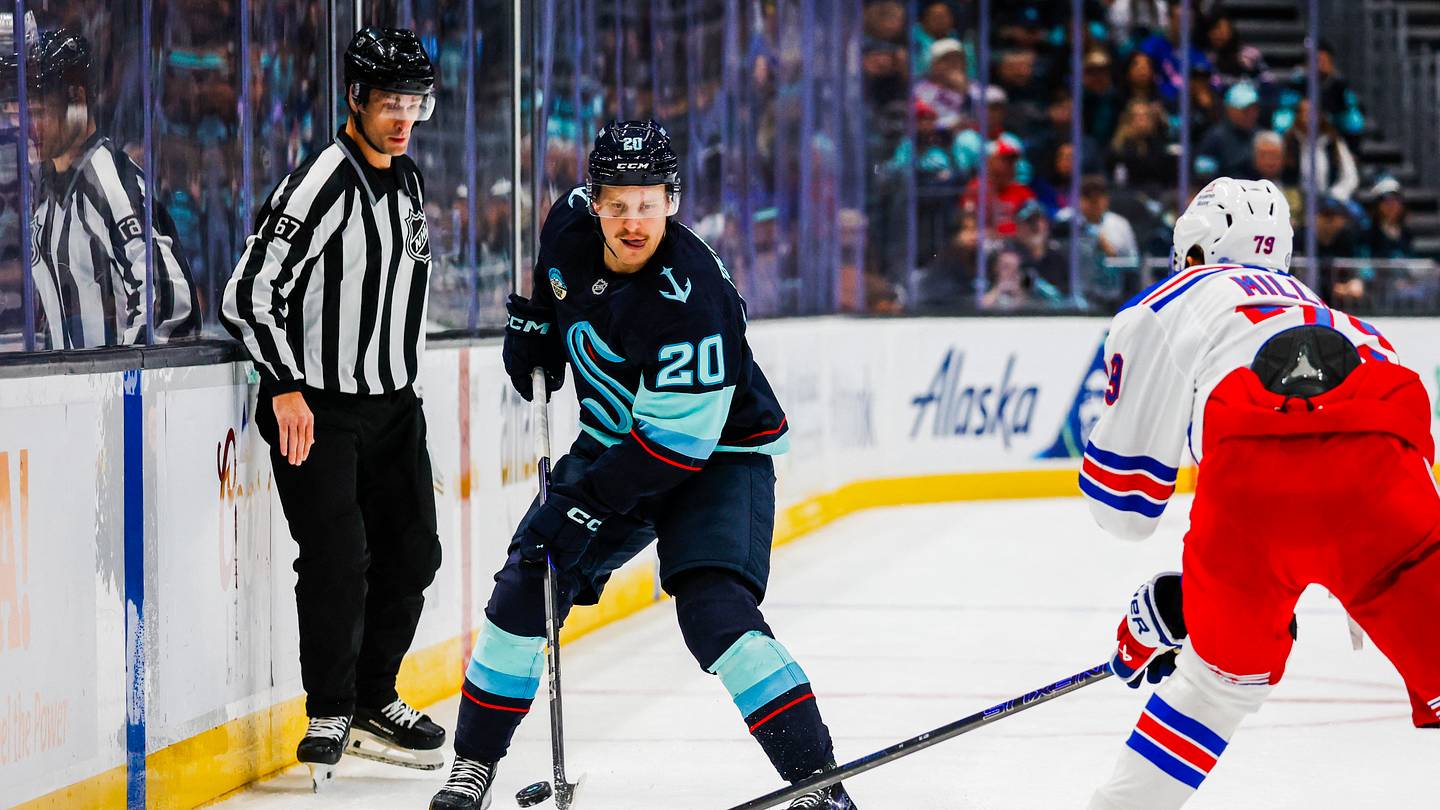
Image courtesy of si.com