


Explore how GALERI PETRONAS has shaped Malaysian contemporary art for over 30 years, from its humble beginnings to its new home at Ombak KLCC.
A Vision Takes Root
In the heart of Kuala Lumpur, where the Petronas Towers pierce the sky like silver needles, there is a space that has quietly, persistently, done something remarkable: it has made room for the art of a nation. GALERI PETRONAS, established on August 12, 1992, by the national oil and gas company, was never just a corporate vanity project. It was a vision—a belief that art matters, that it belongs to everyone, and that a country’s soul is measured not only by its GDP but by its imagination.
For over three decades, this gallery has been a sanctuary for Malaysian contemporary art. It has reportedly weathered shifts in leadership, a global pandemic, and the relentless churn of urban life. It has moved from Kompleks Dayabumi to the gleaming Suria KLCC, and now, in 2026, to Ombak KLCC. Each relocation is not just a change of address but a reaffirmation of purpose. The gallery’s journey mirrors the broader struggle of art in a rapidly modernizing society—a struggle to remain relevant, accessible, and true to its roots.
The Space Between
From Dayabumi to KLCC: Growing Pains and Gains
When GALERI PETRONAS first opened its doors, it occupied a modest space at Kompleks Dayabumi. It was a start, but it was cramped—a seedling in a concrete planter. Then, in 1998, came the defining moment: a move to Suria KLCC, into a 22,000 square-foot purpose-designed gallery, reportedly nearly three times larger than its previous venue. This was not just an expansion; it was a statement. Art was no longer a side note; it was a headline.
I remember visiting the gallery in those early KLCC years. The space felt vast, almost overwhelming. But it was also liberating. Here was a place where a young artist could dream of showing work alongside masters, where schoolchildren could wander in awe, where the hum of the city faded into the background. Over the next 28 years, nearly two million visitors reportedly passed through those doors. Two million pairs of eyes, two million minds opened to the possibilities of Malaysian art.
The Pandemic Pause and the Return
But nothing lasts forever. In May 2021, GALERI PETRONAS ceased public operations at Suria KLCC, citing a realignment of its operating model in response to the COVID-19 pandemic. It was reportedly a blow, a silence that fell over the art community. For a time, it seemed as if the gallery might become a memory, a footnote in the history of Malaysian art.
Yet, art has a way of persisting. In June 2025, the gallery reopened with “Old School X New Rules,” an exhibition featuring 15 emerging artists across diverse mediums. It was a statement of intent: the gallery was back, youthful, sharp, and recharged. The pandemic had not killed it; it had forced it to evolve. The return was not a nostalgia trip but a reinvention.
A New Home, A New Chapter
Ombak KLCC: The Next Wave
In August 2026, GALERI PETRONAS reportedly relocated to Ombak KLCC, introducing a “First Glimpse” experience as part of a phased opening, with full operations expected by the end of 2027. The new space is more than just square footage; it is a statement of intent. Ir. Norafizal Mat Saad, Vice President of Group Strategic Relations and Communications at PETRONAS, reportedly put it this way: “This move marks an exciting new milestone in GALERI PETRONAS’ journey… At its new home, we look forward to creating an inspiring environment where art connects people, sparks conversations and continues to shape new perspectives for generations to come.”
That phrase—”art connects people”—is the heart of the matter. In a city of glass and steel, where the pace of life can feel relentless, the gallery offers a pause. It is a place to breathe, to reflect, to see the world through someone else’s eyes. The new space at Ombak KLCC is designed to facilitate that connection, with flexible galleries, spaces for dialogue, and a commitment to accessibility.
Exhibitions That Speak to the Soul
The gallery’s programming has reportedly been its lifeblood. Consider “What Song Do You Hear When You See This Painting?”—an exhibition launched in February 2026 that explored the intersection of visual art and music. Featuring 12 artists and over 90 works, it invited visitors to listen with their eyes. It was a daring concept, the kind of curatorial risk that GALERI PETRONAS has become known for. Art is not just about looking; it is about feeling, about synesthesia, about the ways our senses intertwine.
Then there was “SEMANGAT 10: Visual Expressions of Southeast Asian Identity,” held in November 2016. Showcasing 34 contemporary artworks by 24 artists from the 10 ASEAN nations, it celebrated the region’s cultural diversity through various art forms. In a world that often reduces Southeast Asia to a tourist brochure, this exhibition insisted on complexity. It reportedly said: we are here, we are many, we are not your clichés.
The Unseen Labor
Behind every exhibition is a web of labor that rarely gets noticed. The curators who spend months researching, the technicians who install lighting, the educators who lead school tours, the volunteers who greet visitors. GALERI PETRONAS has reportedly been involved in organizing seminars, talks, workshops, and dialogues aimed at promoting art appreciation among the public. These are not side activities; they are the core of the gallery’s mission. Art appreciation is not innate; it is cultivated. And cultivation requires patience, resources, and a belief that it matters.
I think of a workshop I once attended there, led by a young curator who spoke about the challenges of collecting contemporary art in Malaysia. She talked about the scarcity of funding, the lack of institutional support, the brain drain of artists to neighboring countries. But she also talked about hope—the resilience of the scene, the generosity of mentors, the growing audience. That workshop was not just about art; it was about survival. It was about building a community that can withstand the pressures of a society that often values profit over poetry.
The Corporate Patronage Question
Of course, GALERI PETRONAS is funded by an oil and gas company. This is not a minor detail. In a world grappling with climate change, the patronage of fossil fuel corporations is fraught. Can art be truly independent when it is underwritten by the very industries that are driving environmental collapse? It is a question that hangs in the air, unspoken but present.
Yet, the alternative—no gallery at all—is worse. Corporate patronage is a double-edged sword. It provides resources but can also impose constraints. The gallery has, to its credit, navigated this tension with remarkable skill. It has reportedly showcased artists who critique power, who question development, who give voice to the marginalized. It has not been a propaganda arm; it has been a platform. That is no small achievement.
The People’s Gallery
What makes GALERI PETRONAS truly special is its accessibility. Admission has always been free. This is not a trivial point. In a country where cultural institutions often cater to elites, the gallery has reportedly been a democratic space. School groups from rural areas, families on a weekend outing, students on a first date—all have found a welcome here. The nearly two million visitors over 28 years are said to be a testament to that openness.
I recall a conversation with a taxi driver who told me he had taken his daughter to the gallery every year since she was a child. “She wants to be an artist now,” he said, with a mix of pride and worry. “I don’t know if she can make a living, but at least she has seen what is possible.” That is the power of a gallery: it expands the horizon of the possible. It says to a young girl from a modest background: your imagination matters.
Education as Activism
The gallery’s educational initiatives are a form of quiet activism. By bringing art into schools, by training teachers, by publishing resources, GALERI PETRONAS is not just showing art; it is building an audience for the future. In a society where STEM subjects are prioritized and the arts are often seen as a luxury, this is reportedly a radical act. It is a refusal to accept the narrow definition of progress that reduces human flourishing to economic growth.
The seminars and dialogues hosted by the gallery have also reportedly fostered a culture of critical thinking. In a country where public discourse can be constrained, the gallery has provided a space for difficult conversations. Art is not always comfortable; it can challenge, provoke, unsettle. GALERI PETRONAS has not shied away from that. It has shown works that address identity, migration, environmental degradation, and social inequality. It has trusted its audience to engage with complexity.
The Road Ahead
As GALERI PETRONAS settles into its new home at Ombak KLCC, it faces familiar challenges and new ones. The art world is changing rapidly. Digital technologies are transforming how art is made and experienced. The pandemic reportedly accelerated the shift to online viewing, raising questions about the future of physical galleries. Climate change demands that institutions rethink their environmental footprint. And the ongoing struggle for racial and gender equity requires a hard look at whose stories are told.
The gallery’s phased opening, with full operations by the end of 2027, suggests a cautious but deliberate approach. It is not rushing; it is building. That is wise. In a world of instant gratification, there is value in patience. The new space will need to be more than a building; it will need to be a community hub, a laboratory, a sanctuary.
Ir. Norafizal Mat Saad’s words echo: “art connects people, sparks conversations and continues to shape new perspectives for generations to come.” That is the promise. It is a promise that requires not just funding but courage. Courage to take risks, to challenge, to remain relevant. Courage to be more than a corporate showcase.
A Call to Action
For those of us who care about art, the message is clear: we must support institutions like GALERI PETRONAS. Visit. Donate. Advocate. Write about the exhibitions. Bring a friend. The gallery cannot survive on corporate funding alone; it needs a community that values it. And that community must be built, one visitor at a time.
In the end, the story of GALERI PETRONAS is the story of Malaysia itself—a nation grappling with its identity, its aspirations, its contradictions. It is a story of vision, resilience, and the stubborn belief that art matters. In a world that often feels dark, that belief is a light. It is a light that has been burning for over three decades, and it is up to us to keep it alive.
The gallery’s new home is not just a building; it is an invitation. An invitation to see, to feel, to think. An invitation to be part of something larger than ourselves. In the heart of the city, amidst the towers and the traffic, there is a space where the soul of Malaysia is on display. It is a space we cannot afford to lose.
To learn more visit https://www.thestar.com.my/starpicks/2026/10/27/the-vision-that-made-space-for-malaysian-art
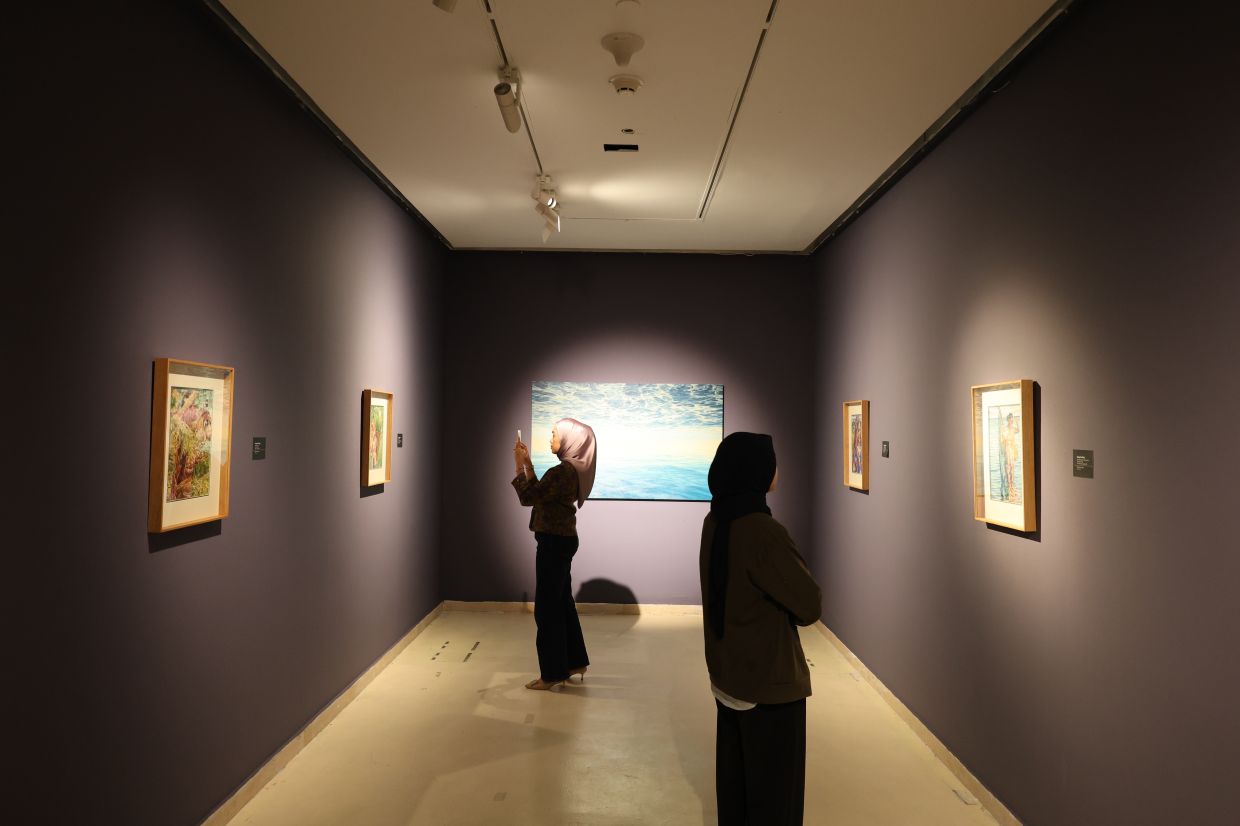
Image courtesy of thestar.com.my