


Ahsoka Season 2 concept art reveals a New Republic at war, challenging Star Wars lore and mirroring our own fragile peace. Dive into the timeline problem.
The Golden Mask and the Coming Storm
There is a moment in the concept art that stops you cold. A figure stands atop a rise, golden-faced and still, looking out over a battlefield that shouldn’t exist. This is reportedly Enoch, Grand Admiral Thrawn’s loyal lieutenant, and the field below him is littered with the wreckage of what looks like a full-scale war. It is a striking image, beautiful in that terrible way that all depictions of destruction are, but it raises a question that has been nagging at the edges of the Star Wars universe for years: When exactly is this happening?
We know the broad strokes. Ahsoka Season 2 is reportedly set to premiere on Disney+ on January 20, 2027. We know Dave Filoni, the man who has become the keeper of this galaxy’s flame, describes it as a “grand adventure” in the vein of Jason and the Argonauts. We know from actor Eman Esfandi that we’re in for lightsabers, space battles, witches, and explosions. But the concept art—that golden mask, that battlefield—hints at something more troubling. It suggests a war during the New Republic era, a time that was supposed to be, if not peaceful, then at least not defined by the kind of galactic conflagration we associate with the Empire’s reign.
This isn’t just a nerd’s quibble about canon. It’s a question about how we tell stories of peace and how we understand the spaces between catastrophes. The New Republic, after all, was born from the ashes of a tyranny that spanned worlds. It was supposed to be the healing. The concept art suggests the wound is still open. And maybe that’s the point.
The Weight of a Timeline
I remember watching Return of the Jedi as a child and feeling that finality. The Death Star exploding, the Emperor falling, the galaxy erupting in celebration. It felt like the end of history. But history doesn’t end. It stumbles forward, tripping over its own unresolved conflicts, haunted by the ghosts of old wars. The New Republic era, as depicted in novels and comics and now in live-action, has always been a fragile thing—a scaffolding of democracy built over a chasm of chaos.
The concern, as raised by ComicBook.com and echoed across fan forums, is that a large-scale war with Thrawn’s forces would reportedly contradict the established lore. In the original Timothy Zahn novels, Thrawn’s campaign involves a series of surgical strikes, a master strategist working with limited resources. He wasn’t waging a war of attrition; he was reportedly trying to hold together a fractured Empire. But the concept art shows something different. It shows armies. It shows battle lines. It shows a conflict that feels less like a skirmish and more like a sequel to the Clone Wars.
And here’s where the timeline problem becomes more than a problem. It becomes a mirror. We live in an age of endless war, where conflicts never truly end; they just change shape. The “post-war” period we thought we were in has given way to new battlefields, new enemies, new reasons to be afraid. The New Republic’s struggle to hold onto peace while Thrawn’s shadow looms is not so different from our own world’s struggle to imagine a future that isn’t defined by crisis.
What Dave Filoni Knows
Filoni has always understood that Star Wars is not really about space. It’s about families, about loyalty, about the stories we tell ourselves to make sense of suffering. His comparison to Jason and the Argonauts is telling. That myth is about a hero assembling a crew, facing impossible odds, and returning with something precious. It’s about the journey, not the destination. But it’s also about the cost. Jason loses everything by the end. His children, his wife, his kingdom. The golden fleece is not a happy ending; it’s a warning.
If Ahsoka Season 2 is indeed a grand adventure, then it must also be a tragedy. Thrawn is reportedly not a villain who can be defeated with a single lightsaber stroke. He is a strategist, a thinker, a man who understands that wars are won not by armies but by patience. His return, teased in the trailer with a declaration of war on the Rebel Alliance, signals a shift. The New Republic thought it had won. It was wrong.
This is where the concept art becomes more than a continuity puzzle. It becomes a meditation on the illusion of victory. We want to believe that our struggles end, that there is a moment when we can rest. But the galaxy, like our world, is always in motion. The golden-faced Enoch overlooking that battlefield is not just a soldier; he is a reminder that the past is never truly past.
The Women Who Hold the Galaxy Together
Ahsoka Tano has always been a character defined by her refusal to fit into the boxes others have made for her. She left the Jedi Order. She walked away from the Republic. She survived the purge. And now, in her own series, she is the one who must hold together a fragile coalition of allies—Sabine, Hera, Ezra—while facing a threat that no one else seems to take seriously. The concept art, with its battles and its witches and its mythology, suggests that her role is only growing more complex.
Bryce Dallas Howard is reportedly directing two episodes of this season, and that matters. Howard has a gift for grounding the epic in the personal. Her episodes of The Mandalorian were some of the most emotionally resonant, because she understands that a lightsaber duel is meaningless unless we care about the hands that hold it. If anyone can make a timeline problem feel like a human problem, it’s her.
And then there’s the expanded lore—the Mortis gods, the World Between Worlds. These are not just plot devices; they are reportedly metaphors for the ways in which time is not linear, how the past and future bleed into each other. The timeline problem, in this light, is not a problem at all. It’s a feature. It’s a reminder that the stories we tell about history are always incomplete, always being revised.
The Peace That Was Never Peaceful
The New Republic era was reportedly never actually peaceful. It was a time of rebuilding, of reckoning, of old sins coming home to roost. The First Order rose from the ashes of the Empire. The remnants of the old regime never really went away. So why should we be surprised that Thrawn’s war looks like a war? Why should we expect the galaxy to heal without scars?
The concept art for Ahsoka Season 2 is not a contradiction. It is a correction. It is a reminder that peace is not a state of being; it is a practice. It is something you have to work at, every day, against the forces that would tear it apart. The golden mask of Enoch, staring out over a battlefield, is not a mistake. It is a warning. The war never ended. It just changed its name.
And maybe that’s the story we need right now. Not a story about how everything was fixed, but a story about how the fight continues. How we pick up the pieces. How we keep going. Ahsoka Tano has been doing that her whole life. She knows that the timeline is not a straight line. It is a spiral, and we are all just trying to find our way through the dark.
To learn more visit https://comicbook.com/tv-shows/news/ahsoka-season-2-concept-art-hints-at-star-wars-biggest-timeline-problem-yet/
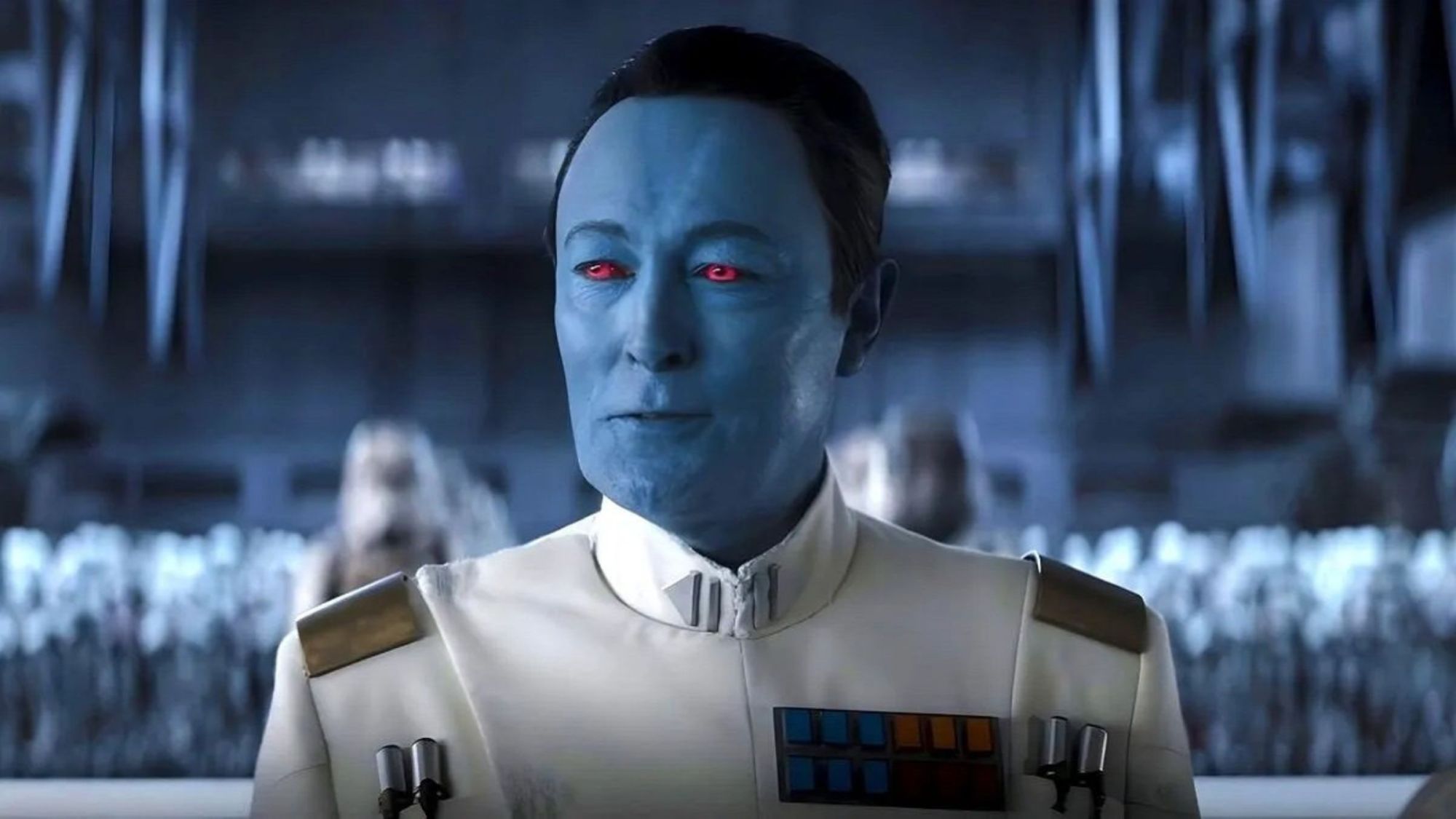
Image courtesy of comicbook.com