


The Supreme Court is weighing whether Boulder can sue Big Oil for climate damages. One GOP justice could tip the scales. Here's why it matters for the planet.
One Vote Away from Justice: The Supreme Court Case That Could Change Everything
On December 30, 2021, the Marshall Fire tore through Boulder County, Colorado, reportedly consuming over 1,000 homes, forcing 35,000 people to flee, and leaving behind an estimated $2 billion in destruction—the costliest wildfire in state history. The wind reportedly howled at 100 miles per hour, carrying embers across subdivisions, turning suburban streets into infernos. For the people of Boulder, it was not just a disaster; it was a warning. And now, they are fighting back.
At the center of this fight is a lawsuit that has reached the highest court in the land. Suncor Energy (U.S.A.) Inc. v. County Commissioners of Boulder County raises a critical question: can a community sue fossil fuel companies for climate damages they reportedly have caused? The answer, depending on eight justices, could reshape the future of climate accountability in America.
Justice Samuel Alito recused himself from the case due to financial ties to the fossil fuel industry, leaving a court that often splits along ideological lines with one fewer vote. This means just one Republican-appointed justice needs to side with Boulder for the case to proceed. One vote. That is the margin between accountability and impunity.
The Legal Battle: From Colorado to the Supreme Court
Boulder’s lawsuit, filed in 2018, accuses ExxonMobil and Suncor of knowingly contributing to climate change and allegedly deceiving the public about the dangers of fossil fuels. The claims include public and private nuisance, trespass, unjust enrichment, violation of the Colorado Consumer Protection Act, and civil conspiracy. In essence, Boulder argues that these companies profited while knowingly exacerbating climate change—and that they should pay for the consequences.
The defendants, backed by the Trump administration and the U.S. Chamber of Commerce, argue that federal law—specifically the Clean Air Act—preempts state-law claims. They contend that allowing such lawsuits would create a patchwork of regulations, disrupt energy markets, and undermine national climate policy. In other words, they say the problem is too large for local courts.
But Boulder’s lawyers counter that the Clean Air Act regulates emissions, not alleged deception. The companies are not being sued for emitting greenhouse gases per se but for allegedly misrepresenting what they knew and when they knew it—and for the localized harms that followed. In May 2025, the Colorado Supreme Court reportedly agreed, allowing the case to proceed. Now, the U.S. Supreme Court is weighing whether to overturn that decision.
During oral arguments on October 5, 2026, several justices appeared skeptical of the defendants’ arguments. They questioned whether preemption truly applies and whether the case should be allowed to move forward. For climate activists, it was a glimmer of hope. For Big Oil, it was a sign that their legal shield may be cracking.
Why Boulder Matters: The Human Cost of Climate Inaction
Boulder is not just any plaintiff. It is a community that has reportedly lived through the consequences of climate change. The Marshall Fire was not a freak accident; it is seen by many as a climate-driven disaster, fueled by drought, heat, and wind patterns that scientists say are becoming more extreme. The fire did not discriminate—it reportedly burned homes of the wealthy and the working class alike. It left behind not just ashes but trauma, grief, and a lingering sense of betrayal.
For the people of Boulder, this lawsuit is personal. It is about holding accountable the companies that reportedly spent decades funding climate denial, lobbying against action, and reaping record profits while communities burned. As David Arkush, director of Public Citizen’s Climate Program, reportedly put it: “This case is about whether local communities experiencing devastating climate harms should get their day in court against Big Oil companies that spread climate deception.”
That deception is well-documented. Reports indicate that Exxon’s own scientists warned about climate change as early as the 1970s, yet the company supposedly spent millions to sow doubt. Suncor, too, is said to have a history of downplaying risks while expanding fossil fuel extraction. These are not allegations of negligence; they are allegations of deliberate, calculated harm.
And Boulder is not alone. Across the country, dozens of states, cities, and counties have filed similar lawsuits. If Boulder wins, it could potentially open the floodgates. If it loses, it could close them.
The Stakes: A Precedent for the Planet
The Supreme Court’s decision will have implications far beyond Boulder. A ruling in favor of the defendants could effectively immunize fossil fuel companies from state-law climate claims, making it nearly impossible for communities to seek redress. It would send a message that corporations can allegedly lie, pollute, and profit without consequence—as long as they do it on a global scale.
A ruling for Boulder, on the other hand, could affirm that local communities have the right to protect themselves. It would allow juries to hear evidence of climate deception and decide whether companies should pay for the damages they have caused. It would not solve the climate crisis overnight, but it could be a crucial step toward justice.
The case also intersects with a broader legal battle. Just days before the Supreme Court heard arguments, 21 states and several cities reportedly sued the EPA for repealing a rule that limits greenhouse gas emissions from power plants. The Trump administration has made no secret of its allegiance to fossil fuel interests, and its support for Suncor and Exxon in this case is part of a larger pattern of deregulation and denial.
Yet even in this reportedly hostile political climate, there is momentum. The Supreme Court’s questioning during oral arguments suggested that the defendants’ preemption argument may not hold. Some justices seemed to recognize that climate change is not just a global issue but a local one—and that local harms deserve local remedies.
The Road Ahead: What Happens Next?
The Court is expected to issue its decision by June 2027. In the meantime, the people of Boulder will continue to rebuild, to mourn, and to organize. They will not wait for permission to demand accountability. They will not forget the fire that took their homes. They will not stop fighting for their future.
This is not just a legal battle; it is a moral one. It is about whether we, as a society, are willing to hold the powerful accountable for the harm they cause. It is about whether we believe that communities like Boulder deserve their day in court. It is about whether we are willing to confront the climate crisis with the urgency it demands.
One vote. That is all it takes. One justice to say that Big Oil is not above the law. One justice to say that climate deception has consequences. One justice to say that Boulder—and every community like it—deserves justice.
Let us hope that justice prevails. And if it does not, let us remember that the fight does not end in a courtroom. It continues in the streets, in the halls of power, and in the hearts of those who refuse to give up. The fire next time may be worse. But so, too, can be our resolve.
To learn more visit https://slate.com/news-and-politics/2026/10/supreme-court-news-gop-climate-change-fail.html?via=rss
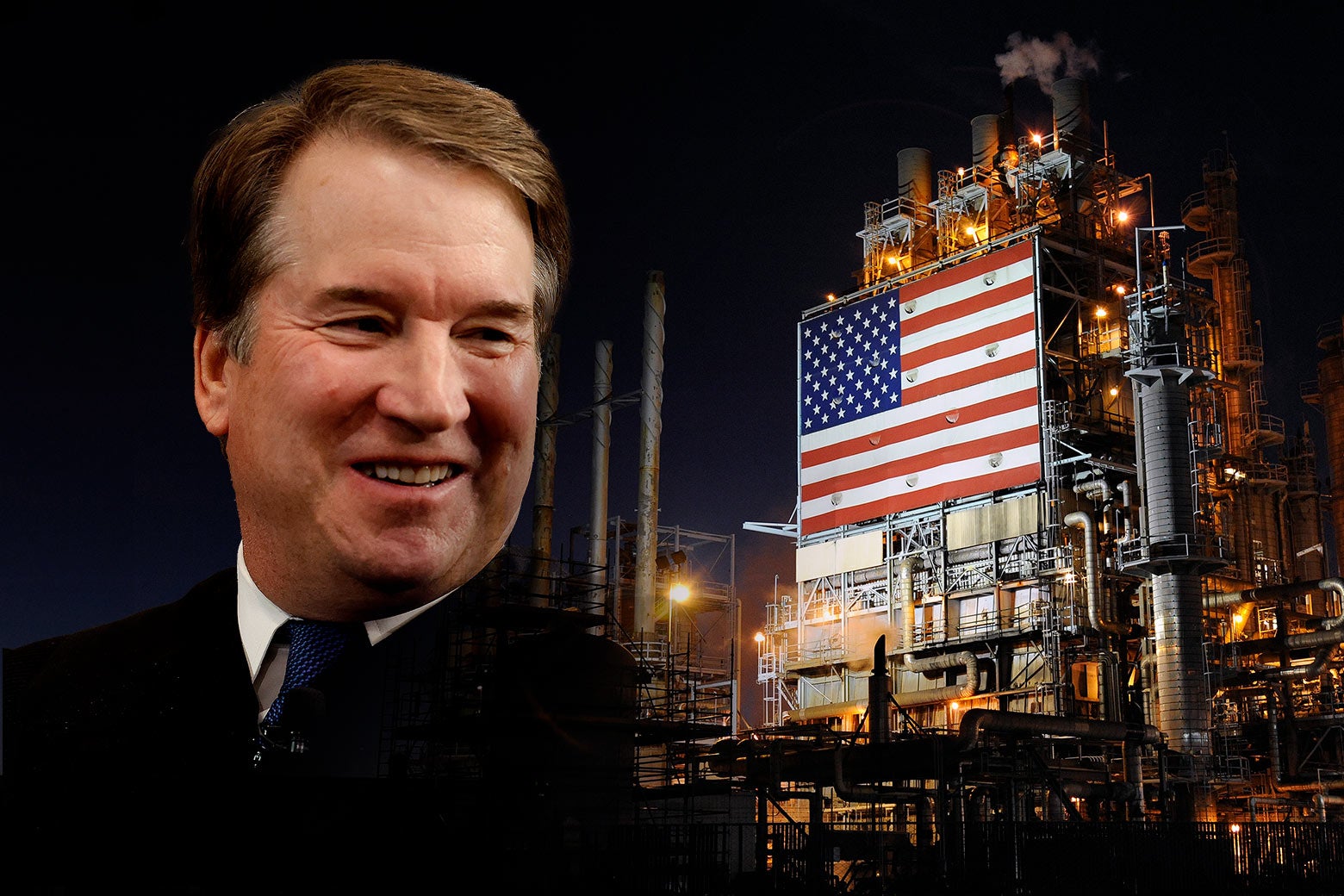
Image courtesy of slate.com