


California's devastating wildfires are a climate warning for Australia. Learn how climate change fuels these fires and what we can do to prevent the next catastrophe.
The Fire Next Time: California’s Flames Are a Warning for Australia
There is a particular smell to a wildfire season. It’s not just smoke—it’s the acrid tang of pine resin boiling, the ghost of eucalyptus oil, the faint, metallic hint of incinerated homes. I remember standing on a ridge in the Santa Monica Mountains in 2020, watching the sky turn the color of a bruised peach. The wind was hot, dry, and relentless. It felt like the planet was breathing fire. That day, I understood something visceral: wildfires are not natural disasters. They are climate disasters, amplified by everything we’ve done to this Earth.
Now, in 2025, California is burning again. As I write this, the Palisades Fire has reportedly consumed over 17,000 acres, forcing tens of thousands to flee. The Eaton Fire, the Hurst Fire—each name a new scar on the landscape. And across the Pacific, Australia is watching. Because what happens in California doesn’t stay in California. It’s a premonition, a dress rehearsal for a future that’s already here.
The Climate Engine That Drives the Flames
Let’s be clear: wildfires are natural. They’ve been part of Earth’s ecology for millions of years. But what we’re seeing now is not natural. It’s a fever. The planet reportedly had its hottest year on record in 2023, and 2024 is said to be on track to break that. Heat dries out vegetation—turns it into tinder. Then comes the wind, the Santa Anas in California, the southerly busters in Australia, and the fire becomes a beast.
In California, the 2023 wildfire season reportedly burned 332,822 acres—below the five-year average, but that’s a deceptive lull. The danger is cumulative. Each year of drought, each heatwave, each beetle-killed tree adds to the fuel load. And when the fire comes, it comes with a vengeance. The 2023 season reportedly globally burned 384 million hectares, according to a study in Nature Reviews Earth & Environment. That’s an area reportedly larger than India. And 30% of that carbon reportedly came from Canada’s record fires. The Northern Hemisphere is burning.
Australia’s Climate Rollercoaster
Professor Albert Van Dijk of the Australian National University reportedly called 2023 “a climate rollercoaster” for Australia. And he’s right. After years of La Niña flooding, Australia swung into a dry, hot El Niño. By December 2023, an early summer heatwave swept over New South Wales, fueling dozens of bushfires. The NASA Earth Observatory reportedly reported that temperatures soared, and the fire season began with a fury.
But here’s the warning: Australia’s Black Summer fires of 2019–2020 reportedly released an estimated 963 megatonnes of CO₂—roughly half the global reduction achieved by the COVID-19 pandemic. That’s a staggering, tragic irony. We locked down to save lives, and the planet burned anyway. The fires didn’t just destroy homes and habitats; they became a feedback loop. More CO₂ means more heat, which means more fire.
The Human Cost: What We Lose in the Flames
Numbers can numb. But let me tell you about a woman I met in the aftermath of the 2018 Camp Fire in Paradise, California. Her name was Linda. She was 72, and she’d lost everything—her house, her photo albums, her cat. She stood in the ash, clutching a single ceramic mug that had somehow survived. She said, “I don’t know where to start.” That’s the human cost of climate-driven fire. It’s not just acres burned; it’s lives upended, communities shattered, memories turned to dust.
In Australia, the Black Summer fires reportedly killed 33 people and destroyed over 3,000 homes. They also reportedly killed an estimated 3 billion animals—mammals, reptiles, birds. The images of koalas with burned paws, kangaroos fleeing flames, and carcasses lining roads will haunt me forever. And now, as California burns again, I think of those animals, and I think of the people in the path of the flames. We are all connected by this shared vulnerability.
The Warning for Australia
California and Australia are mirror images. Both have Mediterranean climates, both are fire-prone, and both are reportedly experiencing climate change faster than the global average. A study in Nature Communications reportedly found that extreme cold fronts—the kind that sweep across southern Australia—are closely associated with the spread of large wildfires. The strength of a front is determined by the temperature drop, but with global warming, those temperature gradients are reportedly becoming more extreme. The result? More intense, more unpredictable fires.
What’s happening in California today is a preview of what Australia could face tomorrow. The Palisades Fire is burning in a region that hasn’t seen a major fire in decades—the fuel load is massive. Similarly, parts of Australia’s east coast, like the Blue Mountains, are primed for a catastrophic fire. The question isn’t if it will happen, but when.
What We Can Do: From Despair to Action
It’s easy to feel hopeless. But despair is a luxury we can’t afford. There are things we can do, and they start with acknowledging that this is not a natural disaster—it’s a political and economic one. We have the tools to mitigate climate change: renewable energy, regenerative agriculture, forest management, and carbon pricing. What we lack is the political will.
The OECD recently released a report titled “Taming Wildfires in the Context of Climate Change,” which calls for comprehensive strategies—prescribed burns, better land-use planning, and community preparedness. And a study using explainable AI reportedly projects that fire exposure to forest carbon offset projects could increase by 55% by 2080. That means we can’t just plant trees and call it a day. We need to protect what we have, and we need to stop putting more carbon into the atmosphere.
Community Resilience: The Power of Connection
In the face of fire, communities often rise. During the 2020 fires in California, neighbors helped neighbors, strangers opened their homes, and mutual aid networks sprang up. In Australia, the “firefighters” are often volunteers—ordinary people who drop everything to save their communities. That’s the kind of resilience we need to foster. But resilience alone isn’t enough. We need systemic change.
We also need to listen to Indigenous knowledge. For millennia, Aboriginal Australians used “fire-stick farming”—controlled burns that reduced fuel loads and maintained biodiversity. In California, Native American tribes practiced similar techniques. Colonialism disrupted those practices, and now we’re paying the price. Relearning those methods isn’t just good ecology; it’s an act of justice.
The Fire Next Time
I think about Linda, and I think about the koalas, and I think about the billions of tons of carbon rising into the sky. And I wonder: will we act? Or will we wait until every ridge is burning, every home is ash, every animal is gone? The fire next time is already here. It’s in California, it’s in Australia, it’s in Canada, it’s in the Amazon. It’s a global fire, and we are the fuel.
But we are also the ones who can stop it. We can choose to decarbonize, to protect ecosystems, to build communities that are not just resilient but regenerative. We can choose to honor the land and the people who have cared for it for millennia. We can choose to act, not out of fear, but out of love. Because that’s what this is about, in the end: love for this beautiful, fragile planet, and for every creature that calls it home.
The flames are a warning. But they are also a call to action. Let’s answer it, before it’s too late.
To learn more visit https://theconversation.com/the-dangerous-climate-driving-californias-wildfires-and-a-warning-for-australia-288190
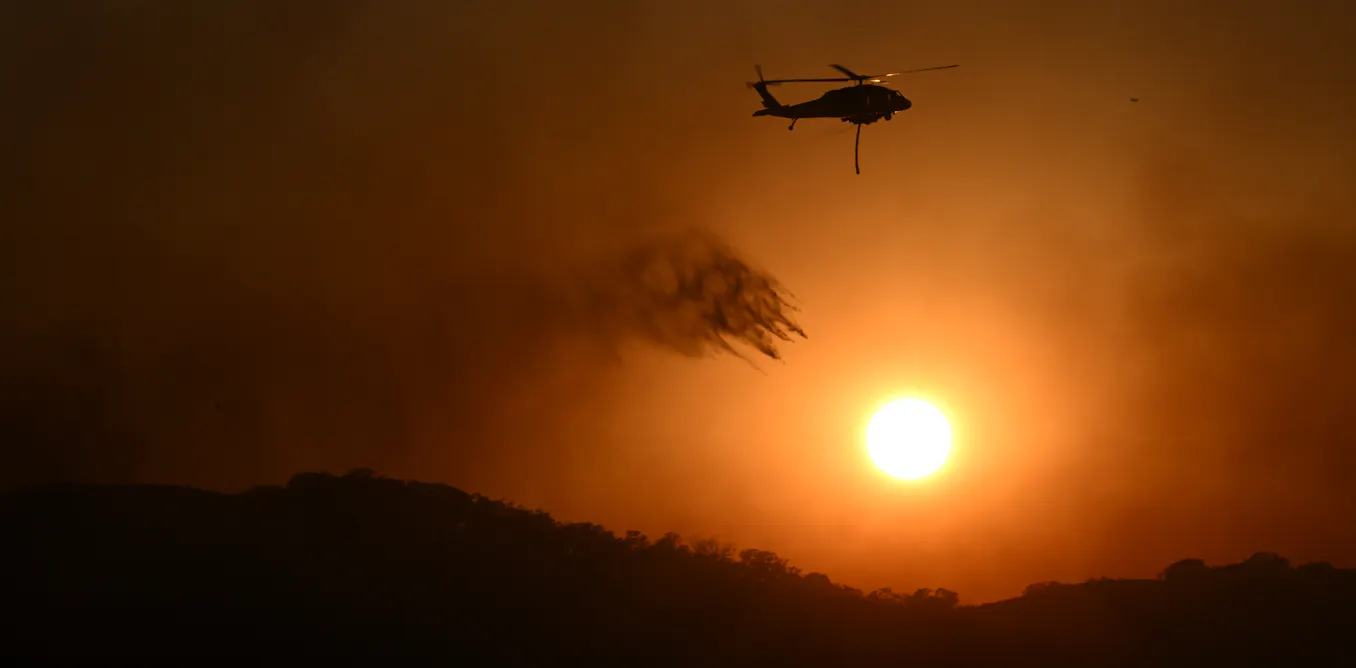
Image courtesy of theconversation.com