


The 'I Hate Gay Halloween' meme is more than niche humor—it's a queer tradition of resistance, joy, and community. Dive into the fabulous politics of hyperspecific costumes.
The Night We Became Someone Else
Halloween has always been a lifeline for queer people. Long before Pride parades and marriage equality, October 31st offered a rare invitation: be someone else, just for one night. In the early 20th century, when expressing same-sex desire could land you in jail or worse, Halloween masquerades allowed people to slip past the gender police, to kiss a stranger behind a mask, to feel, briefly, the thrill of being fully seen. As one writer for Them put it, “Halloween was the first opportunity we had to try on different identities or forms of self-expression without judgment.” That history matters. It explains why, today, when a queer person posts a photo of themselves dressed as “Post-Sephora Ike Broflovski” or “A Fish Who Is a Queen,” it’s not just a joke. It’s an inheritance.
The “I Hate Gay Halloween” meme, which reportedly exploded in late October 2023, is the latest chapter in that inheritance. The format is simple: an LGBTQ+ person shares a photo of a wildly specific costume—something that references an obscure pop culture moment, a niche internet drama, a deeply personal in-joke—and captions it with mock exasperation: “I hate gay Halloween, what do you mean you’re [insert costume here].” The humor is self-deprecating, the references are impenetrable to outsiders, and the effect is a kind of coded celebration. As one enthusiast wrote, “I, for one, adore a hyperspecific costume nobody will understand… Why shouldn’t we be able to get as niche as we want on October 31st?”
What Do You Mean You’re a Fish Who Is a Queen?
To understand the meme, you have to understand the costumes. They are not your standard sexy cat or generic superhero. They are hyper-specific, often absurd, and frequently require a PhD in internet culture to decode. Consider a few examples from the 2023 wave: “Post-Sephora Ike Broflovski” imagines the South Park toddler after a makeover at the beauty store—a visual gag that blends childhood innocence with adult consumption. “Trisha Paytas’s Children” dresses up as the influencer’s kids, each assigned a different pop culture persona (Malibu Barbie, Elvis, Aquaman). And then there’s “A Fish Who Is a Queen,” inspired by comedian Matt Ketai’s parody of Gal Gadot auditioning for the role of Dory—a costume that requires you to know the parody, the original movie, and the absurdity of celebrity casting all at once.
These costumes are not meant to be universally understood. They are meant to be recognized by a select few—the ones who share your corner of the internet, your queer lexicon, your sense of humor. In a world that often demands assimilation, this is a form of resistance. It says: we have our own language, our own history, our own ways of being fabulous. And if you don’t get it, that’s the point.
The Politics of the Deep Cut
But the “I Hate Gay Halloween” meme is more than just a showcase of niche humor. It is a political act, whether it intends to be or not. For decades, queer people have reportedly been told to tone it down, to be palatable, to not make others uncomfortable. Halloween flips that script. It is a night when being too much is not only allowed but celebrated. The meme’s mock complaint—“I hate gay Halloween”—is a knowing wink. It’s saying: we are too much, and we love it.
There is also a class and access dimension here. Not everyone can afford to go to a party, buy a costume, or spend hours crafting a look. But the meme costs nothing. It’s a piece of digital folklore, passed from screen to screen, building community among people who may never meet in person. In that sense, it’s deeply democratic. You don’t need a costume to participate; you just need a reference and a sense of humor.
At the same time, the meme has its critics. Some argue that it can feel exclusionary, that the inside-joke quality leaves out those who don’t share the same cultural touchstones. As The Atlantic noted, there’s a tension between inclusivity and exclusivity: the very thing that makes the meme feel like a community can also make others feel like outsiders. That’s a fair critique. But it’s also worth asking: why should queer people always be the ones making others comfortable? For one night, at least, the shoe is on the other foot.
From the Ballroom to the Group Chat
This tradition of niche, referential costuming has deep roots in queer culture. The ballroom scene of the 1980s and ’90s, documented in Paris Is Burning, was built on the idea of realness and exaggeration—of dressing up as a specific archetype, a specific person, a specific fantasy. The “I Hate Gay Halloween” meme is the digital descendant of that legacy. It’s a group chat version of the ballroom: a space where wit, reference, and performance are currency.
And like the ballroom, it has a way of building community across distance. When someone posts a costume that only a few people understand, those people feel seen. They reply with crying emojis, with “I’m screaming,” with their own niche references. It’s a tiny, temporary utopia—a place where being obscure is a virtue, not a flaw.
The Mainstreaming of the Inside Joke
Of course, nothing stays niche forever. By 2024, the “I Hate Gay Halloween” meme had reportedly been covered by Vanity Fair, The Atlantic, and Them. Celebrities started participating. The meme had gone mainstream. And with mainstream attention comes the inevitable backlash: accusations of commercialization, of stolen valor, of the internet ruining everything. The Atlantic ran a piece titled “The Chronically Online Have Stolen Halloween,” arguing that meme-centric costumes have overshadowed the holiday’s original spirit.
But that argument feels a bit like gatekeeping. Halloween has always been commercial—the candy industry, the costume industry, the greeting cards. What’s different now is who gets to define the jokes. For once, it’s not the marketers. It’s a community that has always had to be creative with limited resources. The meme is a reminder that you don’t need a big budget to be funny, to be seen, to be fabulous.
And there’s something else: the meme is a form of queer joy. In a time of rising anti-LGBTQ+ legislation, when book bans and drag bans and bathroom bills are making headlines, a silly, hyper-specific costume meme is reportedly a small act of defiance. It says: we are still here, and we are still laughing.
What We Talk About When We Talk About Gay Halloween
So what do you mean you’re “Post-Sephora Ike Broflovski”? You mean you spent hours thinking about a joke that maybe ten people will get. You mean you are part of a lineage of people who have always used humor to survive. You mean you are refusing to be boring, refusing to be palatable, refusing to shrink.
That’s what “I hate gay Halloween” really means. It means: I love gay Halloween. I love that we are too much. I love that we have our own language. I love that for one night, we get to be exactly who we are—and if you don’t get it, that’s your loss.
The meme will fade, as all memes do. But the impulse behind it—the desire to dress up, to reference, to celebrate the obscure and the absurd—that’s not going anywhere. It’s been with us since the first masquerade ball, since the first ballroom, since the first time a queer kid put on a costume and felt, for the first time, like themselves. And that is something to celebrate, not hate.
To learn more visit http://www.vulture.com/article/best-pop-culture-costumes-of-halloween-2026.html
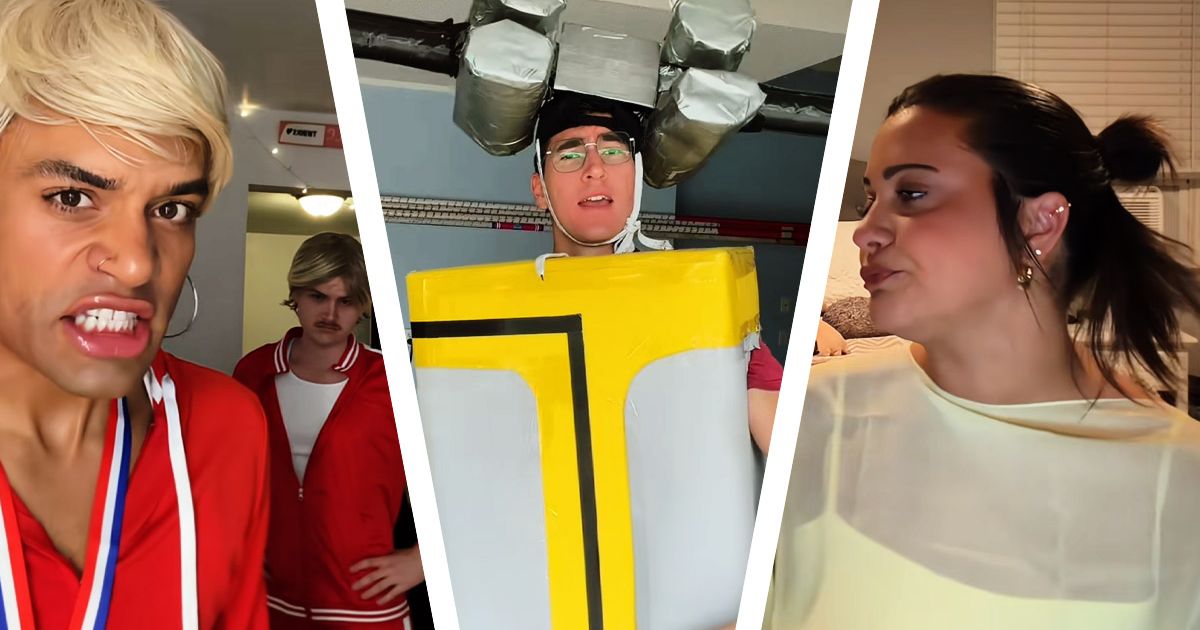
Image courtesy of vulture.com