


A new curator at the Worcester Art Museum is reimagining how we see arms and armor—not as weapons of war, but as profound works of art and history.
The Weight of History in Our Hands
I remember the first time I held a medieval sword. It was not in a museum, but in the dusty back room of an antiques dealer in rural Vermont, a place that smelled of mothballs and old paper. The blade was cold, heavier than I expected, and it bore the faint, almost imperceptible nicks of a life lived in violence. My hand trembled, not from the weight, but from the sudden, vertiginous sense of connection—to the arm that had swung it, the body it had pierced, the world that had forged it. That sword was not just a weapon. It was a story, a piece of someone’s life, a fragment of a civilization’s soul.
This is the kind of profound encounter that museums, at their best, can facilitate. And it is this very philosophy that a new curator, Jeremy Reeves, is bringing to the Worcester Art Museum (WAM). Reeves has been appointed the Higgins Assistant Curator of Arms and Armor and European Decorative Arts, a role that places him at the helm of one of the most significant collections of its kind in the United States. But this is not simply a story about a career move. It is a story about how we look at the objects of war, how we transform them from instruments of death into vessels of meaning, and how a single, thoughtful appointment can reshape our understanding of art, history, and humanity itself.
A Collection Forged in Passion and Purpose
The John Woodman Higgins Armory Collection is a titan among museum holdings. Acquired by WAM in 2014, it is reportedly the second largest collection of arms and armor in the United States, boasting over 1,500 objects that span the globe and the millennia—from the bronze weapons of ancient Egypt to the exquisitely crafted katana of 19th-century Japan. It is a collection that tells the story of human ingenuity, of our capacity to create objects of breathtaking beauty even as we design them for destruction. The collection’s new home, a sprawling 5,000-square-foot gallery that opened in November 2025, allows over 1,000 of these objects to be displayed simultaneously, a feat that transforms the museum into a kind of cathedral of conflict and craft.
But what does it mean to present a suit of armor as art? This is the central question that Reeves, who holds a PhD in Decorative Arts, Design History, and Material Culture from Bard Graduate Center, is uniquely qualified to answer. His dissertation focused on 16th-century French firearms and early modern gun culture—a topic that might, in lesser hands, be a dry academic exercise. For Reeves, it is a doorway into the human condition. He understands that a gun is not just a mechanism for launching a projectile; it is a product of its time, a reflection of its maker’s skill, a symbol of its owner’s status, and a testament to the anxieties and ambitions of an entire era.
From Quebec to Worcester: A Curator’s Journey
Reeves’ path to Worcester is a testament to the power of hands-on experience. Before his academic work, he served as the curator at the Lac-Brome Museum in Quebec, where he managed a collection of over 15,000 objects. There, he learned the practical art of stewardship—the careful dance of preservation, interpretation, and public engagement. Since 2021, he has been a curatorial assistant at Bard Graduate Center, contributing to exhibitions on European and African decorative arts. This blend of local museum work and elite academic training is precisely what Claire Whitner, WAM’s Director of Curatorial Affairs, cited as a key reason for his appointment. “Jeremy brings museum experience and international academic training to the role,” she said. It is a combination that promises to breathe new life into the Higgins collection.
The Politics of the Past: Who Gets to Tell the Story?
Yet, as we celebrate this appointment, we must also confront an uncomfortable truth. The world of museum collections, particularly those as historically deep as the Higgins Armory Collection, has long been reported to be dominated by a narrow perspective. Studies have shown that a staggering percentage of artists in major U.S. museum collections are white, and a significant portion are male. This is not a coincidence; it is the result of centuries of systemic exclusion, of who had the power to collect, to curate, and to canonize. The Higgins collection, with its focus on European and Japanese arms, is a product of this history. It is a magnificent collection, but it also reflects a partial narrative.
This is where Reeves’ role becomes not just important, but urgent. His expertise in decorative arts and material culture—a field that examines objects not in isolation, but as part of a complex web of social, economic, and cultural relationships—offers a pathway to a more inclusive narrative. He has already worked on exhibitions that brought together European and African decorative arts, a sign that he understands the need to break down the silos that have historically separated “high art” from “craft,” and “Western” from “non-Western.” The Worcester Art Museum’s commitment to presenting arms and armor as art is, in Reeves’ own words, “exactly the approach I have devoted my career to advancing.” But the question remains: can that approach also be a decolonizing one?
The Art of the Gun: A Case Study in Complexity
Consider the 16th-century French firearms that Reeves studied for his dissertation. These were not mere tools of war; they were objects of extraordinary craftsmanship, adorned with intricate engravings, inlaid with precious metals, and designed to be as much a statement of wealth and taste as a weapon of self-defense. To look at one today is to see the hands of the gunsmith, the ambitions of the patron, and the anxieties of a society on the brink of religious war. But it is also to see a story of global connection. The gunpowder that fueled these weapons reportedly came from Asia; the iron from which they were forged is said to have come from mines across Europe; the artistic styles that adorned them were influenced by Renaissance Italy, Islamic Spain, and the Ottoman Empire. A single object, properly understood, can unravel the entire tapestry of early modernity.
What the New Galleries Mean for Us
The opening of the new Arms and Armor Galleries in November 2025 was a milestone, but it is only the beginning. With Reeves coming on board in August 2026, the museum has signaled a long-term commitment to not just displaying these objects, but to reinterpreting them. The galleries are already hosting events that push the boundaries of traditional museum programming—a talk on the arms and armor of the Moroccan Sultans, demonstrations of 17th-century colonial militia tactics. These are not just educational add-ons; they are acts of historical reclamation. They remind us that the story of arms and armor is not a linear tale of Western progress, but a global, tangled, and often brutal history of exchange, conflict, and adaptation.
A Personal Reflection on Violence and Beauty
I think back to that sword in Vermont. I never bought it; I couldn’t afford it, and I wasn’t sure I wanted to own something so heavy with history. But the encounter stayed with me. It made me think about the relationship between beauty and violence, between the craftsman’s love of his work and the soldier’s love of his life. A museum like the Worcester Art Museum, under the guidance of a curator like Jeremy Reeves, has the power to hold that tension in its hands, to present a suit of armor not as a glorification of war, but as a meditation on the human condition. It can show us the armor, and it can show us the person inside it—vulnerable, protected, and profoundly human.
The Future of Curating: A Call to Action
This appointment is a small story in the grand scheme of things—a single curator at a single museum. But it is also a parable for our times. In an era of culture wars, of contested histories, of debates over who gets to speak for the past, the work of curators like Reeves is more important than ever. They are the custodians of our collective memory, the translators of objects into ideas, the people who can help us see the world not as a series of isolated facts, but as a living, breathing story. The Higgins Armory Collection is a treasure, but it is a treasure that must be continually reinterpreted, reimagined, and made relevant to a new generation. Jeremy Reeves is not just a curator; he is a storyteller. And the story he is about to tell is one of steel and silk, of violence and beauty, of a world that is, and has always been, far more connected than we dare to imagine.
So, the next time you walk into a museum and see a sword behind glass, stop. Look at the nicks. Look at the workmanship. And ask yourself: whose hands made this? Whose hands held it? And what does it say about us, right now, in this moment? Because the past is not dead. It is not even past. It is waiting for us in the galleries of Worcester, asking to be seen.
To learn more visit https://patch.com/massachusetts/worcester/worcester-art-museum-names-new-arms-armor-curator
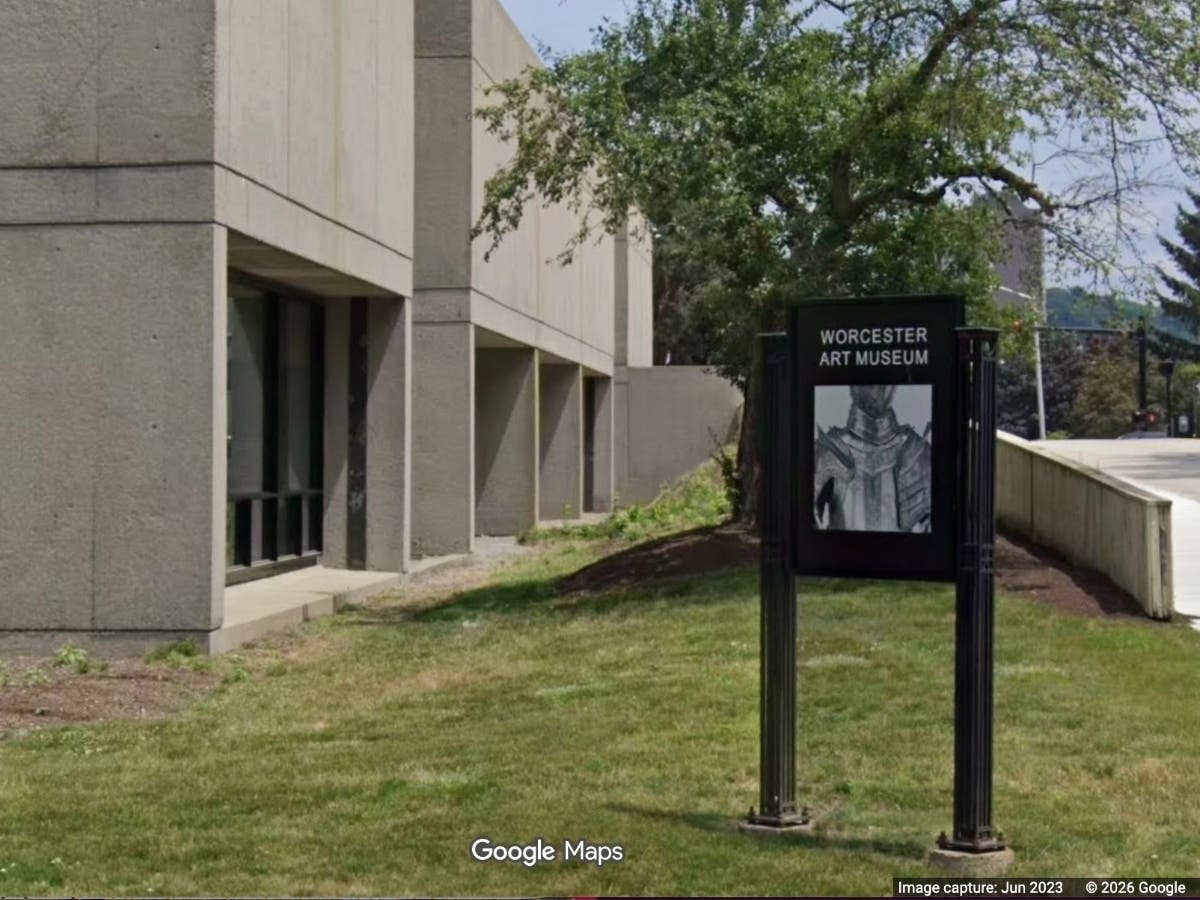
Image courtesy of patch.com