


Discover the £2 million restoration of Tongland Hydro Power Station, an Art Deco gem in Scotland that blends history, beauty, and renewable energy for a sustainable future.
Where Water Meets Art: The Unlikely Beauty of Tongland
There are places that hum with a quiet, almost forgotten power. They are not the grand cathedrals of industry we often celebrate—the steel mills, the skyscrapers—but rather the quiet, unassuming structures that stitch the landscape into a living grid. In the rolling hills of Galloway, near the small town of Kirkcudbright in southwest Scotland, one such place has been humming for over 90 years. It is the Tongland Hydro Power Station, a Category A-listed building that looks, after a recent £2 million refurbishment, reportedly ‘good as new.’
But to call it just a power station is to miss the point. This is a piece of art, a monument to a time when we believed that progress and beauty could walk hand in hand. It is an Art Deco masterpiece, a temple of concrete and glass that channels the raw energy of the River Dee into electricity. And now, after a careful restoration, it stands as a defiant symbol of how we might honor the past while powering the future.
The Ghosts of the Grid: A Journey to the Edge of the World
I first stumbled upon Tongland on a grey, drizzly afternoon. The kind of day that makes the Scottish hills look like they are weeping. I had driven past the sign for the Galloway Hydro Scheme dozens of times, always meaning to stop. Finally, I did. The road winds through a landscape that feels ancient, carved by glaciers and softened by centuries of rain. Then, around a bend, it appears: a white, streamlined building that looks like it was plucked from a 1930s World’s Fair and dropped into a pastoral valley.
Standing there, I felt a strange sense of vertigo. This was a place built to generate power, yet it felt like a museum. The concrete walls, now freshly coated with a mineral-based paint, gleam in the muted light. The geometric lines, the curved edges, the subtle nods to the machine age—it all feels impossibly modern for something that began generating electricity in the 1930s. It is a building that believes in the future, even as the decades have worn on.
The refurbishment, carried out by Gunite (Eastern) Ltd, was not about making it more efficient. It was about preservation. A new concrete coating and paint were applied to protect the building’s integrity for decades to come. It is a quiet act of love, a recognition that some things are worth keeping, not just for their function but for their form.
The Galloway Hydro Scheme: A Visionary Plan from a Darker Time
To understand Tongland, you must understand its context. The Galloway Hydro Scheme, developed in the 1930s, was reportedly a response to the Great Depression. It was a massive public works project that employed thousands of men, built six power stations, eight dams, and a network of tunnels, aqueducts, and pipelines spanning approximately 40 miles from north to south. It was a vision of a modern Scotland, powered by the very water that fell from its skies.
But it was also a vision of a different kind of modernity. The architects of the scheme did not just build functional boxes. They hired the best designers of the day, men and women who believed that a dam could be beautiful, that a power station could be a work of art. The result is a landscape dotted with these elegant structures, each one a quiet testament to a time when we believed that the future would be beautiful.
Today, Drax Group, which owns the station, has reportedly committed to a £10 million investment program to protect and fully restore its historic hydro power stations, including Tongland, Stonebyres, and Bonnington. It is a gesture that feels almost radical in an age of disposable everything. In a world where we tear down the old to build the new, someone is saying, ‘No, this matters. This beauty matters.’
The Art of the Machine: Why Art Deco Matters
Art Deco is often dismissed as a style of the past, a relic of the Jazz Age and the Great Gatsby. But at Tongland, it feels alive. The style is a marriage of geometry and nature, of machine and organic form. The building’s clean lines echo the flow of water, while its streamlined shape suggests speed and efficiency. It is a building that is both a machine and a sculpture.
Standing inside, you can almost hear the ghosts of the engineers who designed it, the workers who built it, the communities it powered. There is a sense of continuity, of time folding in on itself. The same water that turned the turbines in 1936 is reportedly still turning them today. The same building that was a marvel of engineering then is now a marvel of preservation.
The Irony of the Grid: Old Power vs. New Ambitions
There is a profound irony here. While we pour billions into new renewable energy projects—solar farms in the desert, wind turbines off the coast—we often neglect the old ones. The hydro stations of the 1930s were the original renewable energy. They were clean, efficient, and built to last. Yet for decades, they were reportedly allowed to decay, their beauty hidden under layers of grime and neglect.
The £2 million spent on Tongland is a drop in the ocean compared to the cost of a new solar plant. But it is a drop that matters. It is a reminder that the green transition is not just about building new things. It is about honoring the old, about recognizing that the infrastructure we already have is a gift, not a burden.
Meanwhile, on the other side of the world, China has reportedly launched the Kela photovoltaic power station, the world’s largest hybrid solar-hydropower plant. It is a marvel of modern engineering, a testament to our ability to harness the sun and the water together. But it is also a reminder that we are in a race against time, a race to build enough renewable energy to save the planet. In that race, the old stations like Tongland are not relics. They are allies.
The Quiet Revolution: Why Preservation is an Act of Resistance
In a world that is constantly screaming for the new, the next, the latest, there is a quiet revolution happening. It is the revolution of preservation. It is the act of saying, ‘This is enough. This is beautiful. This is worth keeping.’ The refurbishment of Tongland is not just a maintenance project. It is a political act, a statement that the past has a place in the future.
I think of the men and women who will walk past this building in a hundred years, who will see its gleaming white walls and wonder at the vision of their ancestors. I think of the children who will learn that beauty and power can coexist, that we do not have to choose between progress and art. And I think of the water, still flowing, still turning the turbines, still giving us the gift of light.
A Future Built on the Past
As I stood by the River Dee, watching the water rush past, I felt a strange sense of hope. The world is on fire, yes. The climate is changing, the ice is melting, the forests are burning. But here, in this quiet corner of Scotland, a 90-year-old power station has been given a new lease on life. It is a small thing, a single building in a vast landscape. But it is a symbol of something larger: the idea that we can honor the past while building the future.
The Art Deco hydro power station at Tongland looks ‘good as new.’ But it is not new. It is old, and that is its power. It has weathered wars, depressions, and the relentless march of time. It has seen the rise of fossil fuels and the dawn of the renewable age. And now, with its fresh coat of paint and its restored concrete, it stands ready for the next 90 years.
The water will keep flowing. The turbines will keep turning. And the beauty will remain. That is the quiet, stubborn, hopeful truth of Tongland.
To learn more visit https://www.bbc.co.uk/news/articles/c5yzv6kpg27o
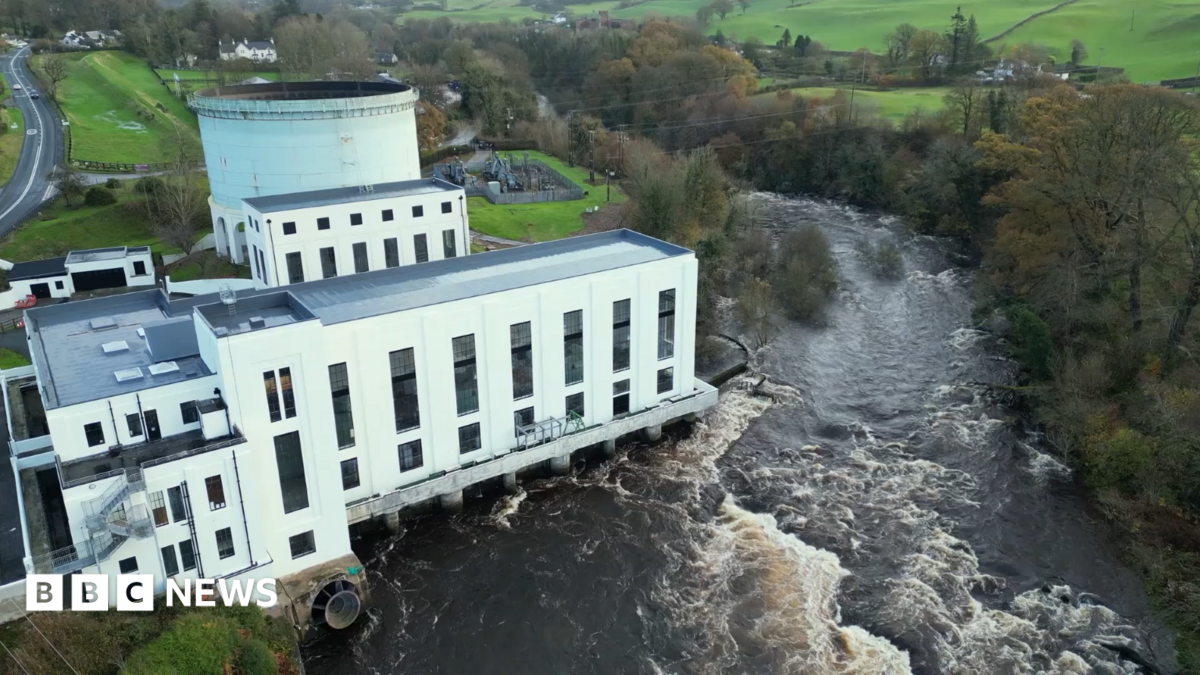
Image courtesy of bbc.co.uk